Does the US Have an Obligation to Communicate with China?
Synopsis
In a compelling address at the Munich Security Conference, Secretary of State Marco Rubio emphasizes the need for the U.S. to engage in dialogue with China, highlighting the significance of managing global tensions and cooperation opportunities. As the geopolitical landscape continues to evolve, can meaningful communication pave the way for a better future?
Key Takeaways
U.S. obligations: Continuous dialogue with China is essential.
Geopolitical necessity: Avoiding conflict through communication is critical.
Trade implications: U.S.-China trade dynamics affect global markets.
Collaboration opportunities: Areas of aligned interests can lead to cooperation.
Long-term challenges: Fundamental issues between the two nations will persist.
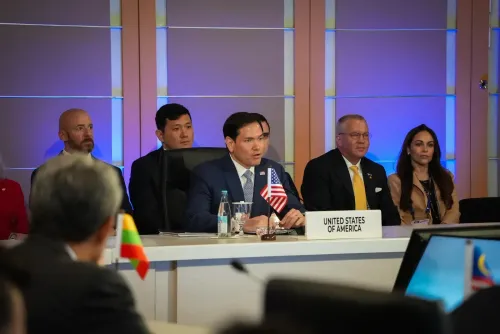
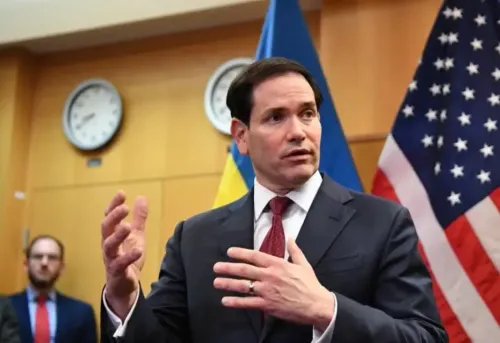
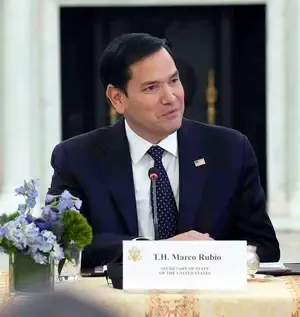
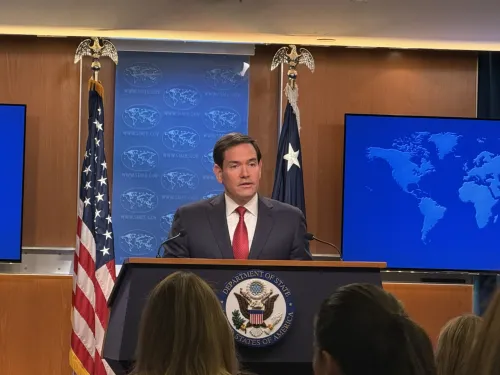
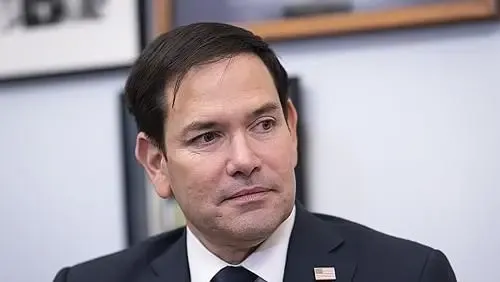
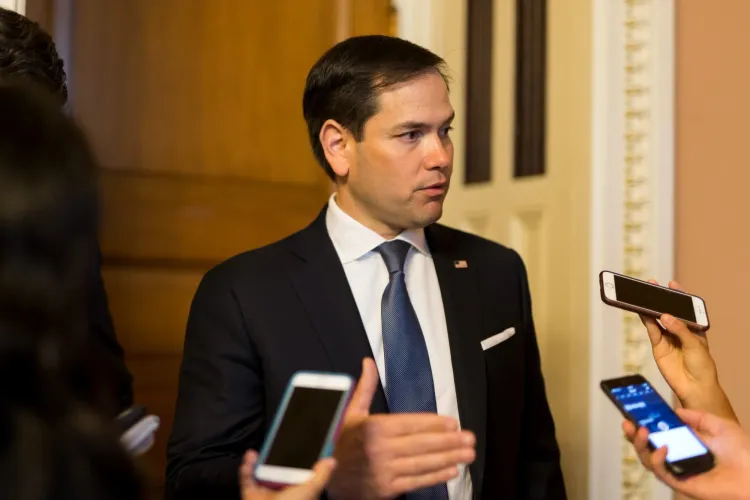
Washington, Feb 14 (NationPress) US Secretary of State Marco Rubio asserted on Saturday that Washington bears an obligation to engage in dialogue with China, emphasizing that ongoing discussions between the world’s two largest economies are a strategic necessity, even amidst significant structural tensions.
During his address at the Munich Security Conference, Rubio stated, “As the two largest economies globally and major powers on the planet, we must engage in communication and dialogue.” He continued, “Failing to converse with China would be a serious geopolitical error.”
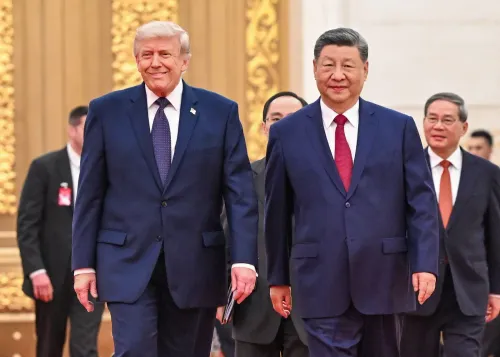
His comments were made in light of an anticipated summit “in about two months” between President Donald Trump and Chinese President Xi Jinping.
Rubio recognized that competition between Washington and Beijing is likely to continue. “Due to our significant global interests, our national priorities will frequently diverge,” he noted. “We owe it to the world to manage these differences effectively, striving to avoid conflicts, whether economic or otherwise.”
He emphasized that engagement does not equate to concessions. “Any agreement must not compromise our national interests,” Rubio insisted, adding that the United States expects China to prioritize its own national interests, as is customary for every nation-state.”
Rubio pointed out that tensions surrounding trade and technology have wider ramifications. “What transpires between the U.S. and China regarding trade has global consequences,” he remarked.
Nonetheless, he expressed a willingness for collaboration where interests align. “In areas where our goals coincide, we can collaborate to create a positive impact on the world, and we actively seek opportunities for such cooperation.”
However, he warned that differences will remain. “Long-term challenges persist that we must address, which will inevitably cause friction in our relationship with China,” he remarked. “No one is under any illusions that fundamental challenges will continue to exist between our nations and between the West and China for various reasons.”
In his broader address, Rubio urged Western countries to bolster their industrial capacity, secure “critical minerals that are not susceptible to coercion from other powers,” and invest in emerging sectors such as “advanced artificial intelligence.”
Since its inception in 1963, the Munich Security Conference has been a platform for transatlantic and global strategic discussions. Recently, the focus has increasingly been on managing strategic competition with China, particularly concerning trade, technology, supply chains, and influence in the Indo-Pacific region.
US-China relations have been characterized by trade disputes, export controls on advanced technologies, tensions regarding Taiwan, and competing geopolitical interests. Nevertheless, successive administrations have maintained high-level diplomatic channels to manage risks and prevent escalation between the two powers.
Point of View
It is crucial to recognize the evolving dynamics between the U.S. and China. While competition is inevitable, the emphasis on communication as a tool for conflict avoidance is vital. Rubio's insights highlight that managing differences and exploring cooperation can lead to a more stable global landscape. It is essential for our nation to engage thoughtfully, ensuring our interests are safeguarded while navigating this complex relationship.
NationPress
19 Sept 2026
Frequently Asked Questions
What did Marco Rubio say about U.S.-China communication?
Marco Rubio stated that the U.S. has an obligation to communicate with China, emphasizing that sustained dialogue is a strategic necessity despite existing tensions.
Why is dialogue with China important?
Dialogue with China is crucial to manage global tensions, avoid conflicts, and explore opportunities for cooperation in areas of mutual interest.
What are some challenges in U.S.-China relations?
Challenges include trade disputes, technological tensions, and geopolitical competition, particularly regarding Taiwan and influence in the Indo-Pacific.
How does Rubio view cooperation with China?
Rubio believes that while differences persist, there are areas where U.S. and Chinese interests align, allowing for potential collaboration to make a positive impact.
What is the significance of the Munich Security Conference?
The Munich Security Conference serves as a platform for global strategic discussions, increasingly focusing on managing competitive relations with China.