Is the US Paving the Way for a New Nuclear Arms Control Era?
Synopsis
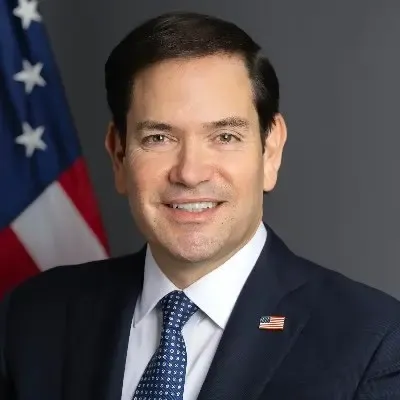
In a bold move, the United States has called for a transformative approach to nuclear arms control that includes multiple nations. As the New START treaty expires, Secretary of State Marco Rubio warns that existing frameworks are outdated and emphasizes the urgent need to address the evolving global nuclear landscape. Read more to discover what this means for global security.
Key Takeaways
The United States is advocating for a multilateral nuclear arms control framework.
The expiration of the New START treaty signifies the need for a new approach to address modern threats.
China 's nuclear arsenal expansion is a central concern in future discussions.
Negotiations for new agreements may take years and require extensive groundwork.
The US will not accept agreements that ignore violations or compromise its security.
Washington, Feb 6 (NationPress) On Friday, the United States urged for a new nuclear arms control framework that involves multiple nations, asserting that the end of the New START treaty signifies the conclusion of a Cold War-era paradigm that is ill-suited to today’s global threats.
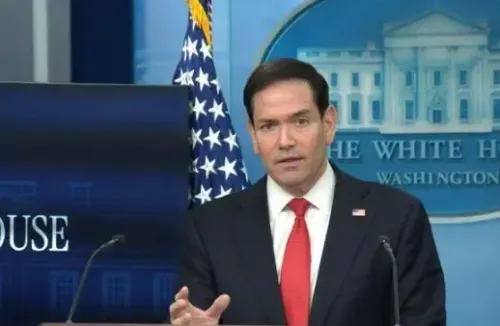
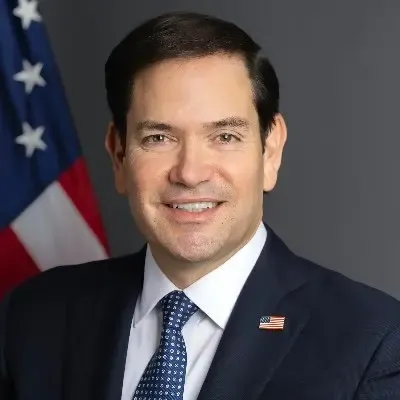
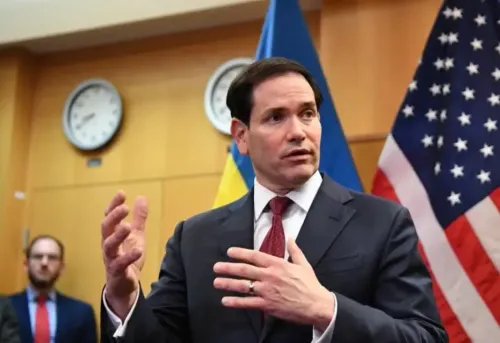
In an article published a day after the formal expiration of New START, Secretary of State Marco Rubio remarked that previous arms control agreements have contributed to the safety of the United States but cautioned that bilateral treaties with Russia no longer align with the current strategic landscape.
“Every agreement has its time, and as of yesterday, New START has ceased to exist,” Rubio stated, dismissing assertions that the treaty's termination would lead to a US-induced arms race. He pointed out that Russia halted compliance with the treaty in 2023 “after years of violating its provisions.”
“A treaty necessitates at least two willing parties,” Rubio added, highlighting that the United States must either bind itself unilaterally or acknowledge that “a new era demands a fresh approach.”
Rubio emphasized that future arms control discussions must reflect the evolving nuclear landscape, particularly concerning China’s swift nuclear arsenal expansion. “China’s rapid and secretive growth of its nuclear capabilities since New START came into effect has made previous arms control frameworks ineffective,” he outlined on Substack.
He noted that China has escalated its nuclear stockpile from “approximately 200 to over 600” since 2020 and is “on track to exceed 1,000 warheads by 2030.” He cautioned that any agreement neglecting China’s expansion would compromise the safety of the United States and its allies.
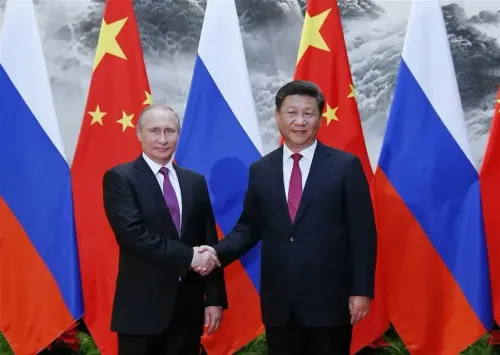
Rubio highlighted that President Donald Trump has been “clear, consistent, and unequivocal” that future arms control must consider both Russia and China as equal nuclear powers.
Rubio stated that Washington formally presented its strategy in Geneva, advocating for multilateral nuclear arms control and discussions on strategic stability. He laid out three core principles, starting with the rejection of arms control as a solely bilateral matter.
“Other nations bear a responsibility to contribute to strategic stability, especially China,” he wrote.
Rubio also affirmed that the United States would not endorse agreements that disregard violations. “We will not accept conditions that jeopardize the United States or ignore noncompliance in pursuit of a future deal,” he asserted.
Simultaneously, he reiterated the importance of deterrence. “We will uphold a strong, credible, and modernized nuclear deterrent,” Rubio wrote, while working towards the President’s goal of mitigating global nuclear threats.
Acknowledging that negotiations could span years, Rubio noted that previous treaties required decades of groundwork and were negotiated between two nations rather than three or more. Nonetheless, he argued that this endeavor is essential.
“Just because something is challenging does not mean we should avoid pursuing it or settle for less,” Rubio concluded, adding that significant agreements are often “the only ones worth achieving.”
He expressed hope that other nations will engage in genuine efforts to mitigate nuclear threats “in reality, not just on paper.”
Point of View
The call for a new nuclear arms control framework by the United States reflects a necessary evolution in addressing contemporary global threats. The acknowledgment of China as a crucial player in nuclear discussions underscores the urgency of collaborative approaches. The shift from bilateral to multilateral talks is essential for enhancing strategic stability and ensuring the safety of the United States and its allies.
NationPress
12 Oct 2026
Frequently Asked Questions
What is the New START treaty?
The New START treaty is a bilateral arms reduction agreement between the United States and Russia that was signed in 2010 and aimed to limit the number of strategic nuclear warheads.
Why does the US need a new nuclear arms control framework?
The US seeks a new framework to address the changing global nuclear landscape, particularly considering China 's rapid nuclear arsenal expansion and to enhance strategic stability.
What role does China play in future arms control discussions?
China is viewed as a nuclear peer that must be included in future arms control agreements to ensure comprehensive safety and stability for the United States and its allies.