Is the Expiry of New START Increasing Global Nuclear Risks?
Synopsis
As the New START treaty approaches its expiration, the US Senate raises alarms about the potential onset of an unregulated nuclear arms race among the United States, Russia, and China. Lawmakers and experts warn that the implications could extend beyond these nations, urging the need for a renewed framework to address evolving threats.
Key Takeaways
The New START treaty is on the verge of expiration, raising alarms in the US Senate.
Lawmakers warn of the onset of an unregulated nuclear arms race involving Russia and China .
There is a growing call for a renewed framework to address current nuclear threats.
Concerns are rising about the implications for US allies and global security.
Experts emphasize the need for inclusive arms control agreements.
Washington, Feb 5 (NationPress) The approaching expiration of the New START nuclear arms control agreement has prompted serious concerns within the US Senate regarding the threat of a more perilous, unregulated phase of nuclear rivalry among the United States, Russia, and China. Lawmakers and analysts are warning that the repercussions could reach far beyond these three nations.
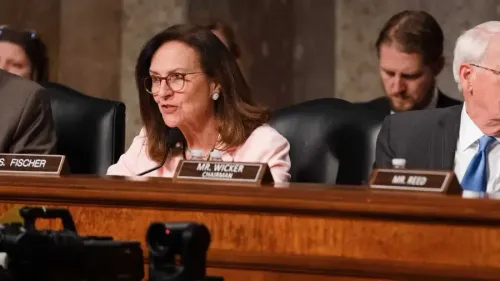
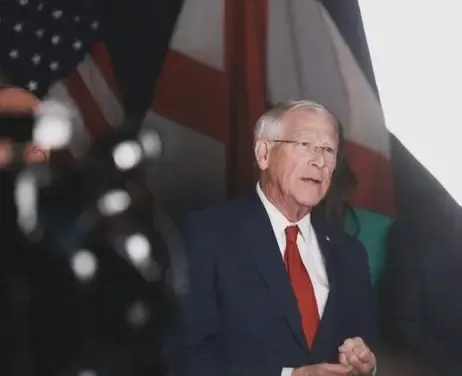
Senate Armed Services Committee Chairman Roger Wicker expressed that the treaty, established in 2010, was “crafted in a different era” and no longer mirrors the present threats we face. He noted that Russia’s withdrawal from compliance and China’s swift military growth have significantly transformed the strategic environment.
“Fifteen years post-treaty signing, we are confronted with a range of challenges far more intricate and hazardous than anyone anticipated in 2010,” Wicker stated during a Congressional hearing this week, highlighting Russia’s nuclear production capabilities and China’s rapidly expanding arsenal.
Ranking Member Jack Reed cautioned that the expiration of New START would leave both Washington and Moscow without any binding framework for regulating nuclear forces for the first time in over fifty years. “For the first time in 54 years, the United States and Russia will lack a binding framework to oversee our respective nuclear arsenals,” he remarked.
Reed noted that public reports suggested Russia had adhered to the treaty's main limitations despite halting inspections, but he warned that an unchecked arms race would not benefit either party. He also noted that China is rapidly approaching nuclear parity, predicting that Beijing could amass around 1,500 warheads in the coming years.
The hearing highlighted increasing divisions over whether the United States should aim to maintain parts of New START or decisively move beyond it. Former US Strategic Command head Admiral Charles Richard stated that arms control could only enhance deterrence if it involved all parties, all weaponry, and effective verification.
“I would not recommend a one-year extension of the New START Treaty without reinstating verification measures,” Richard emphasized, suggesting that any new agreement should at least include the United States, Russia, and China.
Former US arms control negotiator Rose Gottemoeller argued that deterrence and arms control are not mutually exclusive but rather “have a mutually beneficial relationship.”
She informed lawmakers that negotiated limits foster predictability, thus strengthening deterrence. Gottemoeller advocated for extending New START limits for another year to mitigate a swift Russian nuclear “upload” while the US prepares to address China’s military buildup.
“It does not align with US national security interests to tackle the Chinese nuclear buildup while simultaneously facing a rapid Russian upload campaign,” she said, cautioning that denying an extension could grant Moscow an “easy diplomatic victory.”
Timothy Morrison, a former national security official, dismissed this perspective, labeling New START a “poor agreement” that restricted the United States more than Russia while overlooking significant parts of Moscow’s arsenal. He argued that arms control should serve as a competitive tool, not an end goal, and insisted that Washington must retain the ability to respond quickly to violations.
Several senators voiced concerns about nuclear proliferation beyond the primary powers. Reed cautioned that resuming US nuclear testing could motivate others to follow suit. “Reviving tests would simply encourage our adversaries to bridge their technological gaps and would provide justification for India, Pakistan, and North Korea to resume their programs,” he warned.
Gottemoeller echoed this viewpoint, stating that a return to explosive testing by the United States would likely be reciprocated by Russia and China, and might also prompt India and Pakistan to reinitiate their testing.
The discussion among legislators underscored anxieties among US allies, particularly in Europe and the Indo-Pacific, regarding the reliability of extended nuclear deterrence. Reed noted that allies are “reassessing their nuclear strategies” amid uncertainties surrounding US commitments, increasing the likelihood of further proliferation.
Point of View
The discussions surrounding the New START treaty's expiration reflect a significant turning point in global nuclear dynamics. The potential for an unchecked arms race poses a grave threat, not only to the involved nations but to global security as a whole. It is imperative that policymakers take decisive action to address these evolving challenges and restore a framework for nuclear stability.
NationPress
12 Oct 2026
Frequently Asked Questions
What is the New START treaty?
The New START treaty is a nuclear arms control agreement between the United States and Russia aimed at reducing and limiting strategic offensive arms.
When does the New START treaty expire?
The New START treaty is set to expire imminently, raising concerns about the future of nuclear arms control.
What are the potential consequences of the treaty's expiration?
The expiration could lead to an unregulated nuclear arms race among the US, Russia, and China, with broader implications for global security.
What are lawmakers saying about the treaty?
Lawmakers are expressing serious concerns about the lack of a binding framework for nuclear regulation following the treaty's expiration.
How might this affect US allies?
US allies may reassess their nuclear policies amid uncertainties regarding US commitments, increasing the risk of further nuclear proliferation.