Is the US Balancing Ties with China and Indo-Pacific Alliances?

Synopsis
In an important address, Secretary of State Marco Rubio discusses the US's dual strategy to manage its relationship with China while enhancing ties with Indo-Pacific allies. Discover how the US aims to navigate complex geopolitical landscapes and maintain cooperation in a tense global environment.
Key Takeaways
US is balancing its relationship with China .
Strengthening alliances in the Indo-Pacific is a priority .
Cooperation with regional partners is essential .
Tensions with China are expected to continue .
India is a key player in the US Indo-Pacific strategy .
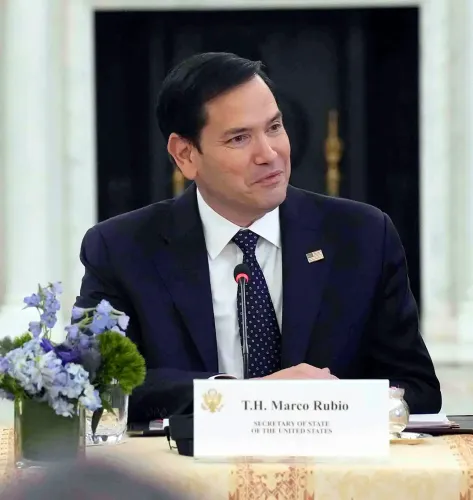
Washington, Dec 20 (NationPress) US Secretary of State Marco Rubio stated that the United States is implementing a dual approach to navigate tensions with China while simultaneously fortifying partnerships throughout the Indo-Pacific. “There will be tensions, there’s no doubt about it,” Rubio remarked, adding that China “is and will continue to be a rich and powerful country and a factor in geopolitics.”
He acknowledged the necessity of engaging with Beijing where feasible. “We have to have relations with them. We have to deal with them,” Rubio explained during his end-of-year press briefing. “We must identify areas for collaboration.”
Rubio also highlighted the importance of alliance commitments. “Our task is to balance these two aspects,” he noted, referencing the partnership with Japan.
“The Japanese are a very close ally of the United States,” Rubio stated, indicating that Washington will continue backing its regional allies.
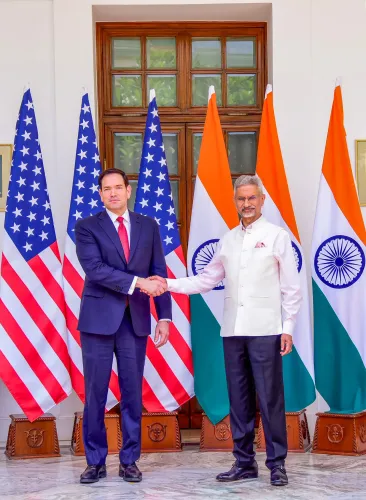
He emphasized that US commitments are not limited to Japan. “This includes not just Japan but also South Korea and the broader Indo-Pacific,” Rubio mentioned, also naming India, Australia, New Zealand, and other regional collaborators.
Rubio clarified that Washington does not aim for confrontation: “I don’t want to leave anybody out,” he said, highlighting the importance of cooperation with a wide array of nations.
Nevertheless, he accepted that friction points are likely to remain. “There will be points of tension now and for the foreseeable future,” Rubio noted.
He asserted that responsible statecraft necessitates identifying cooperation opportunities without compromising alliances. “I think both sides understand that,” Rubio stated.
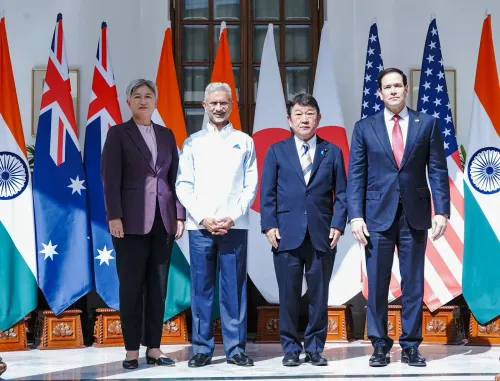
Relations between the US and China have been tense due to issues surrounding trade, technology, Taiwan, and security matters in the South and East China Seas. Concurrently, Washington has bolstered strategic cooperation with nations like India, Japan, Australia, and others through frameworks such as the Quad.
India has become a pivotal partner in the US Indo-Pacific strategy, with expanding defense, technology, and economic ties influencing regional balance considerations.
Point of View
It is essential to recognize the delicate balance the US is trying to achieve in its foreign relations, particularly with China. The emphasis on cooperation with allies in the Indo-Pacific region is critical, especially as geopolitical tensions rise. By fostering strong relationships, the US can better navigate future challenges and maintain stability in the region.
NationPress
7 Oct 2026
Frequently Asked Questions
What is the US's strategy regarding China?
The US is pursuing a dual strategy of managing tensions with China while strengthening alliances across the Indo-Pacific.
How does the US plan to engage with China?
The US aims to engage with Beijing where possible, finding areas for collaboration while maintaining its alliances.
What countries are included in the US's Indo-Pacific strategy?
The US's Indo-Pacific strategy includes partnerships with Japan, South Korea, India, Australia, New Zealand, and other regional allies.
Will there be ongoing tensions between the US and China?
Yes, Secretary Rubio acknowledges that points of tension are likely to persist in US-China relations for the foreseeable future.
What frameworks does the US use to strengthen its Indo-Pacific alliances?
The US has expanded strategic cooperation with regional partners through frameworks such as the Quad.