PM Modi at Viksit Bharat Sabha: 'Every crisis tested my patience, every success deepened responsibility'
Synopsis
At the Viksit Bharat Sankalp Sabha, Modi gave one of his most introspective public addresses in years — mapping the Morbi floods, the Bhuj earthquake, Chandrayaan's setback and the Covid pandemic each to a governing lesson, and crediting critics alongside supporters for shaping him. The 25-year-trust framing was unmistakably political, but the emotional register was personal.
Key Takeaways
PM Modi addressed the Viksit Bharat Sankalp Sabha in New Delhi on 7 October .
He described himself as a lifelong student, recalling his early days in Vadnagar and saying his capacity to learn drives his ability to serve the country.
Modi credited both supporters and critics: critics, he said, taught him to 'look within', while opponents made him understand 'the power of democracy'.
He cited the Morbi floods , Bhuj earthquake , Chandrayaan setback and the Covid-19 pandemic as formative governance lessons.
He described 25 years of public trust as 'a very valuable asset' that 'belongs to the country', not to him personally.
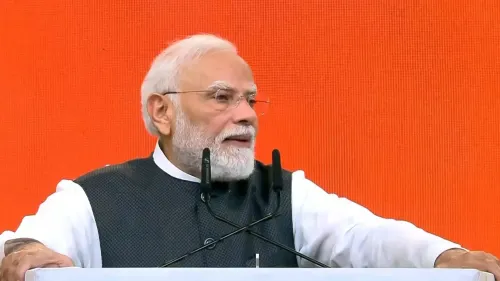
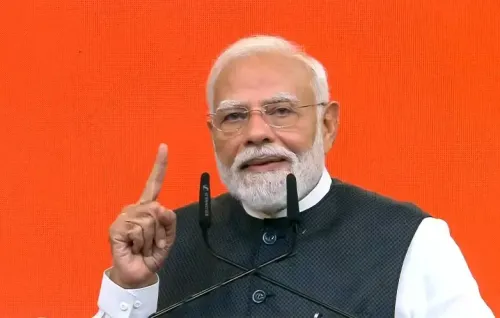
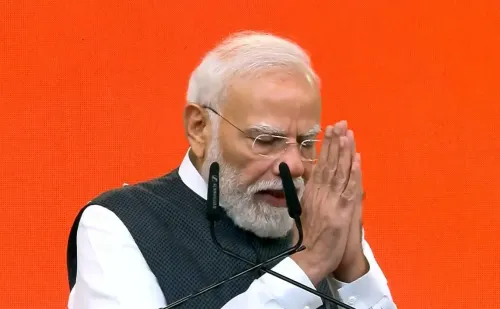
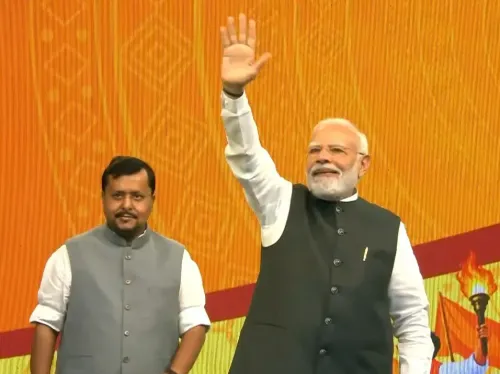
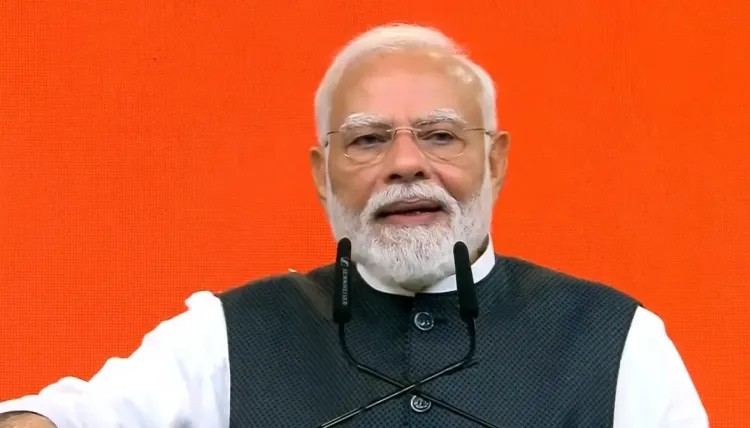
Prime Minister Narendra Modi on Wednesday, 7 October delivered an introspective address at the 'Viksit Bharat Sankalp Sabha' in New Delhi, reflecting on 25 years of public life and framing every adversity he faced — from natural disasters to a global pandemic — as a lesson in governance and service.
A Lifelong Student, by Self-Description
Opening on a personal note, Modi recalled his school days in Vadnagar, where he was often the first student to arrive in class. 'That eagerness to learn became a part of my life, and even today, I consider myself a student,' he said, adding that he had prayed at a temple earlier in the day for his capacity to learn to never diminish. 'The more I learn, the greater my ability to do something for the country will become,' he told the gathering amid chants of 'Modi-Modi'.
Gratitude Across the Spectrum — Supporters and Critics Alike
In a rare moment of public reflection, the Prime Minister expressed gratitude to adversaries alongside allies. 'Those who made me win taught me to remain humble. Those who brought me down taught me to stand up again. Well-wishers encouraged me, while critics taught me to look within myself,' he said. He added that those who opposed him made him 'understand the power of democracy' — a remark that drew considerable attention given the charged political climate.
Crises That Shaped His Governance
Modi drew direct lines between specific national crises and the leadership lessons he drew from each. The Morbi floods, he said, showed him 'the path of engaging in relief and service work day and night'. The Bhuj earthquake taught him to 'remain steadfast in reconstruction'. Chandrayaan, referencing India's early lunar mission setback, taught him to 'rise after failure'. And the Covid-19 pandemic, he said, made him understand 'the importance of the nation's collective consciousness'. Taken together, the list reads as a curated biography of crisis-to-resolve: each calamity mapped to a principle.
25 Years of Public Trust — 'An Asset That Belongs to the Country'
The Prime Minister expressed gratitude to the people of India for choosing him as their leader for 25 consecutive years. He described this accumulated trust and experience as 'a very valuable asset', but was careful to contextualise it: 'This asset does not belong only to Modi; it belongs to the country. Every child of Mother India is entitled to this asset.' He called every citizen the rightful claimant of that legacy, framing his tenure as a collective achievement rather than a personal one.
On Media, Villages and Policymaking
Modi also praised the media, crediting it with giving him 'inspiration to move forward through both bitter and sweet experiences'. He said every journey across the country — into villages and among the poor — reinforced a core conviction: 'Resources may be limited, but dreams should be big and determination should be strong.' He said this exposure directly shaped his approach to policymaking, injecting what he called 'sensitivity' into governance decisions. The address, delivered with evident emotion, is likely to be cited as one of the more candid public speeches of his third term.
Point of View
And in today's polarised environment, the framing lands as a deliberate softening of register. Yet the address doubled as political stocktaking — 25 years of unbroken electoral mandate recast as national patrimony is a narrative construction, not merely a personal reflection. The invocation of Morbi alongside Chandrayaan is also notable: Morbi was a governance controversy, and placing it in a list of 'lessons learned' without acknowledgement of accountability questions skips over a contested chapter. The speech will be received very differently depending on where one sits politically.
NationPress
7 Oct 2026
Frequently Asked Questions
What did PM Modi say at the Viksit Bharat Sankalp Sabha?
Prime Minister Narendra Modi delivered an introspective address on 7 October, reflecting on 25 years in public life. He described every crisis as a test of patience and every success as a deepening of his sense of responsibility toward the nation.
What crises did Modi say shaped his leadership?
Modi cited the Morbi floods, the Bhuj earthquake, the Chandrayaan setback and the Covid-19 pandemic as defining experiences. Each, he said, taught him a distinct lesson — from the spirit of service to the importance of collective national consciousness.
What did Modi say about critics and opponents?
Modi said critics taught him to 'look within myself' and that opponents made him 'understand the power of democracy.' He expressed gratitude to adversaries alongside supporters, framing both as formative influences.
What did Modi mean by 25 years of public trust being a national asset?
Modi said the experience and trust accumulated over 25 years of public service 'does not belong only to Modi; it belongs to the country.' He framed his tenure as a collective legacy that every Indian citizen is entitled to, rather than a personal achievement.
What is the Viksit Bharat Sankalp Sabha?
The Viksit Bharat Sankalp Sabha is a government-organised outreach programme aligned with the broader 'Viksit Bharat' (Developed India) vision, aimed at communicating government schemes and development goals to citizens directly.