CM Bhupendra Patel offers Ashtami prayers to Maa Mahagauri
Synopsis
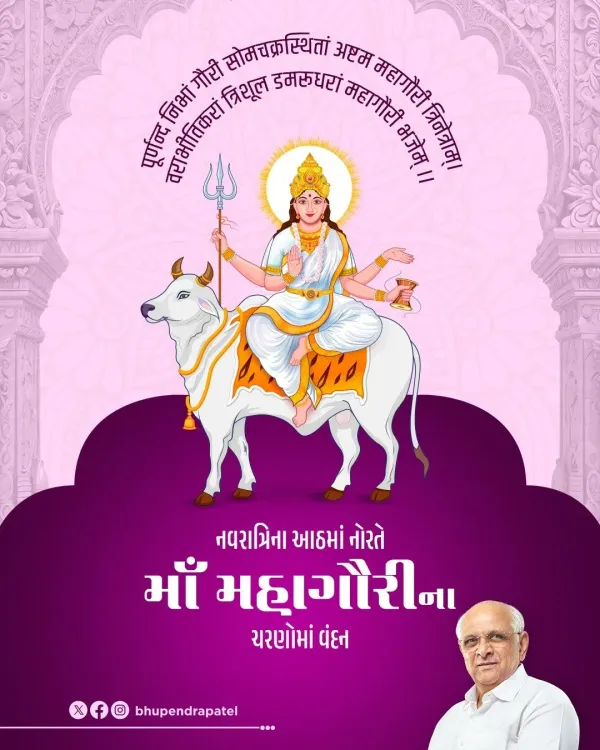
Gujarat CM Bhupendra Patel marked Navratri Ashtami on 18 October 2026 with a Gujarati-language prayer to Maa Mahagauri, the eighth form of Goddess Durga, seeking blessings of purity, peace, and prosperity for all citizens.
Key Takeaways
Gujarat CM Bhupendra Patel posted Navratri Ashtami greetings on 18 October 2026 , the eighth night of the nine-night festival.
He venerated Maa Mahagauri , described as a symbol of purity, sanctity, peace, and infinite compassion.
Patel prayed for the destruction of suffering and sin and for blessings of happiness, peace, and prosperity for all.
The post was written in Gujarati and closed with the invocation જય અંબે! ('Victory to Amba!').
Gujarat is one of India's foremost Navratri states, known worldwide for its Garba tradition spanning all nine nights.
On the eighth and most sacred day of Navratri, Gujarat Chief Minister Bhupendra Patel offered devotional greetings to Maa Mahagauri — the eighth form of Goddess Durga — on Sunday, 18 October 2026, invoking her blessings of purity, peace, and prosperity for all.
Writing in Gujarati, CM Patel described Maa Mahagauri as a symbol of purity, sanctity, peace, and boundless compassion — 'શુદ્ધતા, પવિત્રતા, શાંતિ અને અનંત કરુણાનું પ્રતીક' ('a symbol of purity, sanctity, peace and infinite compassion'). He prayed that the Goddess cleanse every mind, destroy all suffering and sin, and shower blessings of happiness, peace, and prosperity upon everyone, signing off with the invocation 'જય અંબે!' — 'Victory to Amba!'
Ashtami: the day Navratri reaches its peak
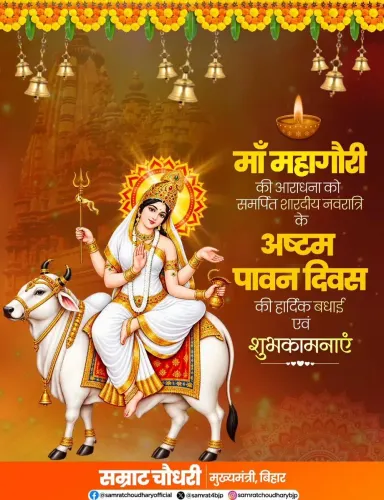
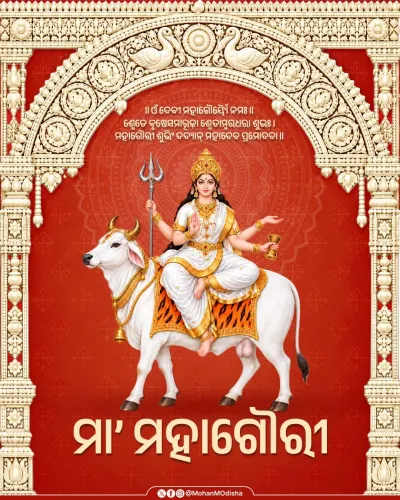
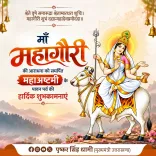
Ashtami, the eighth night of Navratri, is traditionally the most spiritually charged of the nine evenings. Maa Mahagauri — depicted in radiant white, riding a white bull — is venerated for her power to wash away past sins and grant devotees a fresh beginning. The day is widely observed across India through special pujas, havan rituals, and the feeding of young girls symbolising the nine forms of Shakti.
Navratri in Gujarat: more than a festival
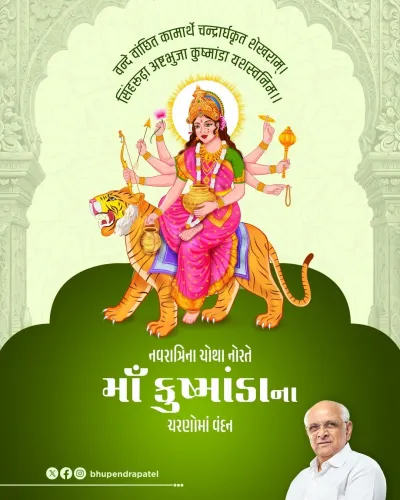
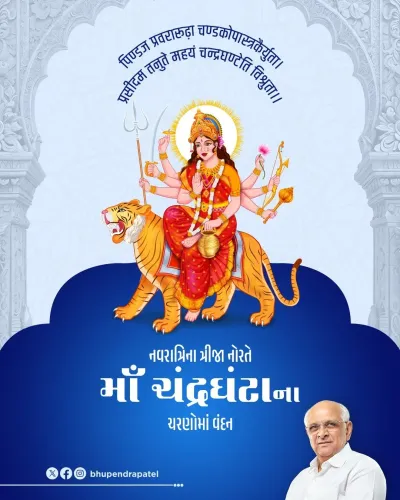
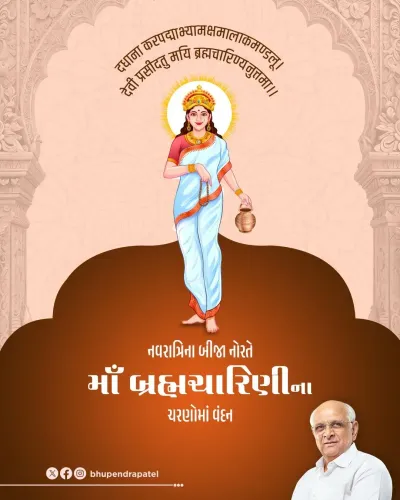
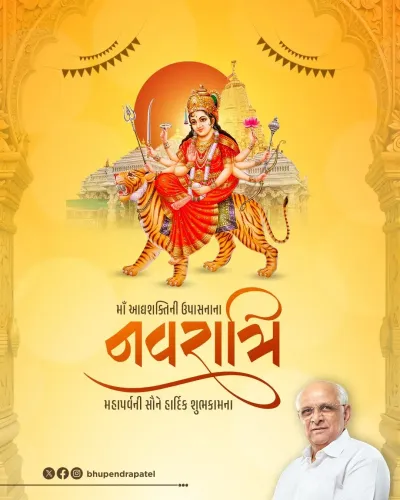
Gujarat holds a singular place in India's Navratri calendar. The state's Garba tradition — a whirling, lamp-lit dance performed across nine nights — has been recognised globally, and major cities including Ahmedabad, Vadodara, and Surat host some of the largest organised Garba events in the country. For elected leaders here, public devotion during Navratri is both a cultural and a civic act: CM Patel, who has led the state since 2021, has consistently marked each of the nine forms of Durga on social media throughout the festival. The remaining night of the festival leads into Navami, the ninth and final day.
Point of View
Blending religious sentiment with electoral identity. For Bhupendra Patel, leading a state where Navratri is a defining cultural institution, these daily greetings reinforce the BJP's deep alignment with Gujarat's Hindu social fabric. The consistency — one post for each of the nine forms of Durga — signals deliberate, sustained engagement rather than a one-off gesture. It also reflects the broader pattern of Indian political communication, where the religious calendar is as much a civic calendar.
NationPress
18 Oct 2026
Frequently Asked Questions
Who is Maa Mahagauri and why is she worshipped on Ashtami?
Maa Mahagauri is the eighth form of Goddess Durga, venerated on the eighth night of Navratri. She is depicted in white and is associated with purity, peace, and the power to cleanse past sins, making Ashtami one of the most spiritually significant days of the festival.
What did Gujarat CM Bhupendra Patel post on Navratri Ashtami 2026?
CM Bhupendra Patel posted a Gujarati-language prayer on 18 October 2026, describing Maa Mahagauri as a symbol of purity and compassion and seeking her blessings of happiness, peace, and prosperity for all.
Why is Navratri especially significant in Gujarat?
Gujarat is home to one of India's most celebrated Navratri traditions — Garba — a nine-night folk dance performed in honour of Goddess Amba. Cities like Ahmedabad, Vadodara, and Surat host massive Garba events that draw participants from across the country and abroad.
When did Bhupendra Patel become Chief Minister of Gujarat?
Bhupendra Patel became Chief Minister of Gujarat in 2021 and is a leader of the Bharatiya Janata Party (BJP).
What is the meaning of 'Jai Ambe' that CM Patel used in his post?
'Jai Ambe' — written as 'જય અંબે!' in Gujarati — is a traditional Hindu invocation meaning 'Victory to Amba' or 'Glory to the Mother Goddess', commonly used as a salutation to Goddess Durga during Navratri.