Nadda greets nation on Durga Ashtami, prays for prosperity
Synopsis
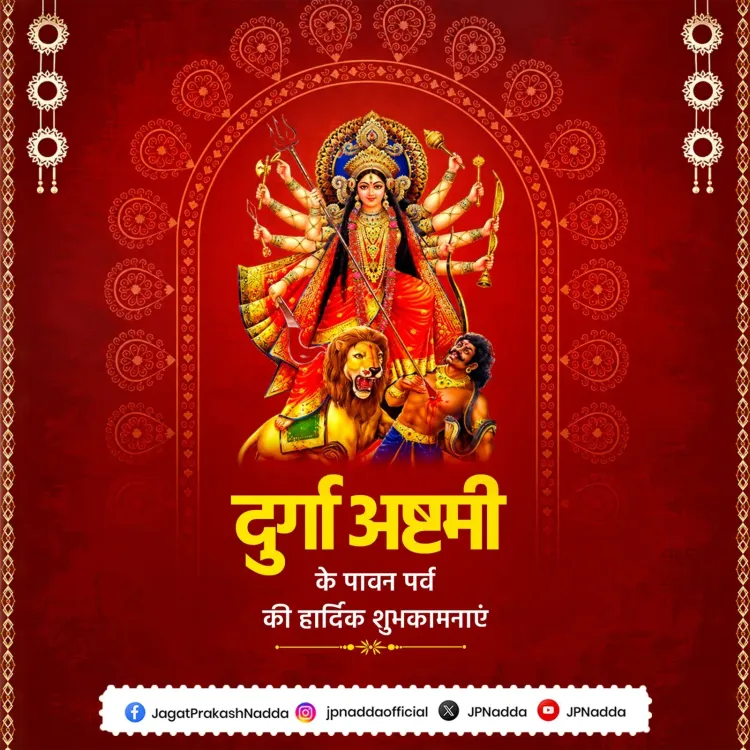
Union Health Minister J. P. Nadda greeted the nation on Durga Ashtami, the eighth day of Shardiya Navratri, with a Sanskrit shloka invoking Maa Mahagauri and a prayer for the prosperity of all devotees.
Key Takeaways
Nadda , Union Health Minister and BJP national president, posted Durga Ashtami greetings on Sunday, 18 October 2026 .
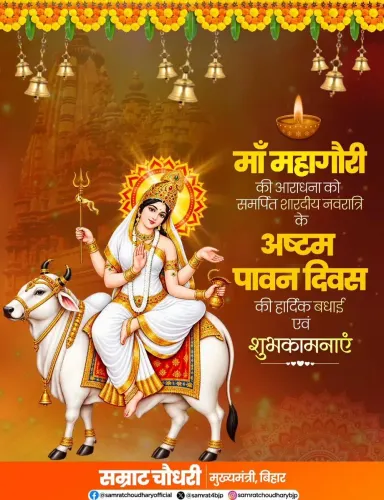
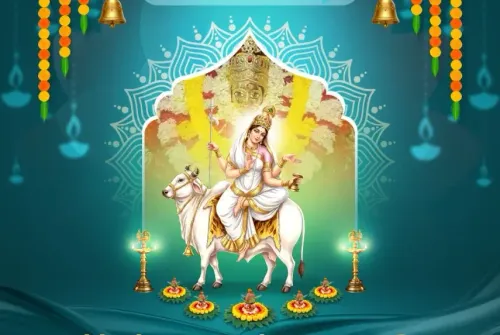
The post opened with a Sanskrit shloka dedicated to Maa Mahagauri , the eighth form of Goddess Durga.
Durga Ashtami falls on the eighth day of Shardiya Navratri, a nine-night autumnal Hindu festival.
Nadda prayed that the 'Mother of the Universe' bless all devotees with 'samridhi evam aishwarya' — prosperity and abundance .
The festival season concludes with Vijayadashami (Dussehra) , celebrating the triumph of good over evil.
On the auspicious eighth day of Shardiya Navratri, Union Health Minister J. P. Nadda extended heartfelt wishes to the nation on Durga Ashtami, invoking the blessings of Maa Mahagauri — the eighth divine form of Goddess Durga — and praying for the prosperity and well-being of all devotees.
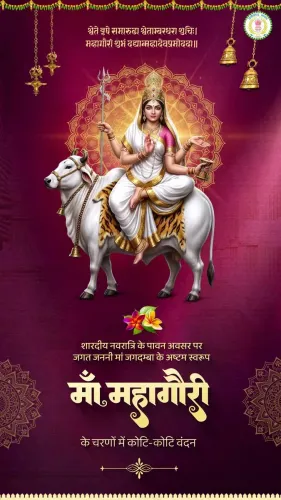
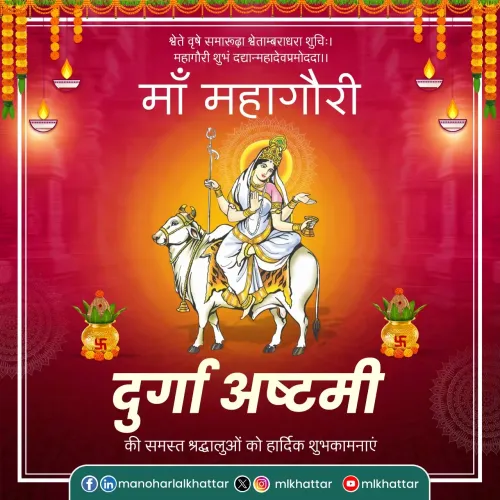
Opening with a Sanskrit shloka — 'Shwete vrishe samarudha shwetambaradhara shuchih, Mahagauri shubham dadyan mahadeva pramodada' (She who rides a white bull, clad in white, pure and radiant — may Mahagauri bestow auspiciousness, she who is the delight of Mahadeva) — Nadda offered his salutations at the sacred feet of Maa Mahagauri. He prayed that the 'Mother of the Universe' bless all her devotees with abundance and prosperity, concluding with the devotional chant 'Jai Mata Di!'
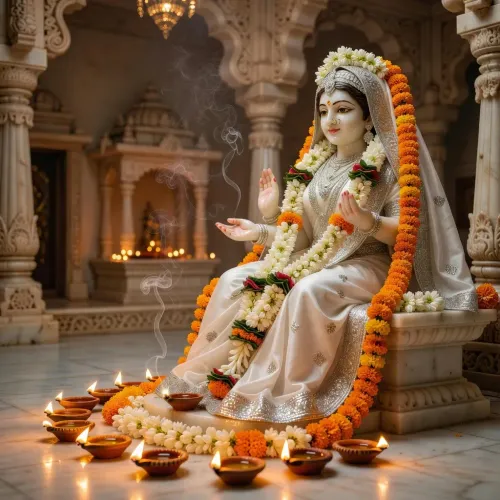
Durga Ashtami, observed on the eighth day of Navratri, holds particular significance in the Hindu calendar. Maa Mahagauri is venerated as the embodiment of purity and serenity, symbolised by her white attire and her mount, the white bull. Devotees across India perform special pujas, kanya pujan (worship of young girls as manifestations of the goddess), and havan rituals on this day.
Shardiya Navratri — the autumnal nine-night festival — culminates in Vijayadashami (Dussehra), which marks the victory of good over evil. It is among the most widely celebrated Hindu festivals, drawing participation from millions of households, temples, and cultural organisations across the country.
Senior political leaders across the spectrum routinely mark major Hindu observances with social-media greetings, a practice that reflects both personal faith and broader public outreach during culturally significant moments in the national calendar.
Point of View
Including party president J. P. Nadda, have consistently used social media to mark major Hindu observances — a deliberate strategy of cultural visibility that reinforces the party's identity as a torchbearer of Hindu tradition. Durga Ashtami, with its national resonance, is a natural moment for such outreach. While the post carries no policy content, it fits a well-established pattern of political leaders using festival seasons to maintain personal connection with a mass devotee base. The choice to open with a classical Sanskrit shloka, rather than a simple greeting, signals a degree of religious literacy that is itself part of the messaging calculus.
NationPress
18 Oct 2026
Frequently Asked Questions
What is Durga Ashtami and why is it celebrated?
Durga Ashtami is the eighth day of Navratri, dedicated to Maa Mahagauri — the eighth form of Goddess Durga. Devotees perform special pujas, kanya pujan, and havan rituals to seek her blessings of purity and prosperity.
Who is Maa Mahagauri in Hindu tradition?
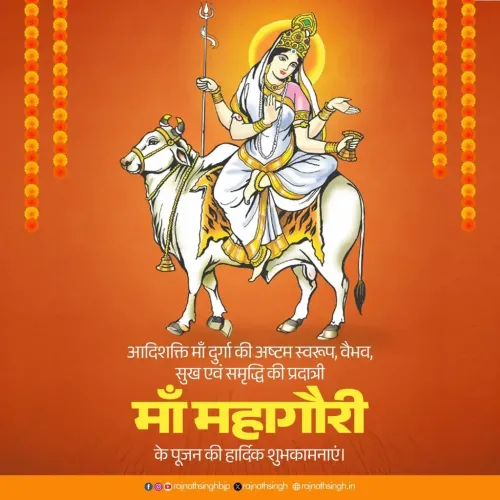
Maa Mahagauri is the eighth Navadurga, revered as the embodiment of purity and serenity. She is depicted in white attire, riding a white bull, and is believed to cleanse devotees of past sins and bestow auspiciousness.
What did JP Nadda post on Durga Ashtami 2026?
J. P. Nadda posted a Sanskrit shloka invoking Maa Mahagauri, extended Durga Ashtami greetings to all, and prayed that the goddess bless every devotee with prosperity and abundance.
What is the significance of the Sanskrit shloka Nadda used?
The shloka — 'Shwete vrishe samarudha shwetambaradhara shuchih' — describes Maa Mahagauri as the radiant, white-clad deity who rides a white bull and bestows auspiciousness as the consort and delight of Lord Mahadeva (Shiva).
When does Shardiya Navratri end in 2026?
Shardiya Navratri concludes with Vijayadashami, also known as Dussehra, which follows the ninth day (Navami) of the festival and marks the symbolic victory of good over evil.