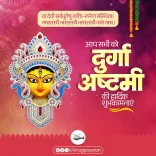
Shekhawat Invokes Maa Mahagauri on Mahashtami
Synopsis
Union Culture Minister Gajendra Singh Shekhawat marked Mahashtami by invoking Maa Mahagauri — the eighth Navadurga — with a Sanskrit shloka and a prayer for the nation's happiness and prosperity during Sharad Navratri 2026.
Key Takeaways
Union Culture and Tourism Minister Gajendra Singh Shekhawat posted Mahashtami greetings on October 18, 2026 .
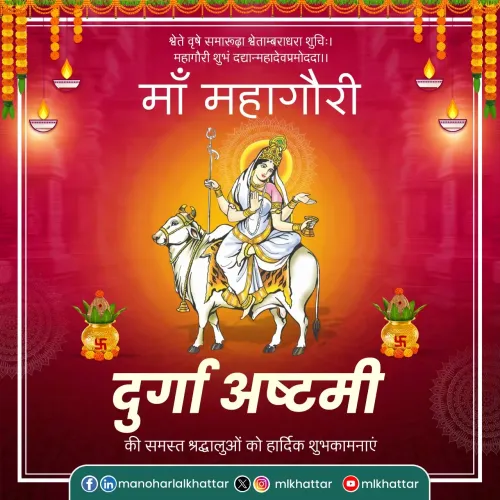
He opened with the Sanskrit shloka 'Shwete Vrishe Samarudha...' , venerating Maa Mahagauri , the eighth form of the Goddess.
Mahashtami is the eighth and one of the most auspicious days of Sharad Navratri, marked by kanya pujan rituals.
Shekhawat prayed for happiness and prosperity ( sukh evam samridhi ) for all citizens.
The post reflects a wider pattern of festival outreach by BJP ministers, especially those holding the Culture portfolio.
Navratri concludes with Navami and Vijayadashami in the days immediately following.
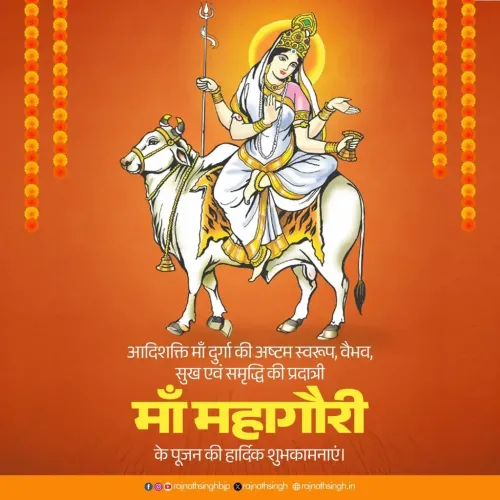
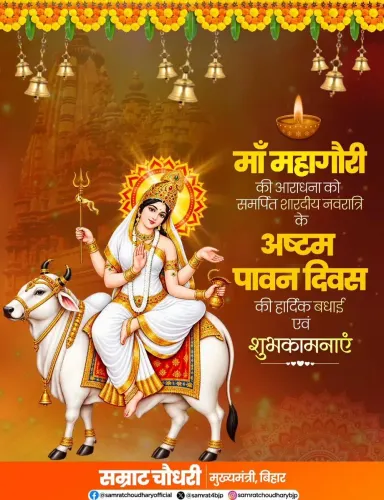
On the eighth and spiritually charged day of Sharad Navratri, Union Culture and Tourism Minister Gajendra Singh Shekhawat extended greetings to the nation on Mahashtami, invoking the blessings of Maa Mahagauri — the eighth manifestation of Maa Bhagavati — and praying for happiness and prosperity in the lives of all.
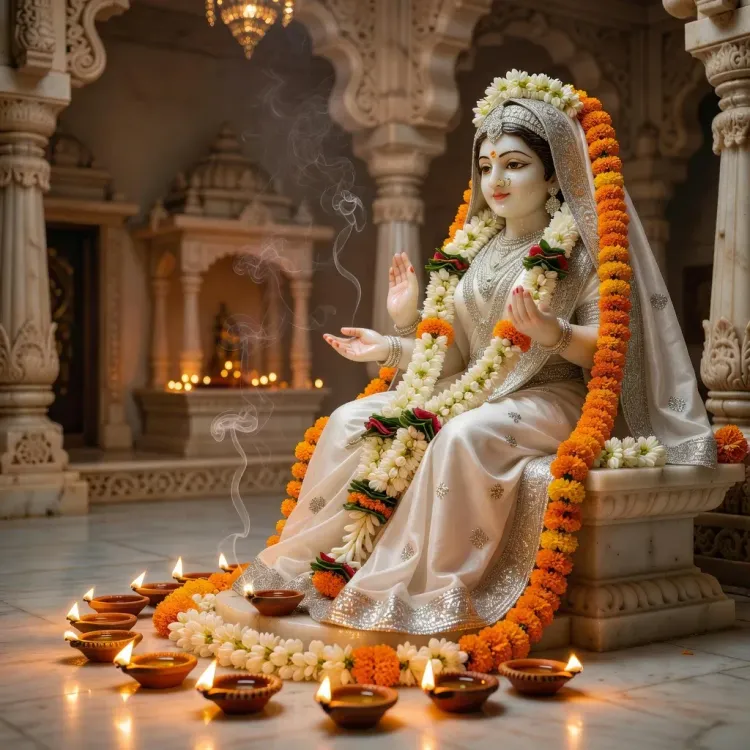
Opening with a classical Sanskrit shloka — 'Shwete Vrishe Samarudha Shwetambaradhara Shuchih, Mahagauri Shubham Dadyat Mahadeva Pramodada' — the Minister invoked the image of the Goddess seated on a white bull, robed in white, the embodiment of purity and the joy of Mahadeva. The verse is drawn from the traditional stotra tradition associated with the Navadurga cycle.The Eighth Form: Who Is Maa Mahagauri?
Maa Mahagauri is venerated as the supremely radiant, pure form of the Goddess — 'Mahagauri' meaning 'the greatly fair one.' Devotional tradition holds that she sheds all darkness and sin, granting liberation and fulfilment to her worshippers. Mahashtami, the eighth day of Navratri, is considered among the most auspicious tithis of the entire festival, with elaborate rituals including kanya pujan (worship of young girls as living embodiments of the Goddess) observed across India.
Shekhawat wrote: 'Mata ke aashirwad se aap sabhi ke jeevan mein sukh evam samridhi ka vaas ho, aisi meri kamna hai' — 'May the blessings of the Mother bring happiness and prosperity into the lives of all of you — this is my heartfelt wish.'
BJP Ministers and the Culture of Festival Outreach
For a minister who holds the Culture portfolio, the post carries an additional layer of resonance. Senior political figures, particularly from the BJP, have long used devotional festival messaging as a form of public cultural engagement — acknowledging living traditions that connect millions of citizens to a shared heritage. Shekhawat, a Lok Sabha MP from Jodhpur, Rajasthan, represents a constituency with deep roots in the Shakti worship tradition.
With Mahashtami marking the penultimate crescendo before Navami and then Vijayadashami, the nine-night festival moves now toward its triumphant close — a moment that reverberates from temple courtyards in Varanasi to pandals in Kolkata.
Point of View
Festival greetings of this kind are rarely just personal piety — they signal an active identification of the state's cultural stewardship with living religious traditions. Shekhawat's choice to lead with a classical Sanskrit shloka rather than a vernacular phrase is deliberate: it roots the message in textual tradition and appeals to a devotionally literate audience. The BJP's consistent and structured engagement with the Navadurga cycle across Navratri reinforces its positioning as the custodian of Hindu cultural heritage ahead of festive-season public sentiment. With Vijayadashami — historically resonant for the Sangh Parivar — days away, such messaging is part of a carefully sequenced cultural calendar.
NationPress
18 Oct 2026
Frequently Asked Questions
Who is Maa Mahagauri and why is she worshipped on Mahashtami?
Maa Mahagauri is the eighth of the nine forms of Goddess Durga worshipped during Navratri. She symbolises extreme purity and radiance, and Mahashtami — the eighth day — is dedicated to her worship, often including the ritual of kanya pujan.
What did Gajendra Singh Shekhawat post on Mahashtami 2026?
Union Culture and Tourism Minister Gajendra Singh Shekhawat shared a Sanskrit shloka praising Maa Mahagauri and prayed that the Goddess's blessings bring happiness and prosperity to everyone's lives.
What is the Sanskrit shloka Shekhawat quoted for Mahagauri?
The shloka is: 'Shwete Vrishe Samarudha Shwetambaradhara Shuchih, Mahagauri Shubham Dadyat Mahadeva Pramodada' — it describes the Goddess as mounted on a white bull, dressed in white, and as the delight of Mahadeva.
When does Navratri 2026 end after Mahashtami?
After Mahashtami comes Navami (the ninth day), followed by Vijayadashami (Dussehra), which marks the conclusion of Sharad Navratri celebrations.
Why do BJP ministers regularly post Navratri greetings?
Senior BJP leaders, particularly those holding portfolios like Culture, use Navratri greetings as a form of public cultural engagement, connecting political outreach with Hindu festival traditions and reinforcing the party's identity as a steward of Hindu heritage.