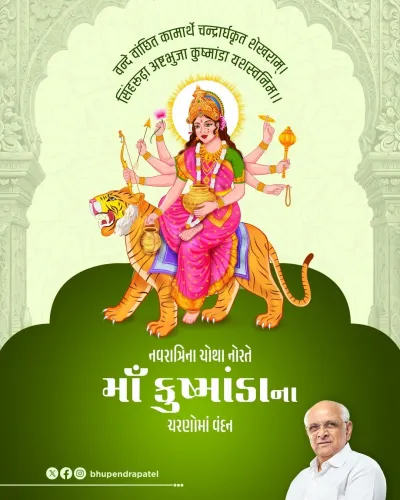
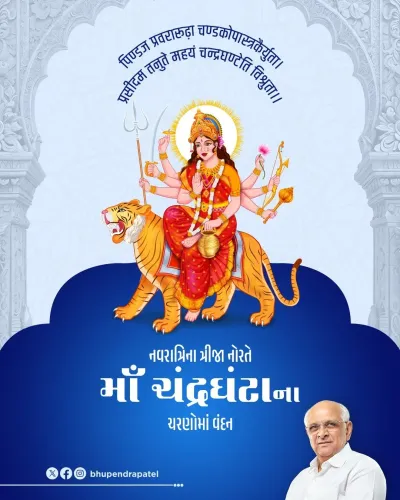
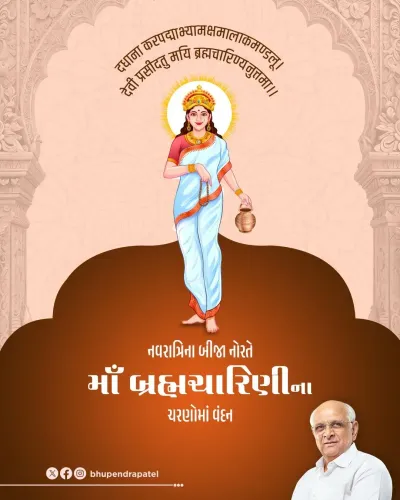
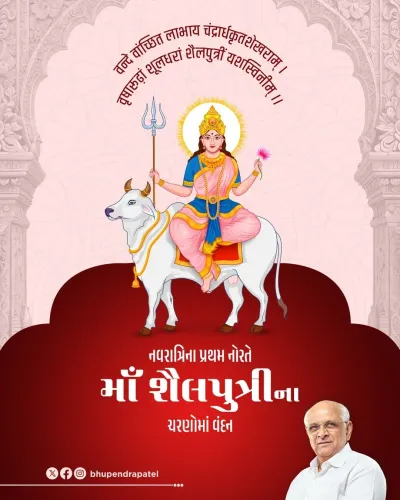
CM Bhupendra Patel Greets Gujarat on Navratri's Seventh Day
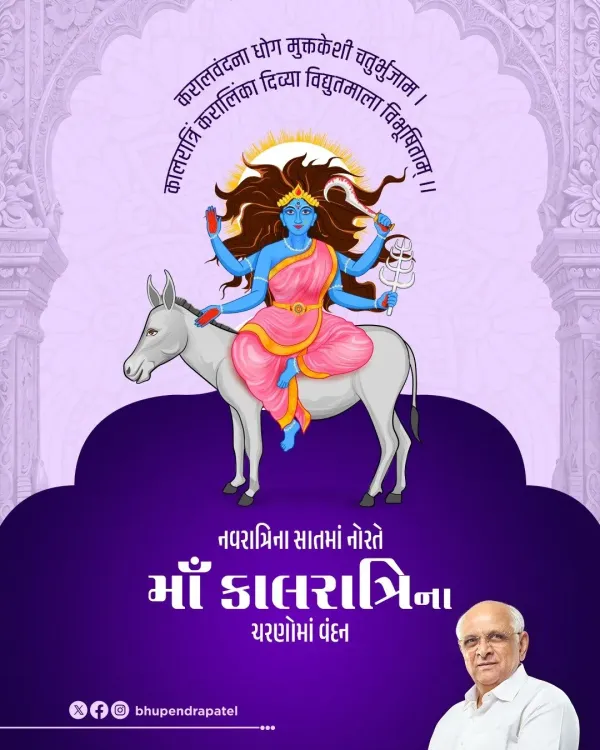
Synopsis
Gujarat Chief Minister Bhupendra Patel offered devotional greetings on the seventh night of Navratri 2026, invoking Maa Kaalratri and praying for the removal of suffering, illness, and negativity from the lives of all people.
Key Takeaways
Gujarat CM Bhupendra Patel posted Navratri greetings on the seventh night, Saturday 17 October 2026 .
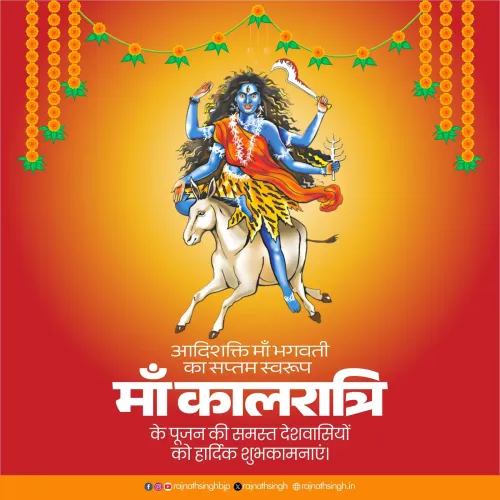
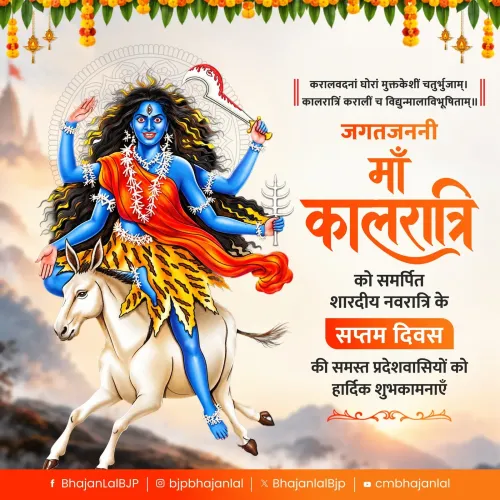
The message honours Maa Kaalratri , the seventh form of Goddess Durga, described as the destroyer of evil and dispeller of ignorance.
Patel prayed for all people to be freed from crisis, illness, and negativity, and blessed with happiness, peace, and fearlessness.
Navratri is observed with exceptional fervour in Gujarat , making such greetings a significant cultural moment for the state's electorate.
The message is part of Patel's tradition of issuing daily devotional greetings across all nine nights of Navratri.
On the seventh night of Navratri, Gujarat Chief Minister Bhupendra Patel offered devotional greetings to the faithful, invoking the blessings of Maa Kaalratri — the seventh of the nine forms of Goddess Durga — on Saturday, 17 October 2026.
Writing in Gujarati, the Chief Minister offered: 'નવરાત્રિના સાતમા નોરતે માઁ દુર્ગાના સપ્તમ સ્વરૂપ માઁ કાલરાત્રિના ચરણોમાં વંદન' — 'On the seventh night of Navratri, I bow at the feet of Maa Kaalratri, the seventh form of Maa Durga.' He described the goddess as the destroyer of evil, the remover of fear, and the dispeller of the darkness of ignorance.
A prayer to end suffering and bestow peace
Patel's message carried a specific prayer: that Maa Bhagwati destroy all forms of crisis, illness, and negativity from people's lives, and grant everyone happiness, peace, and fearlessness. He closed with the traditional invocation 'Jai Ambe' and a folded-hands gesture — a hallmark of these festival greetings.
In Hindu tradition, Maa Kaalratri is regarded as the most fierce avatar of Goddess Durga, associated with the annihilation of darkness and demonic forces. Navratri, the nine-night festival celebrated with particular fervour in Gujarat, dedicates each night to one of Durga's divine forms through worship, garba, and community gatherings.
Gujarat's CM and the rhythm of Navratri messages
For Indian state leaders, and especially for Gujarat's chief ministers, Navratri is both a deeply personal and publicly prominent occasion. Patel, a BJP leader known for consistent cultural engagement, has maintained the tradition of daily festival greetings across all nine nights. The pattern reflects the broader role elected officials play in marking religious calendars — a form of outreach that resonates strongly with Gujarat's devout electorate.
As Navratri approaches its final two nights, the energy of worship across Gujarat only intensifies — and the Chief Minister's daily invocations move in step with it.
Point of View
Low-key form of cultural connectivity with voters. The messages carry no policy content, but their consistency signals the party's positioning as custodian of Hindu tradition — particularly potent in Gujarat, where Navratri is a mass cultural event. For Patel personally, these greetings reinforce a persona rooted in piety and accessibility rather than combative politics. Across nine nights, the cumulative effect is a soft but deliberate narrative of governance aligned with devotion.
NationPress
17 Oct 2026
Frequently Asked Questions
What did Gujarat CM Bhupendra Patel say on the seventh day of Navratri 2026?
CM Bhupendra Patel posted a devotional message in Gujarati on 17 October 2026 honouring Maa Kaalratri, the seventh form of Goddess Durga, and praying that she destroy all crisis, illness, and negativity while granting happiness, peace, and fearlessness to everyone.
Who is Maa Kaalratri and why is she worshipped on Navratri's seventh day?
Maa Kaalratri is the seventh of the nine forms of Goddess Durga venerated during Navratri. She is regarded as the destroyer of evil and the remover of fear and ignorance, and is traditionally worshipped on the seventh night of the festival.
How is Navratri celebrated in Gujarat?
Navratri is one of Gujarat's most prominent festivals, marked by nine nights of worship dedicated to the forms of Goddess Durga, along with large community garba gatherings, prayers, and fasting. It is observed with particular energy across the state.
Does Bhupendra Patel post Navratri greetings every year?
Yes, CM Bhupendra Patel follows the tradition of posting daily devotional greetings across all nine nights of Navratri, reflecting both personal piety and consistent cultural engagement with Gujarat's electorate.
What does 'Jai Ambe' mean?
'Jai Ambe' is a traditional Gujarati and Hindi invocation meaning 'Victory to Amba' — a popular name for Goddess Durga. It is commonly used to close devotional messages and prayers during Navratri.