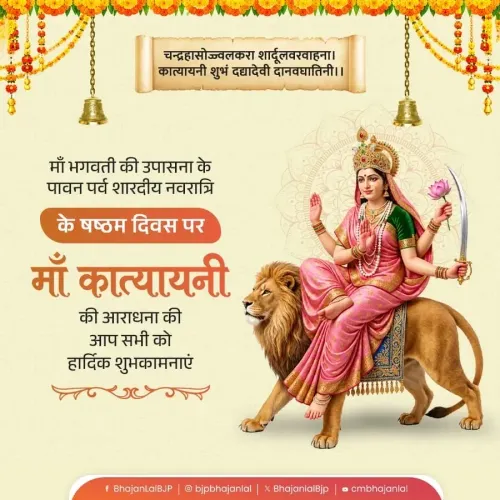
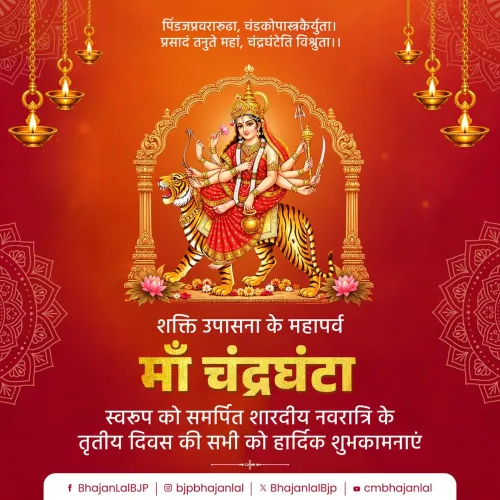
CM Bhajan Lal Sharma Pays Tribute on Navratri's Seventh Day
Synopsis
Rajasthan Chief Minister Bhajan Lal Sharma offered prayers to Maa Kalratri on the seventh day of Navratri, sharing a Sanskrit verse and seeking her blessings of strength, courage, and good health for all devotees.
Key Takeaways
CM Bhajan Lal Sharma posted devotional greetings for Navratri's seventh day on 17 October 2026 .
The message honoured Maa Kalratri , the seventh and most ferocious form of Goddess Durga.
CM Sharma invoked blessings of 'immense strength, courage, and excellent health' for all devotees.
He opened the post with a classical Sanskrit verse describing Maa Kalratri's fearsome and powerful form.
The festival concludes with Vijayadashami , the day that marks the triumph of good over evil.
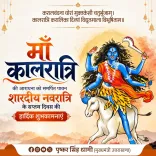
On the seventh day of Navratri, Rajasthan Chief Minister Bhajan Lal Sharma offered his reverence to Maa Kalratri — the fierce seventh form of Goddess Durga — invoking her blessings of strength, courage, and good health for all devotees across the state.
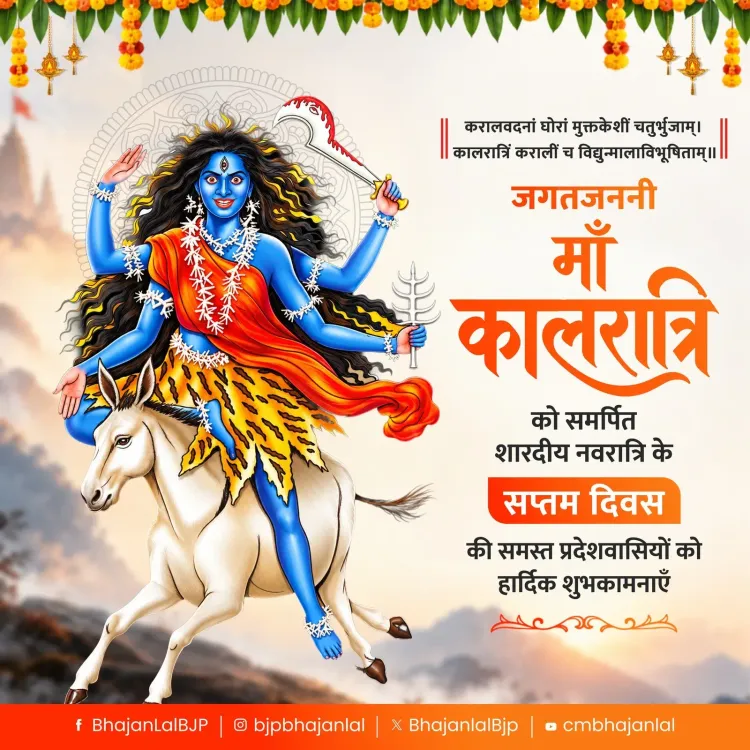
Sharing a devotional Sanskrit verse, CM Sharma wrote: 'करालवदनां घोरां मुक्तकेशीं चतुर्भुजाम्। कालरात्रिं करालीं च विद्युन्मालाविभूषिताम्॥' — ['She of the fearsome face, terrible and four-armed, with flowing hair; Kalratri, the fierce one, adorned with a garland of lightning.'] He prayed that the goddess rid devotees of all troubles and shower them with immense power, courage, and excellent health.
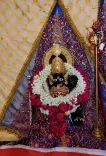
Maa Kalratri is regarded as the most ferocious among the nine manifestations of Goddess Durga worshipped during Navratri. She is traditionally depicted with a dark complexion, three eyes, and four arms, symbolising the destruction of evil and ignorance. Her worship on the seventh night is considered especially potent for protection and courage.
Navratri, the nine-night autumn festival celebrated widely across India and with particular fervour in Rajasthan, honours each of Durga's nine forms over successive days. Public figures and political leaders routinely mark each day's observance, keeping the devotional calendar at the centre of public life. The festival concludes with Vijayadashami, the day of victory over evil.
With two days of the festival remaining, the momentum of celebration — and the official acknowledgements from Rajasthan's government — will build toward that culminating moment.
Point of View
Especially for BJP leaders who emphasise Hindu cultural heritage as a governance identity. For CM Bhajan Lal Sharma, who took office in December 2023, such observances reinforce his administration's alignment with Rajasthan's deeply religious demographic. The choice to open with a classical Sanskrit shloka rather than a simple greeting signals a deliberate cultural register. As Vijayadashami approaches, the symbolic arc of Navratri — from invocation to victory — offers leaders a natural platform for aspirational public messaging.
NationPress
17 Oct 2026
Frequently Asked Questions
Who is Maa Kalratri and why is she worshipped on the seventh day of Navratri?
Maa Kalratri is the seventh form of Goddess Durga, worshipped on the seventh night of Navratri. She represents the fierce power that destroys evil and ignorance, and her worship is considered especially potent for protection and courage.
What did Rajasthan CM Bhajan Lal Sharma post for Navratri Saptami 2026?
CM Sharma shared a Sanskrit verse describing Maa Kalratri's fearsome form and prayed that she free all devotees from troubles while blessing them with strength, courage, and good health.
When does Navratri 2026 end?
The nine-night Navratri festival concludes with Vijayadashami, which falls two days after the Saptami (seventh day) observance on 17 October 2026.
Which goddess is worshipped on which day of Navratri?
Each of the nine days of Navratri is dedicated to one of the nine forms of Goddess Durga. The seventh day is dedicated to Maa Kalratri, the most powerful and fierce manifestation.
Why do Indian politicians post Navratri greetings on social media?
Publicly acknowledging major Hindu festivals is a long-standing practice among Indian political leaders. It signals cultural alignment with a large devotee base and keeps elected officials visible during significant community observances.