CM Bhupendra Patel Offers Prayers on Navratri's Fifth Day
Synopsis
Gujarat Chief Minister Bhupendra Patel greeted citizens on Navratri's fifth day, invoking Maa Skandamata as a symbol of maternal love and praying for peace and wisdom to prevail across all lives.
Key Takeaways
Gujarat CM Bhupendra Patel posted Navratri greetings on 15 October 2026 , the festival's fifth day.
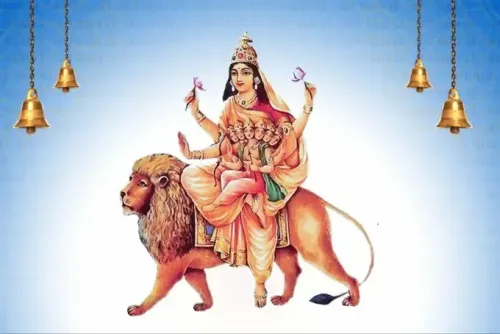
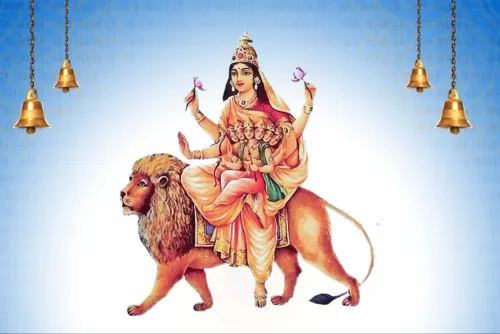
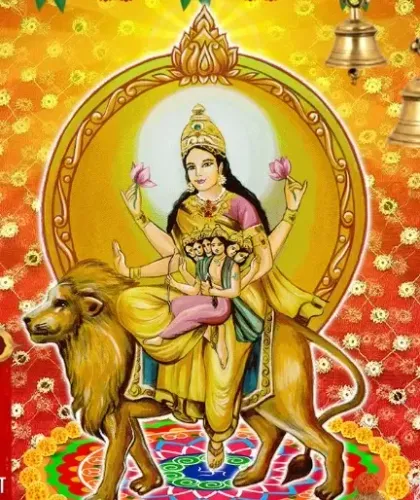
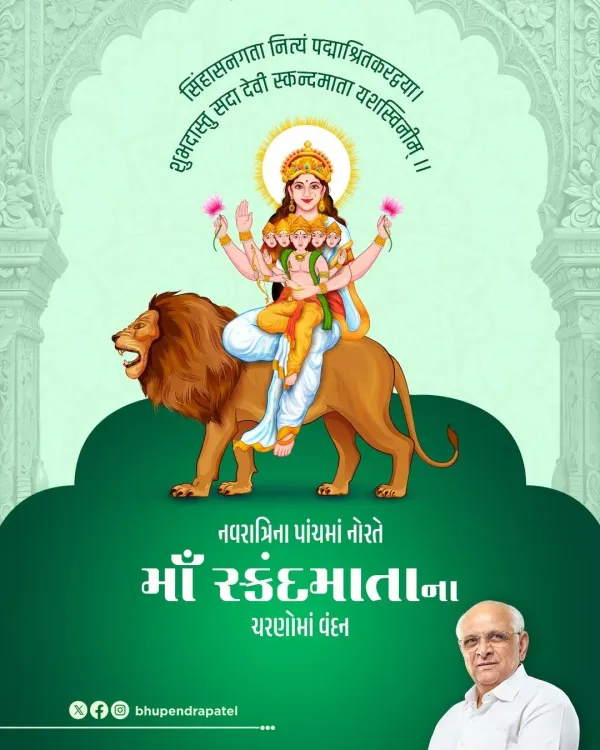
He offered prayers to Maa Skandamata , the fifth form of Goddess Durga, worshipped on the fifth night of Navratri.
His message described Skandamata as the 'supreme symbol of affection, compassion, and maternal love.' He prayed for happiness, peace, and the 'light of knowledge and purity' to dispel ignorance.
Gujarat has one of India's most vibrant Navratri traditions, including large-scale Garba celebrations.
On the fifth day of Navratri, Gujarat Chief Minister Bhupendra Patel offered his devotional greetings to Maa Skandamata — the fifth form of Goddess Durga — praying for peace, wisdom, and the light of knowledge to fill every household.
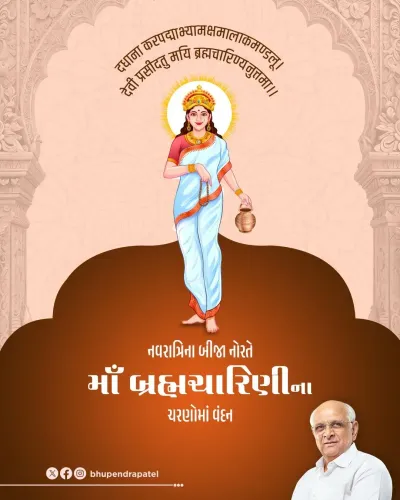
Posting in Gujarati on Thursday, 15 October 2026, the Chief Minister wrote: 'માઁ સ્કંદમાતા વાત્સલ્ય, કરુણા અને મમતાનું પરમ પ્રતીક છે' — 'Maa Skandamata is the supreme symbol of affection, compassion, and maternal love' — and prayed that Maa Bhagwati may spread happiness and peace in all lives, dispel the darkness of ignorance, and let the light of knowledge and purity prevail.
Skandamata and the Fifth Night of Navratri
Across India's nine-night Navratri festival, each day is devoted to a distinct form of Goddess Durga. Skandamata — literally 'the mother of Skanda (Lord Kartikeya)' — is revered on the fifth day as the embodiment of a mother's unconditional love. Devotees believe her worship bestows clarity of mind and spiritual merit, twin themes the Chief Minister's prayer explicitly echoed.
Gujarat's Deep Navratri Tradition
Gujarat holds a uniquely central place in Navratri's cultural map. The state's Garba and devotional performances draw millions every year, and public figures participating in or acknowledging the festival is a long-standing, deeply felt tradition — not mere political optics. For Chief Minister Patel and the BJP, connecting governance with Gujarat's spiritual identity has been a consistent part of public communication, especially during the nine nights that effectively bring the state to a joyful standstill.
As Navratri moves toward its final days, the energy across Gujarat's towns and cities only deepens — each night's Garba circles spinning a little faster, each prayer carrying the cumulative weight of five nights of devotion.
Point of View
Where Navratri carries deep civic as well as religious weight, such outreach carries amplified resonance. The choice of Skandamata's themes — maternal love, dispelling ignorance — allows the messaging to cross the line from purely religious to broadly aspirational. For a government that emphasises development alongside cultural rootedness, these nine nights offer a recurring, low-friction communication moment.
NationPress
15 Oct 2026
Frequently Asked Questions
Who is Maa Skandamata and why is she worshipped on the fifth day of Navratri?
Maa Skandamata is the fifth of the nine forms of Goddess Durga, revered as the mother of Lord Skanda (Kartikeya). She is worshipped on the fifth day of Navratri and is considered the symbol of maternal love, compassion, and the power of nurturing.
What did Gujarat CM Bhupendra Patel post for Navratri 2026?
CM Bhupendra Patel posted a Gujarati-language greeting on 15 October 2026, offering prayers to Maa Skandamata and seeking her blessings for peace, happiness, and the spread of knowledge and purity in every life.
Why is Navratri especially significant in Gujarat?
Gujarat is regarded as one of India's cultural heartlands for Navratri, famous for its Garba dance tradition. The nine-night festival draws millions of participants and is deeply woven into the state's social and cultural fabric.
What are the nine forms of Goddess Durga celebrated during Navratri?
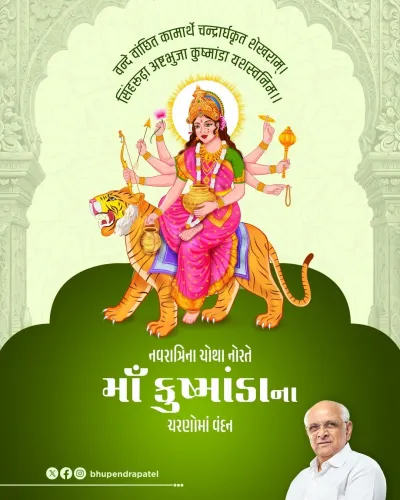
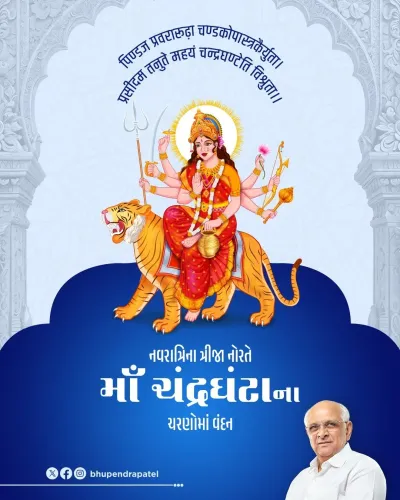
The nine forms — Navaratri — are Shailaputri, Brahmacharini, Chandraghanta, Kushmanda, Skandamata, Katyayani, Kalaratri, Mahagauri, and Siddhidatri, each worshipped on successive nights of the festival.
Is it common for Indian politicians to post Navratri greetings?
Yes. State leaders and national politicians across party lines routinely issue greetings during Navratri and other major Hindu festivals, a long-standing practice of acknowledging culturally significant observances in public life.