Anurag Thakur hails Sanatan Sanskaram Ramleela as living cultural legacy
Synopsis
BJP MP Anurag Thakur marked the Dussehra season on 17 October 2026 by lauding Sanatan Sanskaram's Ramleela as a living cultural mission, urging youth to draw inspiration from Lord Ram's values of sacrifice, duty and social harmony.
Key Takeaways
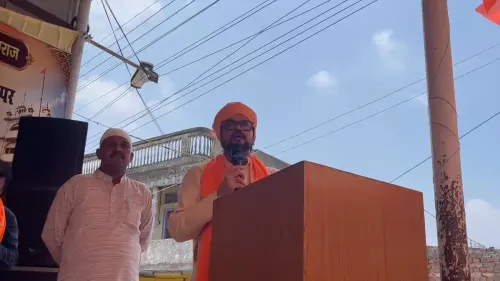
BJP MP Anurag Thakur posted on 17 October 2026 praising a Ramleela organised by Sanatan Sanskaram .
He called the event an 'unparalleled attempt' to transmit Lord Ram's life philosophy to future generations.
Thakur highlighted three lessons from Ram's life: upholding dignity in adversity, dedication to duty, and building social harmony.
He described the Ramleela not as mere religious spectacle but as a 'living message' of truth, dharma and ideal values.
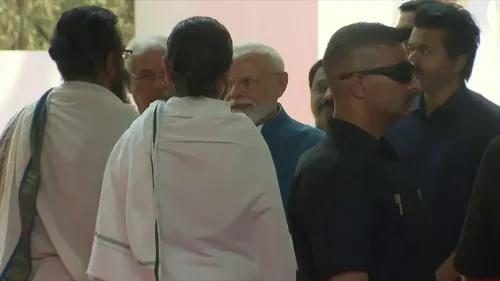
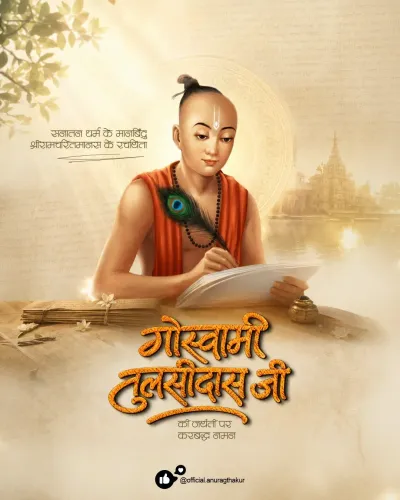
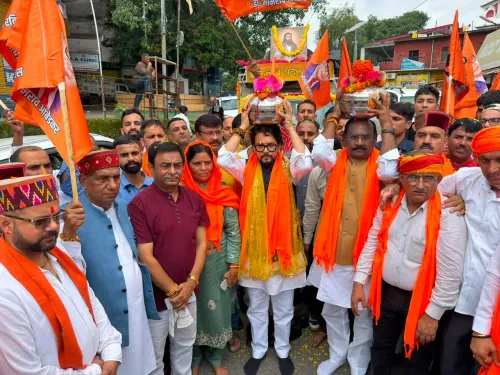
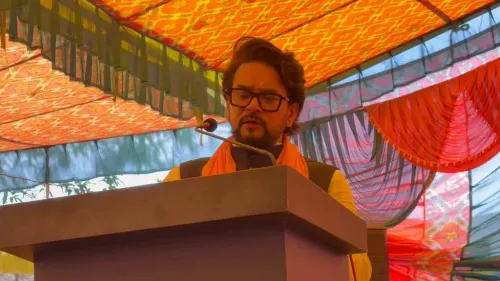
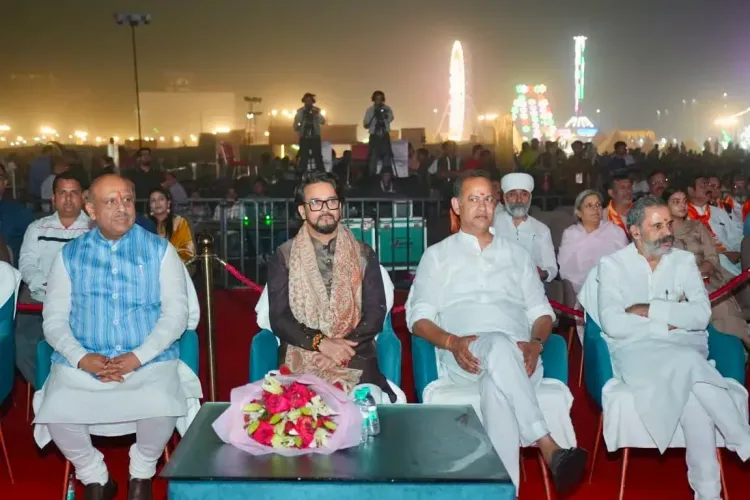
The post was accompanied by four images from the event and closed with Jai Shri Ram , framing it as both a cultural and moral call.
As the Dussehra season fills India's evening skies with the glow of torches and the sound of conch shells, BJP MP Anurag Thakur turned to Lord Ram's life as a compass for contemporary living — saluting a Ramleela staged by Sanatan Sanskaram as an 'unparalleled effort' to transmit India's civilisational values to the next generation.
In a post on X on Saturday, 17 October 2026, Thakur wrote in Hindi: 'Tyaag, tap aur sanyam se bhare Maryada Purushottam ke jeevan se hamein har paristhiti ka poore saamarthya se samna karne ki prerna milti hai' — 'The life of Maryada Purushottam, filled with sacrifice, penance and restraint, inspires us to face every situation with our full strength.' He described the Ramleela as not merely a religious occasion but 'a living message of truth, dharma, sacrifice, duty and ideal values of life.'
What Sanatan Sanskaram's Ramleela represents
Thakur's praise was directed at a production by Sanatan Sanskaram, an organisation mounting a Ramleela focused specifically on the life and philosophy of Lord Shri Ramchandra Ji Maharaj. He called it an 'unmatched attempt' (anupam prayas) to help future generations absorb the life philosophy of Maryada Purushottam — the 'upholder of righteousness' — and draw inspiration from it.
The Ramleela tradition itself is one of India's oldest living performance arts — a dramatic retelling of the Ramayana enacted across thousands of towns and villages, particularly in the weeks leading up to Dussehra, when the symbolic burning of Ravana's effigy marks good's triumph over evil. What distinguishes this staging, in Thakur's framing, is its deliberate pedagogical intent: not just spectacle, but a cultural classroom.
Ram as a template for public and private conduct
Thakur drew three specific lessons from Ram's life: maintaining maryada (dignity and propriety) even in adversity; remaining dedicated to one's duties; and building sadbhaav (harmony) and ethics in society. These are not abstract ideals — in the context of Indian public discourse, invoking them is a deliberate call to link everyday civic behaviour to a moral tradition far older than the constitution.
He closed with a direct appeal to cultural continuity: 'Such religious and cultural events keep our glorious traditions alive and connect the new generation to Indian culture and values.' The post was accompanied by four images from the event and signed off with Jai Shri Ram 🚩🙏.
For the Hamirpur MP, who has long used his platforms to amplify cultural and heritage messaging, the Ramleela post sits within a well-established pattern: bridging religious tradition and national identity in the festive window between Navratri and Diwali — when the audience for such messaging is at its annual peak. Whether it reads as cultural revival or political signalling, the stage is set and the message is unmistakable.
Point of View
He elevates a local cultural programme into a civilisational statement. This is consistent with the BJP's broader project of making Hindu cultural continuity a mainstream, aspirational identity — not just a religious sentiment. The framing of Ramleela as a 'cultural classroom' for youth is particularly pointed, given ongoing national debates around history, heritage and identity in education.
NationPress
17 Oct 2026
Frequently Asked Questions
What did Anurag Thakur say about Ramleela?
Anurag Thakur praised a Ramleela by Sanatan Sanskaram as an 'unparalleled effort' to help future generations absorb Lord Ram's life philosophy, calling it a living message of truth, dharma and ideal values rather than merely a religious event.
Who organised the Ramleela Anurag Thakur mentioned?
The Ramleela was organised by Sanatan Sanskaram, a group that staged a performance based on the life and philosophy of Lord Shri Ramchandra Ji Maharaj.
What is Maryada Purushottam?
Maryada Purushottam is a revered Sanskrit title meaning 'upholder of all moral boundaries,' applied to Lord Ram in Hindu tradition to describe his embodiment of dharma, dignity and righteous conduct.
Why do BJP leaders often post about Ramleela during Dussehra?
BJP leaders frequently share Ramayana-themed messages during the Dussehra and Navratri season to highlight cultural continuity and link contemporary public life to classical Indian moral teachings, a recurring pattern in the party's cultural messaging.
What lessons did Anurag Thakur draw from Lord Ram's life?
Thakur highlighted three lessons: maintaining dignity and propriety even in adversity, remaining dedicated to one's duties, and working to establish social harmony and ethics in society.