CM Saini: BJP win in Punjab will push out drug traffickers
Synopsis
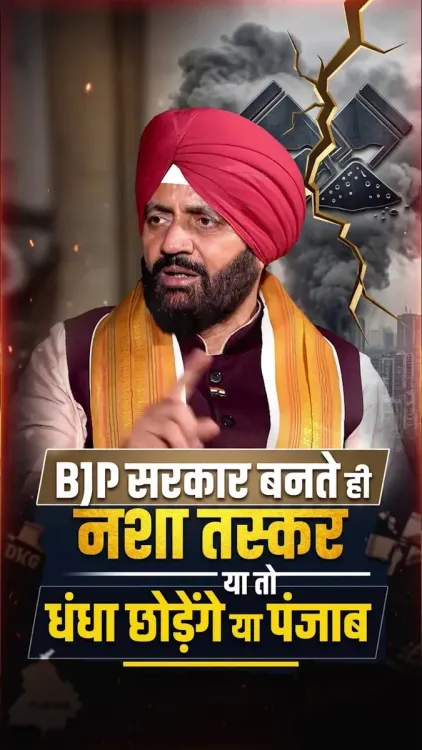
Haryana CM Nayab Singh Saini issued a pointed ultimatum on X: once BJP forms a government in Punjab, drug traffickers will either shut down or ship out. The statement sharpens BJP's law-and-order pitch along the drug-prone Punjab-Haryana border corridor ahead of any Punjab electoral contest.
Key Takeaways
Haryana CM Nayab Singh Saini posted a direct warning on 18 November 2026 : drug traffickers must leave their trade or leave Punjab if BJP comes to power.
The statement targets the Punjab-Haryana drug corridor , where narcotics routes from the Indo-Pakistan border have long challenged law enforcement in both states.
BJP has used anti-narcotics messaging as a governance-contrast tool against opposition-led Punjab for over a decade.
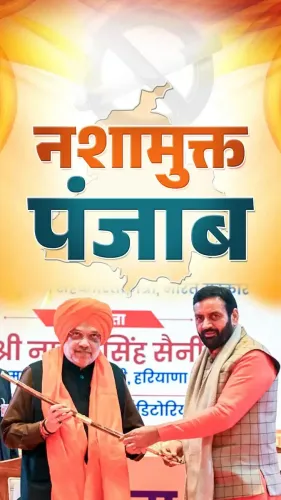
The Nasha Mukt Bharat Abhiyan , launched by the central government in 2020 , provides the national policy backdrop for such state-level rhetoric.
Durable enforcement on the corridor is widely seen to require inter-state coordination, central agency involvement, and sustained de-addiction funding — beyond any single government's declaration.
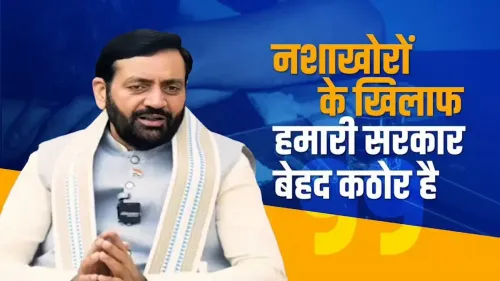
A blunt, six-word ultimatum — and a state border in the crosshairs. Haryana Chief Minister Nayab Singh Saini fired a sharp electoral salvo on Wednesday, 18 November 2026, warning drug traffickers that a BJP government in Punjab would leave them only two options: quit the trade, or quit the state.
Posting on X, Saini declared — 'BJP sarkaar bante hi nasha taskkar ya to dhanda chhodenge ya Punjab!' — 'The moment a BJP government is formed, drug traffickers will either abandon their trade or abandon Punjab!' The message was spare, combative, and aimed squarely at a region where the narcotics crisis has shadowed policy debate for more than a decade.The Punjab drug route and why Haryana keeps watching
Punjab and Haryana share a long, porous border, and narcotics enforcement has rarely been a tidy state-level affair. Drug routes running from the Indo-Pakistan border through Punjab have repeatedly spilled into Haryana, drawing border-area youth into cycles of addiction and trafficking. For BJP leaders in Haryana, that cross-border dynamic is a recurring political and administrative flashpoint.
The central government's Nasha Mukt Bharat Abhiyan, launched in 2020, gave the party a national scaffolding for anti-narcotics messaging. Haryana's BJP administration has periodically layered state-level enforcement drives on top of that campaign, announcing intensified border checks and anti-narcotics sweeps — particularly during election cycles.
Saini's gambit: governance contrast as campaign weapon
Nayab Singh Saini took charge as Haryana Chief Minister in March 2024, succeeding Manohar Lal Khattar. The rhetorical pattern he is deploying is a familiar one for BJP leaders in the region: position the party as the decisive force on law-and-order, sharply contrasting their approach with that of the opposition-ruled Punjab government. The framing converts a persistent governance failure into a campaign promise — vote BJP, and enforcement follows immediately.
The post's compressed, almost cinematic phrasing — 'quit the trade or quit Punjab' — is built for shareability. It signals zero-tolerance policing to one audience, and credible electoral intent to another. Whether that intent translates into concrete joint operations or increased anti-narcotics funding will be the test that follows any change in power.
What serious enforcement would actually require
Rhetoric aside, analysts who track the Punjab-Haryana drug corridor note that durable results require more than state-level political will: coordinated intelligence-sharing between state police forces, central agencies, and border security; sustained funding for de-addiction infrastructure; and protection for witnesses and informers who expose trafficking networks. Any incoming government in Punjab would inherit an entrenched supply chain, not simply a policy vacuum.
Saini's post plants the BJP's flag firmly on that challenge — now the clock is ticking on whether the promise outlives the campaign trail.Point of View
Forcing voters to frame any upcoming Punjab election as a referendum on narcotics enforcement. The sharpness of the phrasing suggests a deliberate pre-campaign positioning rather than a reactive remark. Historically, such declarations build early narrative momentum but put the party on the hook for measurable enforcement outcomes once in office. The real political risk is the gap between slogan and delivery: Punjab's drug networks are deeply entrenched, and a BJP government that fails to show rapid, visible results would hand opposition parties a potent counter-narrative.
NationPress
18 Nov 2026
Frequently Asked Questions
What did Haryana CM Nayab Singh Saini say about Punjab drug traffickers?
Saini declared that once a BJP government is formed in Punjab, drug traffickers will have only two choices — abandon their business or abandon Punjab. He posted the warning on X on 18 November 2026.
Why is Punjab's drug problem linked to Haryana?
Punjab and Haryana share a long border, and drug trafficking routes running from the Indo-Pakistan frontier through Punjab frequently extend into Haryana, making enforcement a cross-state concern for both administrations.
What is the Nasha Mukt Bharat Abhiyan?
Nasha Mukt Bharat Abhiyan is a nationwide anti-drug campaign launched by the central government in 2020, targeting drug abuse and trafficking across India. BJP-governed states, including Haryana, have used it as a framework for state-level enforcement drives.
Who is Nayab Singh Saini?
Nayab Singh Saini is the Chief Minister of Haryana and a BJP leader. He took office in March 2024, succeeding Manohar Lal Khattar.
What would effective anti-drug enforcement in Punjab actually require?
Experts point to the need for coordinated intelligence-sharing between state police forces and central agencies, enhanced border security, sustained de-addiction infrastructure funding, and witness protection — measures that go well beyond any single election promise.