CM Bhajan Lal meets Amit Shah, discusses Rajasthan law-order
Synopsis
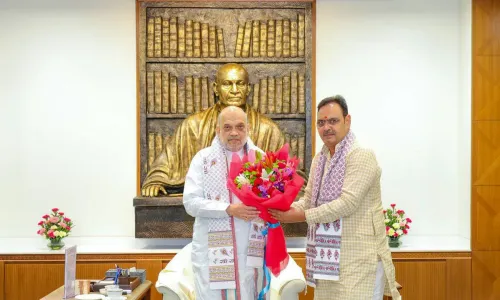
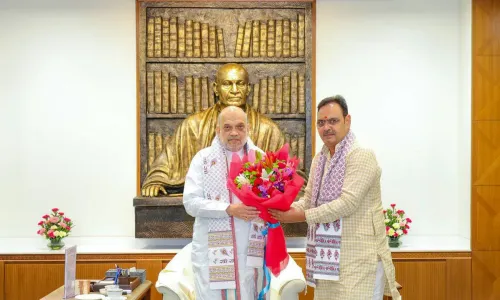
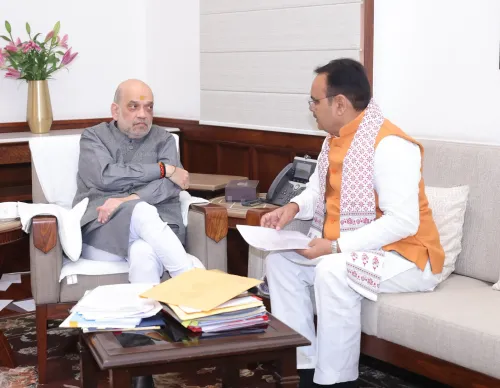
Rajasthan Chief Minister Bhajan Lal Sharma met Union Home Minister Amit Shah in New Delhi on November 18, discussing law-and-order strengthening, state development, and welfare scheme delivery — reinforcing the BJP's direct centre-state coordination model.
Key Takeaways
Bhajan Lal Sharma met Union Home Minister Amit Shah in New Delhi on November 18, 2026 .
Discussions covered strengthening Rajasthan's law-and-order framework and accelerating overall state development.
Effective implementation of public welfare schemes and various public-interest subjects were also on the agenda.
Sharma credited Amit Shah's 'continuous support' for giving momentum to Rajasthan's development goals.
The BJP government in Rajasthan has been in office since December 2023 , making centre-state alignment a key governance tool.
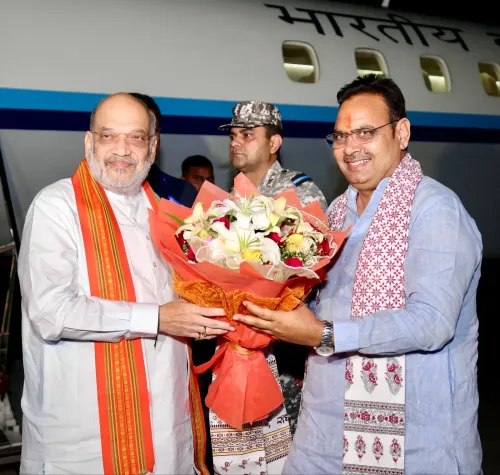
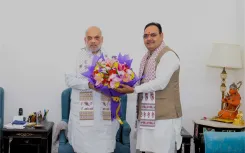
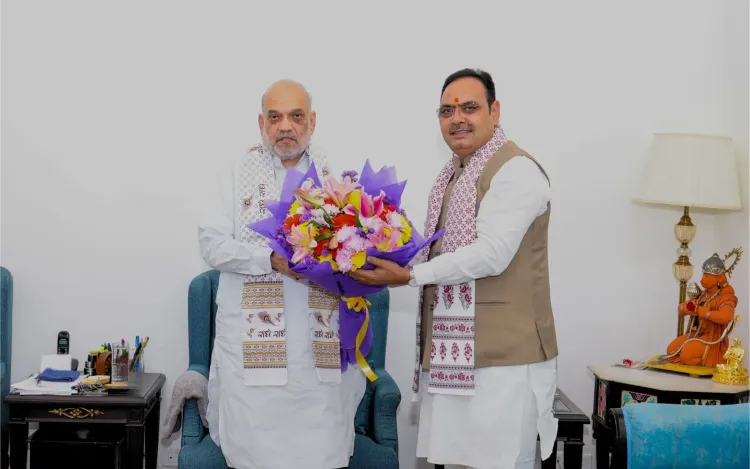
Rajasthan Chief Minister Bhajan Lal Sharma travelled to New Delhi on Wednesday, November 18 to hold a face-to-face meeting with Union Home and Cooperation Minister Amit Shah — a sit-down that placed Rajasthan's security agenda and welfare delivery squarely on the capital's table.
Sharma described the meeting as a warm, guided exchange — aatmeeya bhet (a heartfelt meeting) — during which both leaders discussed strengthening the state's law-and-order framework, accelerating Rajasthan's overall development, and ensuring the effective roll-out of public welfare schemes. 'With the Home Minister's continuous support, our efforts to take Rajasthan to new heights of development are receiving steady strength,' Sharma wrote.
Centre-state security coordination at the heart of the meeting
Meetings between BJP-governed chief ministers and the Union Home Minister are a standing feature of the party's federal governance model — a direct channel through which states align on internal-security priorities, police modernisation, and centrally-sponsored scheme implementation. For Rajasthan, which has been under BJP rule since December 2023, such coordination carries particular weight as the state works to establish its law-and-order credentials.
Amit Shah, as the minister who oversees both national security architecture and the cooperative sector, sits at the intersection of two of the state's stated priorities: a safer Rajasthan and a faster disbursal of welfare benefits. The post's reference to 'various public-interest subjects' signals that the conversation ranged across departments, even if specific outcomes remain to be formally announced.
Bhajan Lal Sharma's governance pitch at the two-year mark
Sharma was sworn in as Chief Minister in December 2023 following the BJP's assembly-election victory in Rajasthan. As his government approaches its third year, public reassurance on law and order and welfare delivery remains central to the administration's public narrative. A direct meeting with Shah — rather than a routine bureaucratic exchange — signals that the state is seeking active central backing, not just procedural coordination.
Rajasthan's size and population density make it one of the larger tests of centre-state policy alignment in western India, with its state police force, border districts, and a substantial beneficiary base for central welfare programmes all demanding sustained attention from both Jaipur and New Delhi.
Watch for follow-up announcements from the state government on police modernisation steps or fresh welfare-scheme drives — the clearest downstream signals that Wednesday's meeting translated into concrete operational decisions.
Point of View
Complete with photographs, is as much governance signalling as it is administrative coordination. Whether concrete outcomes emerge — police modernisation funds, scheme targets, security deployments — will determine whether Wednesday's engagement was strategic optics or a genuine policy inflection point.
NationPress
18 Nov 2026
Frequently Asked Questions
Why did Rajasthan CM Bhajan Lal Sharma meet Amit Shah in Delhi?
Sharma met Union Home Minister Amit Shah in New Delhi on November 18, 2026, to discuss strengthening Rajasthan's law-and-order situation, accelerating state development, and ensuring effective delivery of public welfare schemes.
What was discussed between Bhajan Lal Sharma and Amit Shah?
The two leaders discussed Rajasthan's law-and-order framework, overall development priorities, the implementation of welfare schemes, and various other public-interest subjects, according to the Chief Minister's post.
When did Bhajan Lal Sharma become Chief Minister of Rajasthan?
Bhajan Lal Sharma was sworn in as Chief Minister of Rajasthan in December 2023 after the BJP won the state assembly elections.
How often do BJP chief ministers meet the Union Home Minister?
Meetings between BJP-governed state chief ministers and Union Home Minister Amit Shah are a routine feature of the party's federal governance model, used to align on security, scheme implementation, and development priorities.
What could follow from the Bhajan Lal-Amit Shah meeting?
Policy watchers are looking for state government announcements on police modernisation or welfare-scheme drives as the most direct signals that Wednesday's meeting produced concrete operational decisions.