CM Dhami Celebrates Igas with Bhailo Ritual at Official Residence
Synopsis
Uttarakhand CM Pushkar Singh Dhami marked the folk festival Igas at his official residence on November 18, performing the Bhailo ritual, worshipping Agni Devta, and urging citizens to preserve the state's Himalayan folk heritage for future generations.
Key Takeaways
Uttarakhand CM Pushkar Singh Dhami hosted an Igas celebration at his official residence on November 18, 2026 .
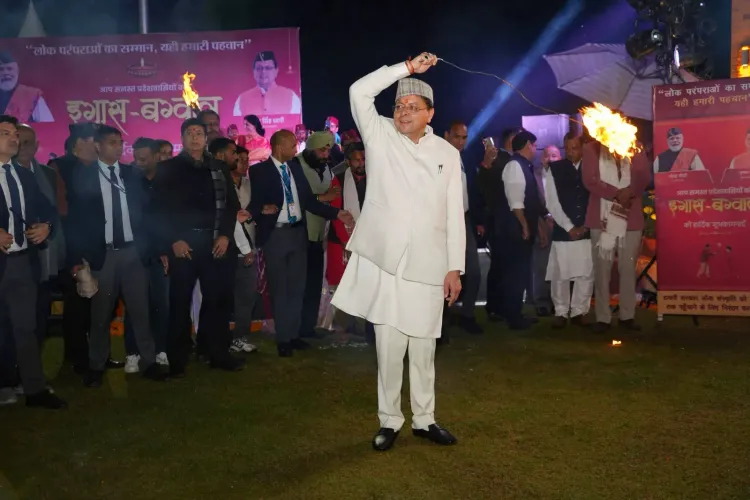
He personally played Bhailo — a traditional fire-swinging ritual — alongside dignitaries and residents.
Prayers were offered to Agni Devta (fire deity), a central element of the Igas observance.
Igas is a folk festival unique to Uttarakhand, celebrated approximately eleven days after Diwali.
Dhami called the festival a symbol of 'folk culture, folk faith, and staying connected to our roots' and urged preservation of these traditions for the next generation.
The event was documented with eight photographs shared on social media.
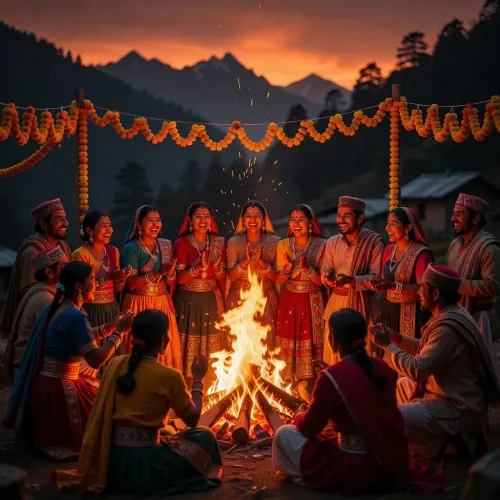
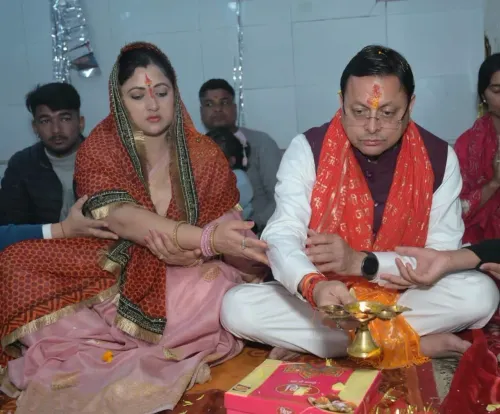
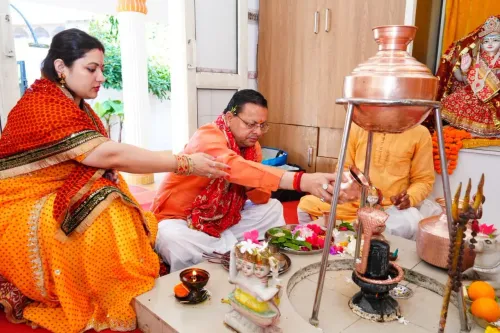
Firelight, folk songs, and the warmth of an ancient Himalayan tradition filled the official residence of Uttarakhand Chief Minister Pushkar Singh Dhami on Wednesday, November 18, as he hosted a public celebration of Igas — one of the state's most cherished folk festivals — and offered prayers to Agni Devta (the fire deity) alongside residents and dignitaries.
Dhami shared the occasion in Hindi, writing: 'भैलो की रोशनी, लोकगीतों की गूंज और पारंपरिक उल्लास हमारी विशिष्ट सांस्कृतिक पहचान को जीवंत बनाते हैं' — 'The glow of Bhailo, the resonance of folk songs, and the joy of tradition keep our distinct cultural identity alive.' He extended warm wishes to the people of Uttarakhand and prayed for the happiness, prosperity, and well-being of every resident of the state.
What Igas Is — and Why It Endures
Igas is a traditional folk festival unique to Uttarakhand, observed with the lighting of fires, the playing of Bhailo — a ritual involving firebrands swung in circular arcs — and devotional worship of Agni Devta. It is celebrated roughly eleven days after Diwali, rooted in a legend that news of Lord Ram's return reached the hills later than the plains. That delayed celebration became its own beloved tradition, a marker of Uttarakhand's distinct cultural identity within the broader north Indian festive calendar.
Dhami called the festival 'a symbol of our rich folk culture, folk faith, and staying connected to our roots,' and stressed that preserving these traditions and passing them to the next generation is a collective responsibility. It is a sentiment that carries real weight in a Himalayan state where migration to cities has long tested the continuity of local customs.
Dhami's Cultural Stewardship Signal
Chief ministers across India routinely participate in regional festivals to affirm local identity — but Dhami's framing went beyond ceremonial attendance. By hosting the event at his official residence and personally playing Bhailo alongside residents, he positioned the state government as an active custodian of Uttarakhand's folk heritage, not merely a spectator. The occasion drew dignitaries as well as ordinary citizens, blending official symbolism with community celebration.
The post was accompanied by eight photographs capturing the firelit gathering, offering a visual record of a festival that rarely receives the national spotlight it arguably deserves. Whether this signals a broader push — documentation drives, tourism promotion, or formal heritage recognition for Uttarakhand's folk calendar — remains to be watched in the months ahead.
For now, the flames of Bhailo burned bright at the Chief Minister's door, and an ancient tradition proved it still has the power to bring a hillside state together.
Point of View
He reinforces the party's 'son of the soil' positioning ahead of any future electoral cycle. The broader pattern — state governments reclaiming regional festivals as living heritage rather than tourist curiosities — reflects a nationwide shift in how Indian political leaders approach sub-national cultural identity. For Uttarakhand specifically, where urbanisation and out-migration threaten the continuity of Kumaoni and Garhwali folk practices, the Chief Minister's visible participation sends a signal that official patronage of these traditions is a governance priority, not merely a photo opportunity.
NationPress
18 Nov 2026
Frequently Asked Questions
What is Igas festival in Uttarakhand?
Igas is a traditional folk festival unique to Uttarakhand, celebrated approximately eleven days after Diwali. Legend holds that news of Lord Ram's return reached the hills later than the plains, so the Himalayan communities held their own delayed celebration. The festival features the Bhailo ritual — swinging firebrands in circular patterns — and worship of Agni Devta (the fire deity), accompanied by folk songs and community gatherings.
What is Bhailo in the Igas festival?
Bhailo is the central ritual of Igas in which participants swing lit firebrands or torches in circular arcs, creating dramatic patterns of light. It is both a form of worship of the fire deity and a communal celebration that has been practised for generations in the hills of Uttarakhand.
Why did CM Dhami celebrate Igas at his official residence?
Chief Minister Pushkar Singh Dhami hosted an Igas event at his official residence in Dehradun on November 18, 2026, to publicly honour the folk festival and affirm the state government's commitment to preserving Uttarakhand's traditional cultural heritage. He joined residents and dignitaries in the Bhailo ritual and prayers to Agni Devta.
How is Igas different from Diwali in Uttarakhand?
While Diwali is the main pan-Indian festival of lights, Igas is celebrated roughly eleven days later and is specific to Uttarakhand's hills. It has its own distinct rituals, particularly the Bhailo fire practice and Agni Devta worship, and reflects a regional folk tradition separate from the mainstream Diwali celebration.
Who is Pushkar Singh Dhami?
Pushkar Singh Dhami is the Chief Minister of Uttarakhand and a BJP leader. He has held the position since 2021 and is known for his emphasis on the state's Himalayan culture and local identity alongside developmental governance.