CM Saini Signals Zero-Tolerance on Drug Menace in Haryana
Synopsis
Haryana Chief Minister Nayab Singh Saini on 8 June 2026 reaffirmed his government's zero-tolerance stance on drug abuse, posting a sharp declaration on X. The statement reflects sustained BJP-led state messaging on narcotics enforcement and aligns with the Central government's Nasha Mukt Bharat Abhiyan targeting vulnerable districts.
Key Takeaways
CM Nayab Singh Saini declared on 8 June 2026 that the Haryana government is 'extremely strict' against drug abusers and the drug trade.
Haryana borders Punjab and the NCR , making it vulnerable to narcotics transit and consumption in several districts.
The statement aligns with the Central government's Nasha Mukt Bharat Abhiyan , launched in 2020 , which targets 272 of India's most drug-affected districts including areas in Haryana.
BJP -governed states have adopted consistent zero-tolerance messaging on narcotics as part of a broader national pattern under the current political dispensation.
Policy watchers will monitor whether the declaration is followed by fresh enforcement drives, excise law amendments, or expanded de-addiction infrastructure in Haryana.
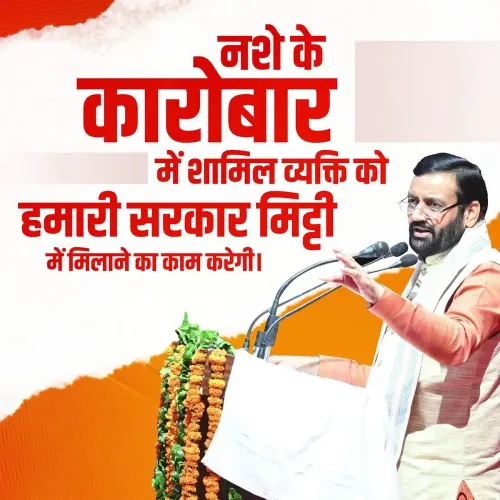
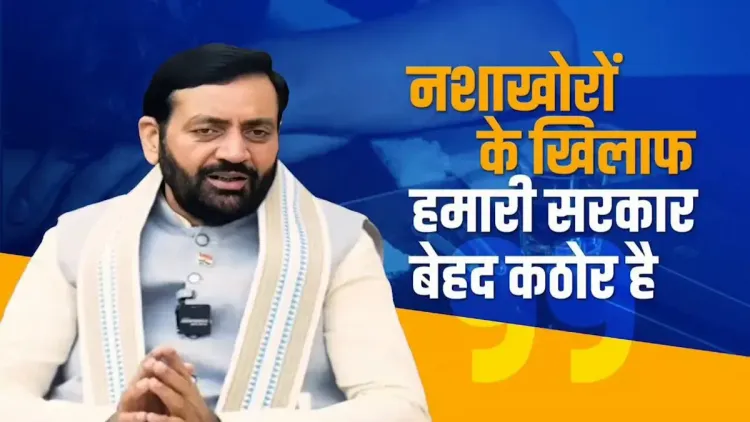
Haryana Chief Minister Nayab Singh Saini on Monday, 8 June 2026, declared that his government maintains an uncompromisingly strict stance against drug abusers and drug networks in the state, posting a sharp message on X that underscored the administration's enforcement-first posture on narcotics.
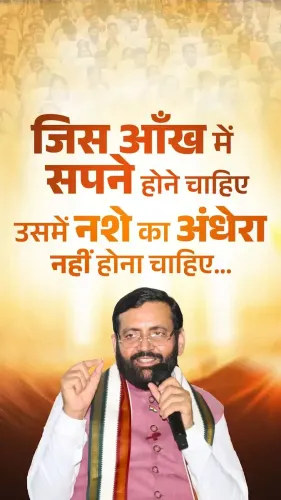
In his post, Saini stated in Hindi: 'नशाखोरों के खिलाफ हमारी सरकार बेहद कठोर है' — 'Our government is extremely strict against drug addicts and those involved in the drug trade.' The message, brief but pointed, signals the ruling BJP government's continued public commitment to zero-tolerance narcotics enforcement across Haryana.
Context
Haryana shares borders with Punjab — one of India's states most severely affected by the drug crisis — and with the National Capital Region of Delhi. This geographic proximity has historically made several Haryana districts vulnerable to the transit and consumption of narcotics, particularly synthetic drugs and opioids. State police and excise departments have periodically conducted enforcement drives targeting supply chains feeding into the state.
CM Saini, who assumed office in 2024, has consistently positioned the BJP-led state government as tough on crime and substance abuse, reflecting a broader national messaging pattern adopted by BJP-governed states.
Policy Backdrop
The statement aligns with the Nasha Mukt Bharat Abhiyan, the Central government's flagship anti-drug campaign launched in 2020, which targeted 272 of India's most drug-affected districts — including several in Haryana. The scheme combines community awareness, enforcement action, and rehabilitation outreach to address the problem from multiple angles.
At the state level, Haryana's approach under the current administration has emphasised supply-side disruption through police action alongside participation in centrally-sponsored de-addiction programmes. The Chief Minister's post reinforces the punitive dimension of this dual-track strategy.
Stakeholders and Impact
Haryana's youth remain the most directly affected demographic, with substance abuse linked to unemployment pressures and social vulnerabilities in border districts. Families in districts such as Sirsa, Fatehabad and Ambala have been among those most vocal about the need for sustained enforcement and rehabilitation infrastructure.
State police bear the primary operational burden of enforcement, while district-level health departments manage de-addiction and counselling services. Civil society groups working in rehabilitation have consistently called for a balance between punitive action and accessible treatment facilities to ensure those dependent on substances receive support rather than criminalisation.
What's Next
Observers will watch for follow-up policy action that gives operational substance to the Chief Minister's declaration — including potential announcements of fresh enforcement drives, amendments to state excise laws, or expansion of de-addiction and rehabilitation facilities in upcoming Haryana assembly sessions. The statement may also precede a formal government initiative or campaign rollout, given its emphatic and public nature. Whether the administration moves beyond messaging to announce measurable targets will determine the statement's longer-term political and policy weight.
Point of View
Often preceding or accompanying on-ground crackdowns. The real test will lie in whether this translates into measurable outcomes — arrests, seizures, de-addiction enrolments — or remains in the register of political messaging. For Haryana's youth and families in vulnerable districts, the demand is less for declarations and more for sustained, accountable delivery on both enforcement and rehabilitation.
NationPress
23 Oct 2026
Frequently Asked Questions
What did Haryana CM Nayab Singh Saini say about drugs?
On 8 June 2026, CM Saini posted on X stating that his government is 'extremely strict against drug addicts and those involved in the drug trade,' signalling a zero-tolerance enforcement stance in Haryana.
What is the drug problem in Haryana?
Haryana faces significant substance abuse challenges, particularly in districts bordering Punjab and Delhi, where narcotics transit routes have historically contributed to drug consumption among the state's youth population.
What is Nasha Mukt Bharat Abhiyan?
Nasha Mukt Bharat Abhiyan is a Central government campaign launched in 2020 targeting 272 of India's most drug-affected districts, combining awareness, enforcement, and rehabilitation to curb drug abuse. Several Haryana districts are covered under this scheme.
What action is the Haryana government taking against drugs?
The Haryana government under CM Nayab Singh Saini has maintained an enforcement-first approach, with state police conducting periodic anti-narcotics drives alongside participation in centrally-sponsored de-addiction programmes.
Which Haryana districts are most affected by drug abuse?
Districts such as Sirsa, Fatehabad, and Ambala, which lie close to Punjab and major transit routes, have been among the most reported as vulnerable to drug abuse in Haryana.