CM Saini Calls for Healthy, Educated, Drug-Free Haryana
Synopsis
Haryana Chief Minister Nayab Singh Saini on 11 July 2026 urged citizens to collectively build a healthy, educated, and drug-free society, reinforcing the state's alignment with national anti-narcotics and welfare outreach drives targeting youth and rural families.
Key Takeaways
CM Nayab Singh Saini posted on 11 July 2026 calling building a healthy, educated, and drug-free society the responsibility of all citizens.
The message addresses three pillars simultaneously: public health , education , and substance-abuse prevention .
Haryana borders Punjab and has documented challenges with youth drug abuse, making de-addiction a recurring policy theme.
The statement aligns with the Nasha Mukt Bharat Abhiyan , launched nationally in August 2020 by the Ministry of Social Justice and Empowerment.
Under BJP governance in Haryana , anti-narcotics messaging has consistently been paired with school-level awareness and health outreach.
Progress on de-addiction centres and school enrolment drives in Haryana will be key indicators of follow-through.
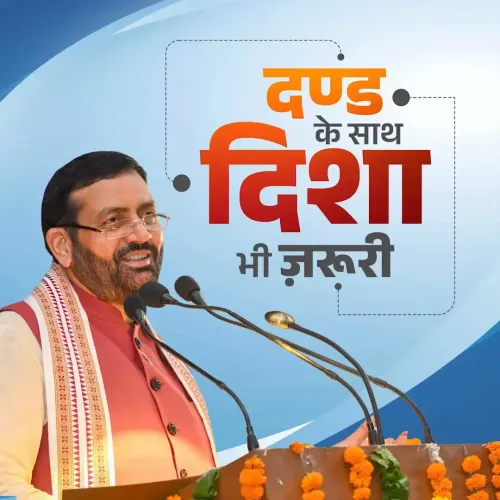
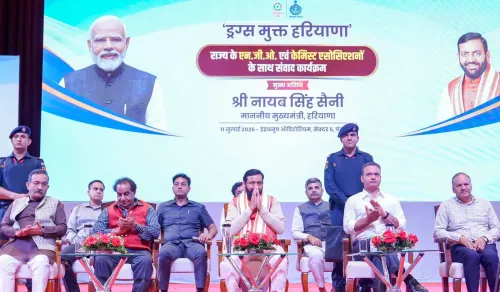
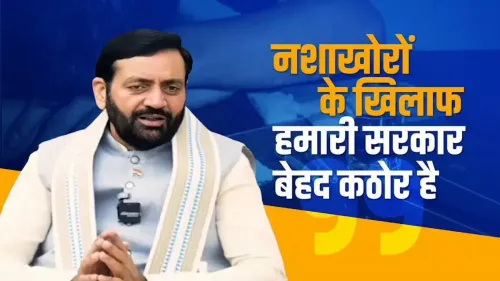
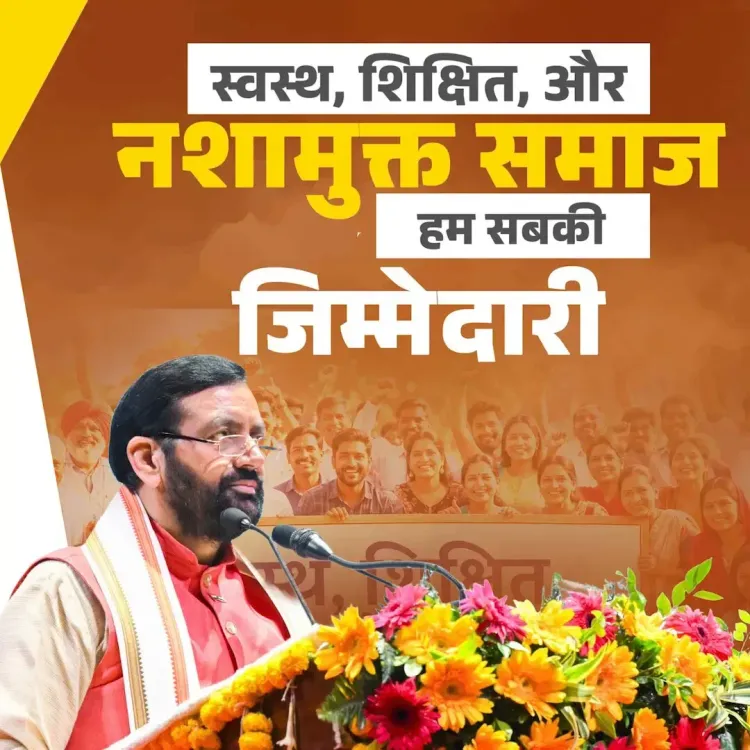
Haryana Chief Minister Nayab Singh Saini on Saturday, 11 July 2026 called on all citizens to take collective responsibility for building a society that is healthy, educated, and free from substance abuse, sharing the message on his official X account.
Context
In his post, Chief Minister Saini wrote: 'स्वस्थ, शिक्षित, और नशामुक्त समाज का निर्माण हम सबकी जिम्मेदारी है' — translated as 'Building a healthy, educated, and drug-free society is the responsibility of all of us.' The statement frames social welfare not as a government programme alone but as a shared civic obligation, addressing three pillars — health, education, and de-addiction — simultaneously.
Haryana, a northern state bordering Punjab, has faced documented challenges around drug abuse among its youth population, alongside persistent concerns about school dropout rates in rural areas. The Chief Minister's message resonates with ongoing state-level outreach on all three fronts.
Policy Backdrop
The post aligns with the Nasha Mukt Bharat Abhiyan, the national campaign launched in August 2020 by the Ministry of Social Justice and Empowerment to reduce drug demand and build treatment infrastructure across Indian states, including Haryana. The campaign targets awareness generation, community mobilisation, and strengthening of de-addiction centres.
Under BJP-led governments in Haryana, anti-narcotics messaging has been periodically linked to school-level awareness drives and health outreach programmes. Such statements have historically accompanied reviews of de-addiction centre capacity and education department campaigns, reflecting a pattern common across northern states.
Chief Minister Saini, who assumed office in 2024, has continued this governance approach, weaving together welfare themes — public health, literacy, and substance-abuse prevention — into a unified social responsibility narrative.
Stakeholders and Impact
The primary stakeholders of this message are Haryana's youth, students, and rural families — groups most vulnerable to the intersecting pressures of poor health access, educational gaps, and drug dependency. By addressing all three concerns in a single statement, the Chief Minister signals a whole-of-society approach rather than siloed departmental action.
Civil society organisations, school administrators, and district health officers working on ground-level implementation are implicitly called upon to reinforce this message. Community leaders and panchayat bodies in Haryana's rural districts are key intermediaries in translating such state-level messaging into local action.
What's Next
Observers will watch for follow-through in the form of state budget allocations for de-addiction infrastructure, school enrolment drives, and public health outreach during upcoming Haryana assembly sessions or annual budget presentations. Periodic progress reports on de-addiction centres and education campaigns will be indicators of whether this message translates into measurable policy movement.
As northern India continues to grapple with substance abuse among young people, CM Saini's framing of the issue as a collective social responsibility — rather than a law-enforcement problem alone — may signal a shift toward community-led prevention models in Haryana's welfare strategy.
Point of View
Education, and de-addiction as a single, shared civic responsibility is a deliberate rhetorical choice — it distributes accountability beyond the state apparatus to families, communities, and local institutions. This mirrors a broader BJP governance pattern in northern states of pairing welfare messaging with community-ownership language to build social buy-in for programmes that require ground-level participation. For Haryana specifically, the drug-free message carries electoral and social weight given the state's proximity to Punjab, where substance abuse has been a defining political issue. The statement is unlikely to represent a standalone post; it typically precedes or accompanies departmental reviews or campaign launches that give the message institutional teeth.
NationPress
10 Oct 2026
Frequently Asked Questions
What did Haryana CM Nayab Singh Saini say about drug-free society?
CM Nayab Singh Saini stated on 11 July 2026 that building a healthy, educated, and drug-free society is the collective responsibility of all citizens, posting the message on his official X account.
What is the Nasha Mukt Bharat Abhiyan and does it cover Haryana?
The Nasha Mukt Bharat Abhiyan is a national campaign launched in August 2020 by the Ministry of Social Justice and Empowerment to reduce drug demand and build de-addiction infrastructure; Haryana is among the states covered under this initiative.
Why is drug abuse a concern in Haryana?
Haryana borders Punjab, a state with well-documented substance abuse challenges, and shares similar vulnerabilities among its youth population, making de-addiction a recurring theme in state welfare and health policy.
Who is Nayab Singh Saini and when did he become Haryana Chief Minister?
Nayab Singh Saini is a BJP leader who became Chief Minister of Haryana in 2024; he previously served as a minister in the state government.
What welfare programmes target youth in Haryana?
Key initiatives include the centrally-sponsored Nasha Mukt Bharat Abhiyan for de-addiction, alongside state-level school enrolment drives and health outreach programmes that the Haryana government has periodically run in coordination with education and health departments.