CM Nayab Saini Flags Family Health as Top Priority
Synopsis
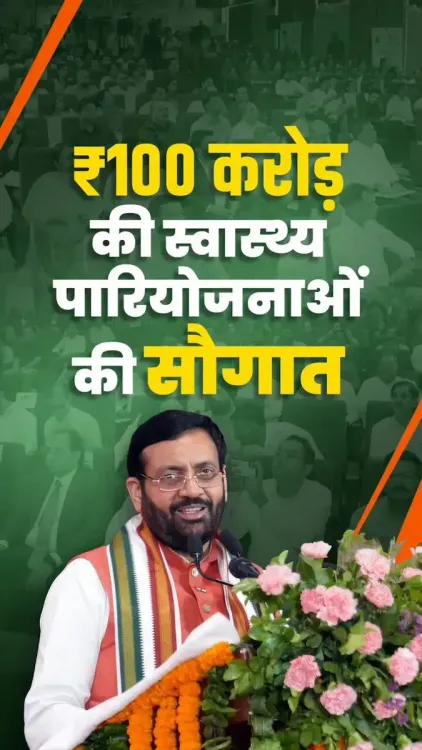
Haryana Chief Minister Nayab Singh Saini has declared better health for families his top priority in a post on X, reinforcing the BJP-led state government's focus on health welfare delivery and signalling possible policy announcements ahead.
Key Takeaways
CM Nayab Singh Saini posted on 30 May 2026 that 'better health for family members is my priority.' Haryana participates in Ayushman Bharat PMJAY , which provides up to Rs 5 lakh health cover per family.
Saini became Haryana Chief Minister in 2024 , succeeding Manohar Lal Khattar .
The statement signals possible upcoming health policy announcements or budget allocations in the state.
Haryana's 2.8 crore residents, especially rural and lower-income families, stand as the primary stakeholders.
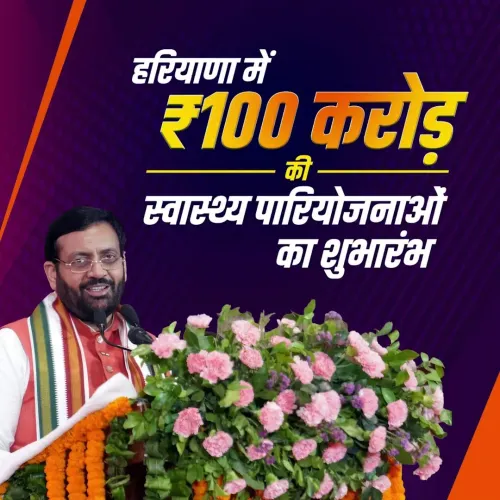
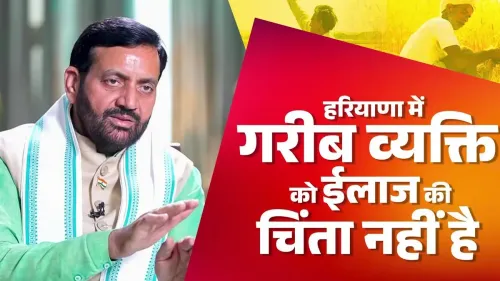
Haryana Chief Minister Nayab Singh Saini on Saturday, 30 May 2026, reaffirmed that the health and well-being of families remains his foremost governance priority, posting a brief but pointed message on X that signals continued emphasis on health delivery for the state's residents.
In his post, CM Saini wrote: 'परिवारजनों का बेहतर स्वास्थ्य मेरी प्राथमिकता' — translated as, 'Better health for family members is my priority.' The statement, though concise, carries weight in the context of Haryana's ongoing efforts to strengthen public health infrastructure and insurance coverage for ordinary households.
Context
Nayab Singh Saini took charge as Chief Minister of Haryana in 2024, succeeding Manohar Lal Khattar as the BJP's face in the state. Since assuming office, Saini has positioned himself as a leader focused on welfare delivery, particularly for rural and lower-income families. Health access has been a recurring theme in his public communication.
The post comes at a time when state governments across India are under pressure to demonstrate tangible outcomes in healthcare — from insurance enrolment to hospital infrastructure — ahead of budget and policy cycles.
Policy Backdrop
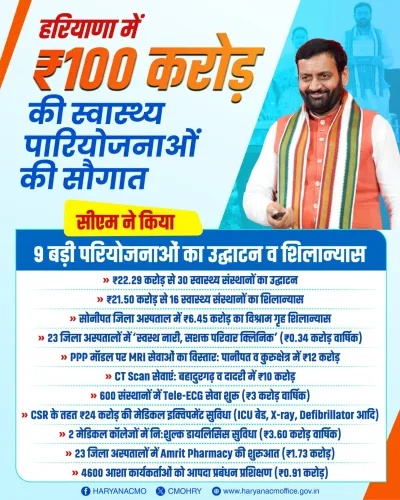
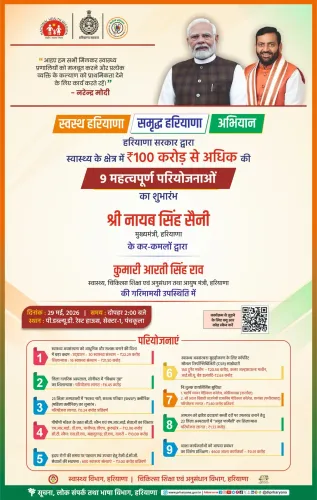
At the national level, the Ayushman Bharat Pradhan Mantri Jan Arogya Yojana, launched in 2018, provides up to Rs 5 lakh in health coverage per eligible family annually. Haryana has been a participant in this flagship scheme while also running supplementary state-level health insurance and infrastructure programmes aimed at broadening coverage.
BJP-governed states have consistently used health welfare schemes as a key plank of governance messaging, building on the central framework with state-specific extensions. Chief ministers often use social media to signal policy intent ahead of formal announcements or budget allocations.
Stakeholders and Impact
The primary beneficiaries of any health-focused policy push in Haryana are the state's estimated 2.8 crore residents, a significant share of whom rely on public health infrastructure and government-backed insurance schemes. Families in rural districts and economically weaker sections stand to gain most from expanded coverage or improved service delivery.
Healthcare workers, district hospitals, and community health centres would also be central to translating such political intent into on-ground outcomes. Civil society groups tracking public health expenditure will be watching for corresponding budgetary commitments.
What's Next
The statement from CM Saini is likely a precursor to more detailed policy announcements — whether an expansion of existing health insurance schemes, new infrastructure investments, or enhanced allocations in the state budget. Observers will watch for formal follow-through in upcoming government communications or legislative sessions.
If Haryana moves to widen the ambit of its health programmes — either by raising coverage limits, adding new beneficiary categories, or increasing the number of empanelled hospitals — it would align with the broader national trend of states competing to demonstrate welfare delivery credentials.
Point of View
Keeping the government's pro-poor image fresh. For a chief minister who took office in 2024 without a long independent political track record, health messaging offers a broad, non-divisive platform. The post's timing — outside any obvious news hook — suggests it may be laying groundwork for a budget-linked or scheme-expansion announcement. Whether rhetoric translates into measurable health outcomes will be the real test of this stated priority.
NationPress
23 Sept 2026
Frequently Asked Questions
What did Haryana CM Nayab Singh Saini say about health?
CM Nayab Singh Saini posted on X on 30 May 2026 that 'better health for family members is my priority,' signalling a continued focus on health welfare for Haryana's residents.
What health schemes are available for Haryana families?
Haryana families can access the Ayushman Bharat Pradhan Mantri Jan Arogya Yojana, which provides up to Rs 5 lakh in annual health coverage, along with supplementary state-level health insurance programmes.
Who is Nayab Singh Saini?
Nayab Singh Saini is the Chief Minister of Haryana and a BJP leader who assumed office in 2024, succeeding Manohar Lal Khattar after the party's election victory in the state.
Will Haryana expand its health insurance coverage?
No formal announcement has been made yet, but CM Saini's statement is seen as a possible signal ahead of a state budget or policy announcement that could expand health coverage for families.
How does Ayushman Bharat work in Haryana?
Under Ayushman Bharat PMJAY, eligible families in Haryana receive up to Rs 5 lakh per year in cashless hospitalisation cover at empanelled public and private hospitals, with the state running additional complementary health schemes.