CM Saini: Poor in Haryana no longer worry about healthcare costs
Synopsis
Haryana Chief Minister Nayab Singh Saini declared on 23 May 2026 that poor residents of the state no longer face financial anxiety over medical treatment, pointing to government health insurance schemes including Ayushman Bharat PM-JAY as the foundation of this access.
Key Takeaways
CM Nayab Singh Saini stated on 23 May 2026 that poor people in Haryana no longer worry about the cost of medical treatment.
The claim is anchored in Ayushman Bharat PM-JAY , which provides up to Rs 5 lakh annual health cover per family for hospitalisation.
Haryana has expanded empanelled hospitals and added state top-up schemes since 2018 to extend cashless care to more low-income residents.
CM Saini took office in March 2024 and has continued health scheme outreach as a core governance communication.
Utilisation data and supplementary health budget allocations in the next assembly session will be key indicators of actual coverage depth.
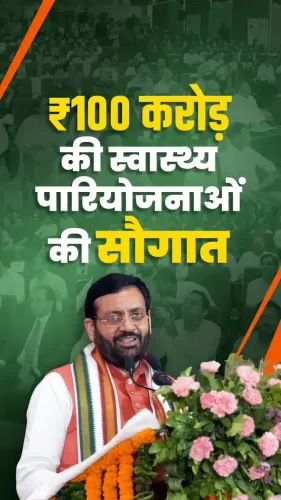
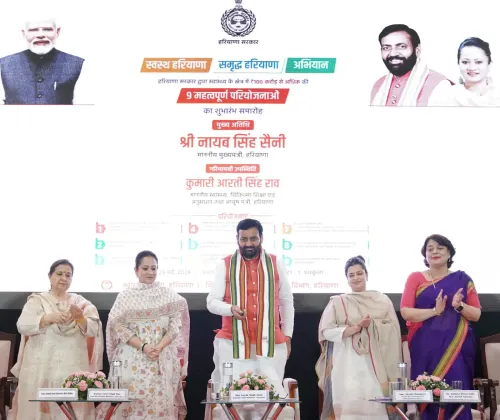
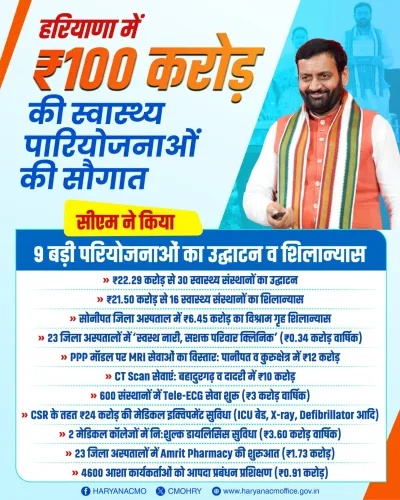
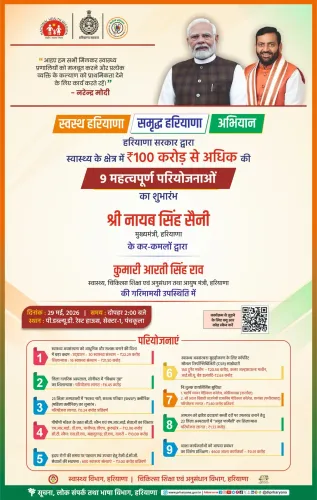
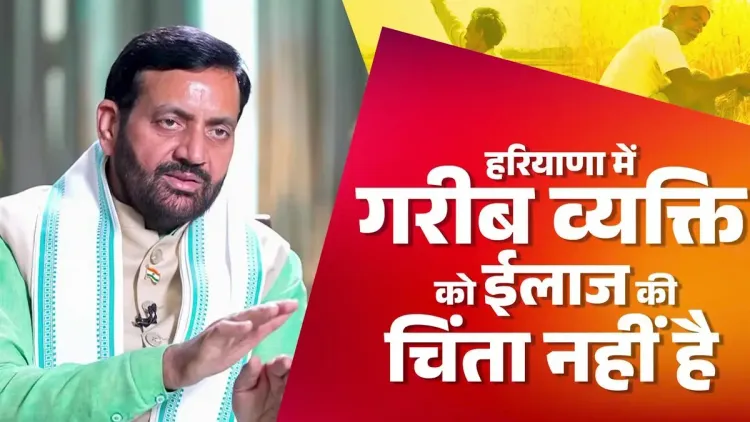
Haryana Chief Minister Nayab Singh Saini on Saturday, 23 May 2026 asserted that poor residents of the state no longer face anxiety over medical treatment costs, crediting government health schemes with removing financial barriers to hospitalisation for low-income families.
Context
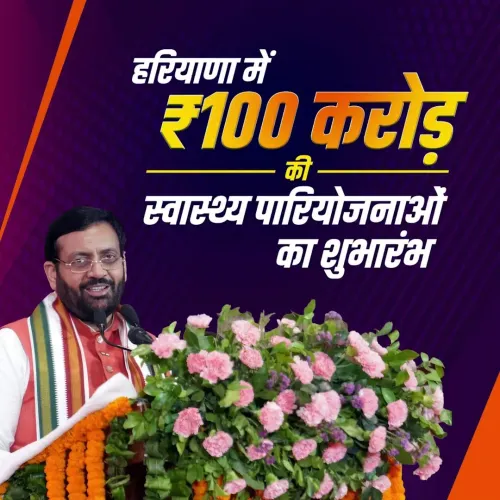
Posting in Haryanvi-inflected Hindi, CM Saini declared: 'म्हारे हरियाणा में आज गरीब व्यक्ति को ईलाज की चिंता नहीं है' — 'In our Haryana today, a poor person has no worry about treatment.' The statement frames healthcare access as a settled achievement under the current BJP government rather than a work in progress.
The post, accompanied by a video, is directed at Haryana's rural and semi-urban poor, the primary beneficiaries of state and central health insurance programmes. It follows a pattern of BJP-led state governments regularly communicating welfare delivery milestones through social media.
Policy Backdrop
The claim rests substantially on the Ayushman Bharat Pradhan Mantri Jan Arogya Yojana (PM-JAY), the national health insurance scheme launched in 2018 that provides up to Rs 5 lakh annual coverage per family for secondary and tertiary hospitalisation. The scheme targets below-poverty-line and low-income households, aiming to eliminate catastrophic out-of-pocket health expenditure.
Haryana has, since 2018, expanded the network of empanelled hospitals — both government and private — and layered state top-up schemes to cover procedures and population segments beyond the central scheme's baseline. These measures extend cashless treatment options to a broader set of economically weaker families across the state.
Since assuming office in March 2024, CM Saini has continued the policy direction set under his predecessor, with health scheme outreach forming a visible part of the government's public communication.
Stakeholders and Impact
The principal beneficiaries are Haryana's low-income and rural families who previously faced the choice between catastrophic medical spending or forgoing treatment. Cashless hospitalisation at empanelled facilities is designed to remove the immediate cost barrier at the point of care.
Private hospitals empanelled under PM-JAY and allied state schemes are also stakeholders, as scheme volumes directly affect their patient mix and revenue from government reimbursements. Healthcare workers and district health officials are responsible for enrolment drives and claim processing that determine how effectively the coverage reaches intended beneficiaries.
What's Next
The credibility of CM Saini's assertion will be tested by utilisation data — the number of claims processed, families covered, and hospitals empanelled — expected to be disclosed in upcoming government reports or the next Haryana assembly session's budget discussions. Supplementary allocations for health infrastructure will be a signal of how far the government intends to deepen coverage.
If Haryana releases granular district-level data on scheme uptake, it would provide independent verification of the access gains the Chief Minister is highlighting, and could inform other states benchmarking their own health scheme roll-outs against the Ayushman Bharat framework.
Point of View
Reinforcing proximity and ownership. What the post does not address is the gap between scheme enrolment and actual claim utilisation, which remains the critical measure of whether financial protection is real or nominal. The messaging sets a high benchmark that utilisation data will either validate or complicate in the months ahead.
NationPress
21 Sept 2026
Frequently Asked Questions
What health scheme is Haryana CM Nayab Singh Saini referring to?
He is primarily referring to Ayushman Bharat PM-JAY , the national health insurance scheme that provides up to Rs 5 lakh annual cashless hospitalisation cover per family, supplemented by state-level top-up schemes in Haryana .
Who is eligible for free treatment under Haryana's health schemes?
Below-poverty-line and low-income families are the primary beneficiaries, with Haryana having expanded coverage beyond the central scheme's baseline to include additional procedures and population groups.
When did Nayab Singh Saini become Haryana Chief Minister?
Nayab Singh Saini assumed office as Haryana Chief Minister in March 2024 , succeeding Manohar Lal Khattar .
What is Ayushman Bharat PM-JAY and when was it launched?
Ayushman Bharat Pradhan Mantri Jan Arogya Yojana was launched in 2018 to reduce out-of-pocket health expenditure for poor families, offering up to Rs 5 lakh per family per year for secondary and tertiary hospital care.
How can poor families in Haryana access cashless hospital treatment?
Eligible families can access cashless treatment at government and private hospitals empanelled under Ayushman Bharat PM-JAY and allied Haryana state schemes by presenting their scheme card at the empanelled facility.