CM Mohan Yadav Invokes Vajpayee to Critique Opposition Leaders
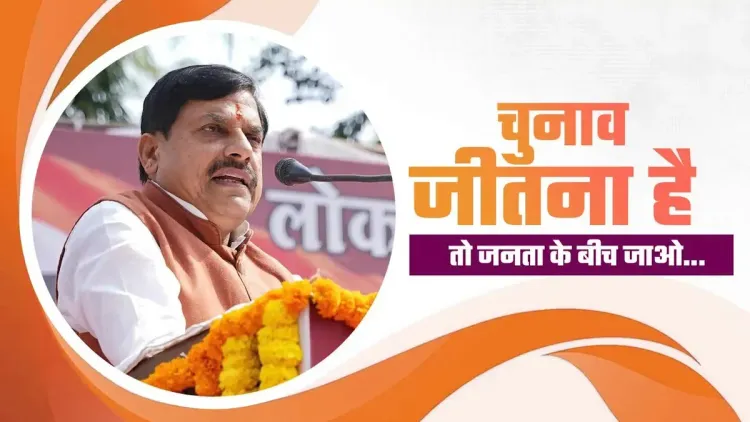
Synopsis
Madhya Pradesh CM Dr. Mohan Yadav invoked Atal Bihari Vajpayee's conduct as Leader of the Opposition to argue that today's opposition leaders fail to match the dignity and gravity that once defined the role, posting under #SaveDemocracyRemoveAnarchy.
Key Takeaways
Mohan Yadav , Chief Minister of Madhya Pradesh, posted on November 17, 2026 comparing the current Leader of the Opposition unfavourably with Atal Bihari Vajpayee .
Vajpayee served as Leader of the Opposition in the Lok Sabha during the 1990s before becoming Prime Minister in 1996 and again in 1999 .
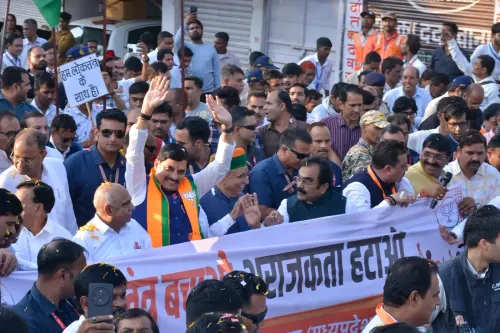
The post was tagged #SaveDemocracyRemoveAnarchy , signalling a live political flashpoint beyond a purely historical tribute.
The BJP has a consistent pattern of using Vajpayee's parliamentary conduct as a benchmark to critique opposition behaviour.
No specific triggering event in November 2026 is independently verified, but the post implies an ongoing political or parliamentary confrontation.
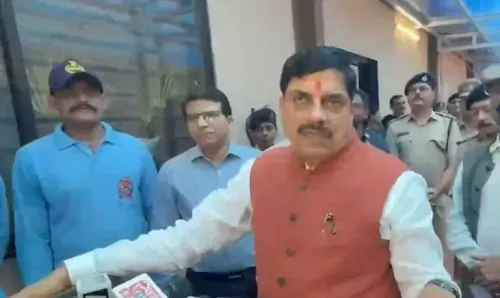
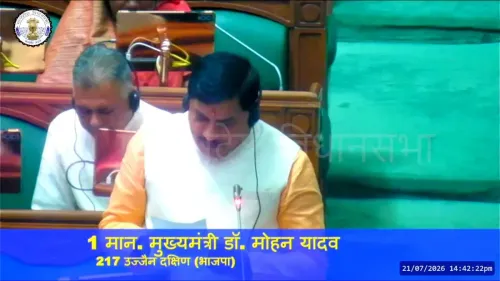
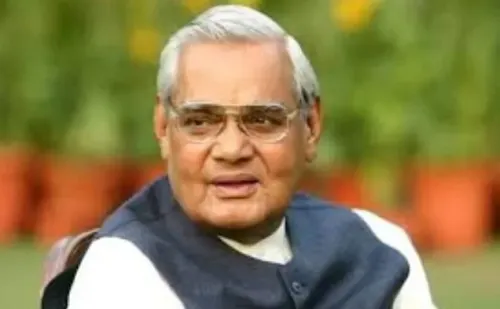
The ghost of Atal Bihari Vajpayee walked back into India's political arena on Tuesday, November 17, 2026, when Madhya Pradesh Chief Minister Dr. Mohan Yadav invoked the former Prime Minister's legacy to deliver a pointed rebuke at the current Leader of the Opposition — arguing that today's opposition leadership has abandoned the dignity that once defined that office.
Posting on X in Hindi under the hashtag #SaveDemocracyRemoveAnarchy, Dr. Yadav wrote: 'Shraddhey Atal Bihari Vajpayee ji ne neta pratipaksha ke pad ko sushobhit kiya tha, durbhagya se aaj vipaksha ke neta us pad ki garima aur gambhirata nahin samajhte...' — 'The revered Atal Bihari Vajpayee ji had adorned the post of Leader of the Opposition; unfortunately, today's opposition leaders do not understand the dignity and gravity of that position.'
Vajpayee's Shadow Over the Opposition Bench
Atal Bihari Vajpayee served as Leader of the Opposition in the Lok Sabha through the 1990s before going on to become Prime Minister — first briefly in 1996 and then for a full term from 1999 to 2004. His parliamentary conduct during those opposition years became a standard-bearer: sharp in criticism, restrained in manner, and scrupulous in respecting the institution even when attacking the government. It is precisely that image Dr. Yadav is now wielding as a contrast.
The comparison is deliberate and loaded. By placing Vajpayee's name at the top of the post, Dr. Yadav signals not just a partisan jab but a wider argument about institutional norms — that the problem is not mere political disagreement, but a perceived erosion of the very culture of responsible opposition.
A Familiar BJP Rhetorical Play, Sharpened by the Hashtag
This is not the first time BJP leaders have deployed Vajpayee's legacy as a measuring stick for the opposition. The party has consistently used his parliamentary stature to anchor a narrative about decorum, democratic responsibility, and what 'constructive opposition' should look like. Dr. Yadav's post fits that template — but the accompanying hashtag #SaveDemocracyRemoveAnarchy gives it a harder, more urgent edge, suggesting the framing is tied to a live political flashpoint rather than a purely historical reflection.
The post includes a video, the content of which is not independently available, but the combination of the Vajpayee comparison and the anarchy-themed hashtag points to an ongoing parliamentary or state-level confrontation that the BJP is framing as a threat to democratic order.
Opposition parties are yet to formally respond, but history suggests the counter-argument will challenge whether the ruling party itself has honoured Vajpayee's tradition of consensus-building — a debate that has played out across multiple election cycles without resolution. The real audience for Dr. Yadav's post is not the opposition leadership — it is the voter who still reveres Vajpayee, and who is now being asked to hold today's opposition to that standard.
Point of View
Linking the Vajpayee contrast to a present-day crisis narrative. This kind of messaging is particularly effective in MP and Hindi-belt politics, where Vajpayee retains deep emotional resonance across voter demographics. The risk for the BJP is that invoking Vajpayee also reopens questions about whether the party itself has upheld his legacy of consensus and cross-party respect.
NationPress
17 Nov 2026
Frequently Asked Questions
What did CM Mohan Yadav say about Atal Bihari Vajpayee?
CM Mohan Yadav said that Vajpayee had honoured the post of Leader of the Opposition with dignity and gravity, and that unfortunately today's opposition leaders do not understand or uphold the same standard.
When was Atal Bihari Vajpayee the Leader of the Opposition?
Atal Bihari Vajpayee served as Leader of the Opposition in the Lok Sabha during the 1990s, prior to becoming Prime Minister briefly in 1996 and then for a full term from 1999 to 2004.
What does the hashtag #SaveDemocracyRemoveAnarchy mean?
The hashtag #SaveDemocracyRemoveAnarchy reflects a BJP political framing that positions the current opposition's conduct as a threat to democratic norms and parliamentary order, calling for its removal.
Who is Dr. Mohan Yadav?
Dr. Mohan Yadav is the Chief Minister of Madhya Pradesh and a senior BJP leader who has held the post since December 2023.
Why does BJP frequently invoke Vajpayee when criticising the opposition?
BJP regularly uses Vajpayee's reputation for parliamentary dignity and constructive opposition as a contrast to frame the current opposition's behaviour as falling short of democratic ideals, a rhetorical strategy that resonates strongly in Hindi-belt politics.