MP CM Mohan Yadav slams Congress over Emergency and Netaji Bose episode in Jabalpur
Synopsis
At a BJP 'Save Democracy' march in Jabalpur, MP Chief Minister Mohan Yadav reached back 85 years to Netaji Bose's contested 1939 resignation and the 1975 Emergency to argue that Congress has no standing to defend democracy — a double-barrelled historical indictment that reflects how central the 'credibility of opposition' narrative has become to BJP's grassroots mobilisation.
Key Takeaways
MP CM Mohan Yadav addressed a BJP foot march in Jabalpur on 2 November 2026 under the 'Save Democracy, Remove Anarchy' campaign.
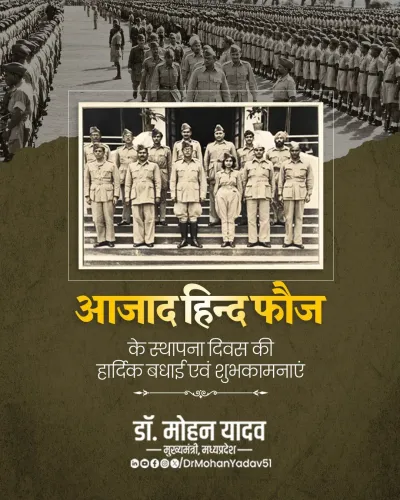
Yadav cited Netaji Subhas Chandra Bose's resignation as Congress president after the Tripuri session of 1939 , alleging pressure from Jawaharlal Nehru .
He invoked the Emergency of 1975 imposed by Indira Gandhi to question Congress's democratic credentials.
Yadav claimed Congress has vanished from 80 per cent of the country due to repeated electoral defeats.
State BJP president Hemant Khandelwal and state ministers participated in the Jabalpur march.
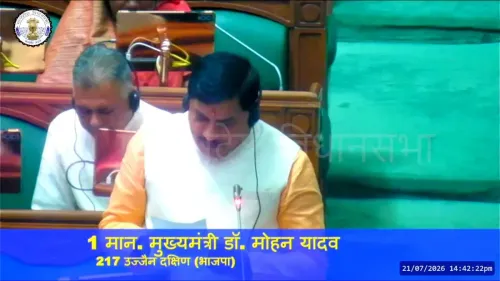
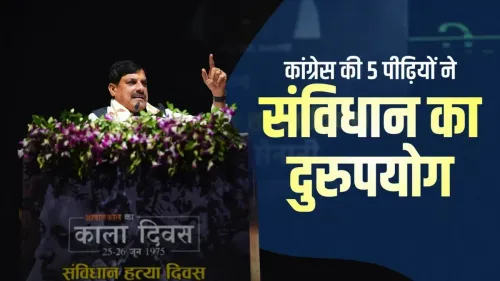
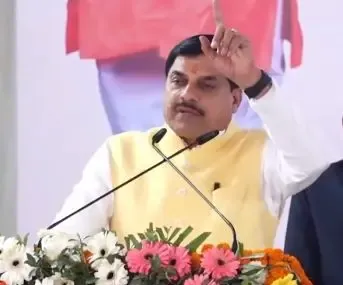
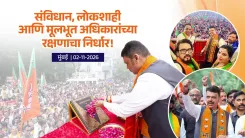
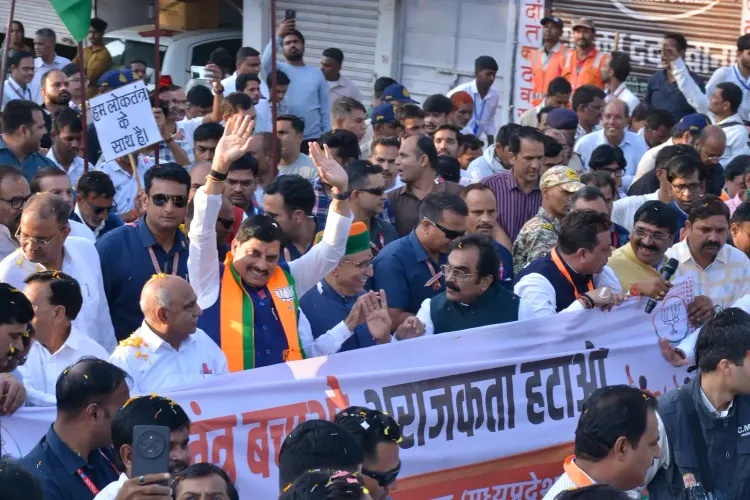
Madhya Pradesh Chief Minister Mohan Yadav on Monday, 2 November 2026, launched a sharp attack on the Congress over its claims of being a guardian of democracy and the Constitution, invoking the Emergency of 1975 and the forced resignation of Netaji Subhas Chandra Bose as party president to challenge its democratic credentials. Yadav made the remarks while addressing a BJP foot march in Jabalpur, Madhya Pradesh, organised under the party's 'Save Democracy, Remove Anarchy' campaign.
Bose and the Tripuri Episode
Drawing on Jabalpur's historical connection with Netaji, Yadav recalled that Subhas Chandra Bose was elected Congress president at the Tripuri session in 1939 but was subsequently compelled to step down following internal party differences. He alleged that pressure exerted by Jawaharlal Nehru and his supporters effectively forced Bose out despite a legitimate electoral mandate within the party.
'When the Congress could not stand by Netaji Subhas Chandra Bose, how can anyone expect it to stand by others?' Yadav said, framing the historical episode as evidence of a deeper intolerance for dissent within the party.
The Emergency as a Democratic Indictment
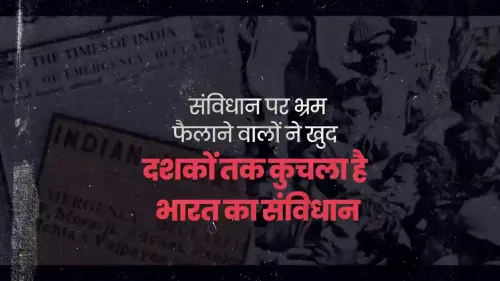
Yadav also cited the Emergency imposed by former Prime Minister Indira Gandhi in 1975 as a defining moment of Congress's alleged disregard for constitutional norms. He accused the party of dismissing court verdicts and undermining constitutional institutions including the Election Commission of India during that period.
'The Congress, which today talks about protecting the Constitution, has a history marked by the Emergency, disregard for court verdicts and disrespect towards constitutional institutions such as the Election Commission,' he said.
Electoral Decline and the Gandhi Family
The Chief Minister argued that the Congress had been reduced to a fringe force across the country, claiming the party had effectively disappeared from 80 per cent of India. He attributed the party's mounting criticism of the Bharatiya Janata Party (BJP) to its repeated electoral defeats rather than principled opposition.
Yadav also took aim at the Gandhi family, alleging that it remained uncomfortable with Prime Minister Narendra Modi — whom he described as having risen from a humble, poor background — occupying the country's highest office. Critics of such characterisations, however, argue they are standard political messaging rather than substantive policy debate.
BJP's 'Save Democracy' Campaign
The Jabalpur march drew participation from state BJP president Hemant Khandelwal, state ministers, public representatives, and party workers. Yadav thanked democracy activists, social workers, and prominent citizens who joined the march, saying the gathering had sent a message of support for Modi's continued leadership.
The BJP has been rolling out foot marches under the 'Save Democracy, Remove Anarchy' campaign across the state as a counter-mobilisation to the Congress's sustained criticism of the Modi government. With assembly-level outreach intensifying, the campaign signals the BJP's intent to keep the democratic credibility debate alive heading into the next electoral cycle.
Point of View
A city with a documented Bose connection, as the venue: it adds symbolic weight that purely rhetorical attacks cannot. Yet the campaign risks becoming a loop of historical grievance rather than a forward-looking democratic argument. The Congress, for its part, has not publicly responded to the Bose framing, which may itself be a vulnerability — allowing the BJP to define the terms of the democracy debate without rebuttal.
NationPress
3 Nov 2026
Frequently Asked Questions
What did Madhya Pradesh CM Mohan Yadav say about Congress and the Emergency?
Yadav accused the Congress of undermining democratic norms by citing the Emergency imposed by former Prime Minister Indira Gandhi in 1975, alleging the party disregarded court verdicts and showed disrespect to constitutional institutions like the Election Commission. He made these remarks at a BJP foot march in Jabalpur on 2 November 2026.
Why did Mohan Yadav bring up Netaji Subhas Chandra Bose at the Jabalpur march?
Yadav invoked Bose's resignation as Congress president after the Tripuri session of 1939, alleging that pressure from Jawaharlal Nehru and his supporters forced Bose out despite being democratically elected to the post. He used the episode to argue that Congress has historically been intolerant of dissent within its own ranks.
What is the BJP's 'Save Democracy, Remove Anarchy' campaign?
It is a BJP-organised grassroots campaign that includes foot marches across Madhya Pradesh aimed at countering the Congress's criticism of the Modi government. The Jabalpur march on 2 November 2026 was one such event, attended by state BJP president Hemant Khandelwal, state ministers, and party workers.
What did Yadav say about Congress's current political standing?
Yadav claimed Congress has effectively disappeared from 80 per cent of India, attributing the party's increasing attacks on the BJP to its own repeated electoral defeats rather than genuine democratic concern. He also alleged that the Gandhi family was uncomfortable with Narendra Modi becoming Prime Minister.
Who participated in the Jabalpur BJP march?
The march was attended by Madhya Pradesh Chief Minister Mohan Yadav, state BJP president Hemant Khandelwal, state ministers, public representatives, democracy activists, social workers, and party workers from the region.