CM Fadnavis Targets Congress at Mumbai Democracy March
Synopsis
Maharashtra CM Devendra Fadnavis addressed a Mumbai democracy march on November 3, attacking Congress for treating the Constitution as a political tool, invoking the 1975 Emergency, and warning against 'Regime Change' rhetoric by drawing parallels with Bangladesh, Nepal and Sri Lanka.
Key Takeaways
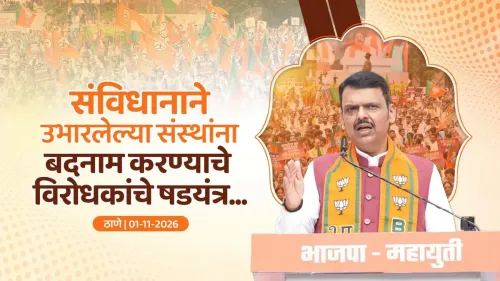
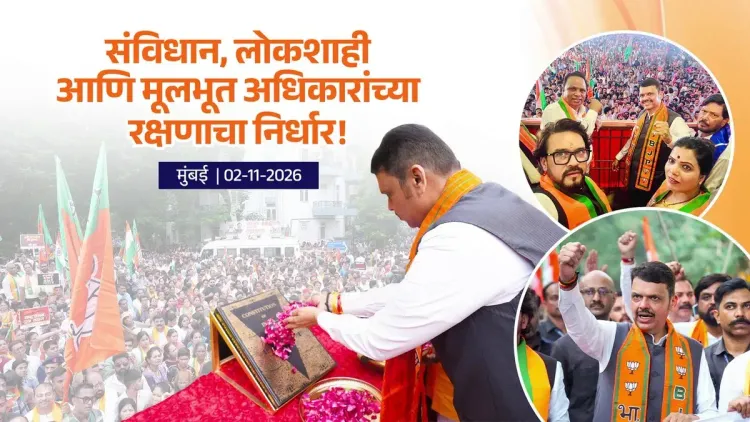
Maharashtra CM Devendra Fadnavis addressed the 'Lokshahi Vachava, Arajakta Hatava' Padyatra in Mumbai on November 3, 2026 .
He accused Congress of historically undermining the Constitution, citing the 1975–77 Emergency and the 42nd Constitutional Amendment .
Fadnavis drew a distinction between electoral 'regime change' and what he called a threat to dismantle democratic institutions, targeting Rahul Gandhi by name.
He warned that instability in Bangladesh , Nepal , and Sri Lanka serves as a cautionary example for India.
Senior leaders including Union MoS Ramdas Athawale , MP Anurag Thakur , and several Maharashtra ministers were present at the rally.
Fadnavis framed the campaign as a civic duty beyond BJP politics, appealing to citizens 'irrespective of ideology.'
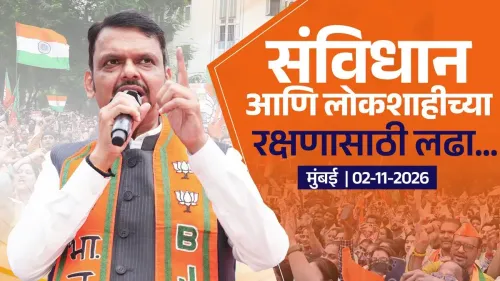
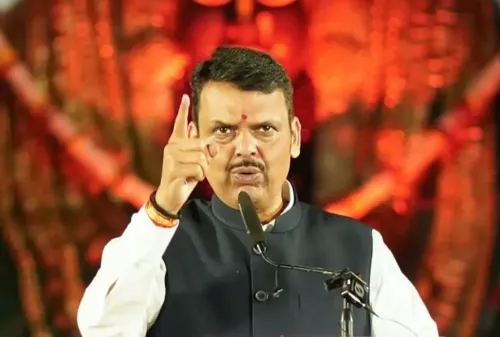
A sharp political offensive unfolded on the streets of Mumbai on Tuesday, November 3, 2026, as Maharashtra Chief Minister Devendra Fadnavis addressed the 'Lokshahi Vachava, Arajakta Hatava' (Save Democracy, Remove Anarchy) Padyatra, levelling a direct constitutional indictment against the Congress party and its leader Rahul Gandhi.
The core charge: a Constitution used as a political prop
Fadnavis's central argument was pointed: a party with a documented history of rewriting constitutional provisions to suit its own survival was now presenting itself as the Constitution's most faithful guardian. He invoked the 1975–77 Emergency — when the Congress government imposed the 42nd Constitutional Amendment and suspended fundamental rights — as the defining exhibit in that case. 'A party with a history of altering constitutional provisions for political interests is now projecting itself as the guardian of the very Constitution it has undermined,' he said.
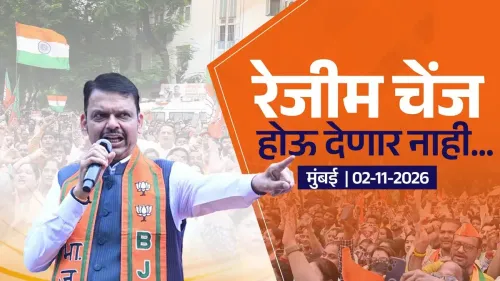
The Chief Minister drew a sharp distinction between a democratic change of government through elections — which he called entirely constitutional — and the opposition's language of 'Regime Change', which he argued carries a more dangerous subtext: the dismantling of institutional architecture itself. That single phrase, he suggested, reveals the real ambition behind the campaign.
Bangladesh, Nepal, Sri Lanka — and a warning for India
Fadnavis reached beyond India's borders to make his argument land harder. The political and constitutional turmoil witnessed in Bangladesh, Nepal, and Sri Lanka in recent years, he said, stands as a 'stark warning' for what institutional erosion can produce. The invocation of neighbourhood instability is a recurring frame in Indian political discourse since 2014, but it carries particular resonance when placed alongside domestic mobilisation language. He framed India's constitutional framework as something that 'cannot become a target of political anarchists.'
He also pointed to Congress's rallies, slogans, and what he called the party's 'Red Book' as evidence of a larger political narrative — though specific details of that document could not be independently verified.
Fadnavis's appeal: above party, towards the Republic
The CM closed with a deliberate broadening of his audience. 'I appeal to every citizen, irrespective of ideology, to stand for constitutional values and democratic institutions,' he said, adding that this fight was 'not merely for the BJP or NDA' but a responsibility towards India's future. The framing was designed to lift the address out of partisan combat and pitch it as a civic call.
Senior figures flanked him at the event: Union Minister of State Dr. Ramdas Athawale, BJP MP Anurag Thakur, Legislative Council Deputy Chairman Sachin Ahir, BJP State President MLA Ravindra Chavan, BJP Mumbai President MLA Ameet Satam, and ministers Mangal Prabhat Lodha and Advocate Ashish Shelar were all present, alongside BJP-Mahayuti office-bearers and karyakartas — a show of organisational force to match the rhetorical one.
The question Congress now faces is whether it answers the constitutional indictment on its own terms, or whether Fadnavis's framing — emergency, neighbourhood chaos, regime change — sets the terms of debate heading forward.
Point of View
He attempts to shift the debate from vote-counting to institutional threat, a framing that proved potent in national elections since 2019. The neighbourhood comparison — Bangladesh, Nepal, Sri Lanka — adds a foreign-policy texture that elevates the stakes beyond domestic partisanship. Whether this offensive pre-empts or responds to a Congress mobilisation surge in Maharashtra will determine how much traction it gains before the next electoral cycle.
NationPress
3 Nov 2026
Frequently Asked Questions
What is the 'Lokshahi Vachava, Arajakta Hatava' padyatra in Mumbai?
It is a BJP-led public march in Mumbai, translating to 'Save Democracy, Remove Anarchy,' at which Maharashtra CM Devendra Fadnavis addressed supporters and accused Congress of undermining the Constitution for political gain.
What did Fadnavis say about Rahul Gandhi and the Constitution?
Fadnavis accused Rahul Gandhi of pursuing an agenda that threatens constitutional frameworks and democratic institutions, pointing to Congress slogans, rallies, and what he called the party's 'Red Book' as evidence.
Why did Fadnavis mention Bangladesh, Nepal and Sri Lanka?
He cited political and constitutional turmoil in those countries as a warning of what institutional erosion can produce, arguing India must protect its constitutional framework from similar risks.
What is Congress's alleged history of constitutional changes that Fadnavis referred to?
Fadnavis was referencing the Congress government's imposition of the Emergency from 1975 to 1977, during which the 42nd Constitutional Amendment was passed and several fundamental rights were suspended.
Who attended the Mumbai democracy march with CM Fadnavis?
Union Minister of State Dr. Ramdas Athawale, BJP MP Anurag Thakur, Legislative Council Deputy Chairman Sachin Ahir, BJP State President Ravindra Chavan, BJP Mumbai President Ameet Satam, and ministers Mangal Prabhat Lodha and Ashish Shelar were among those present.