Ramaswamy's Election-Eve Push: Taxes, Streets, Energy Bills
Synopsis
On the eve of the November 4, 2026 elections, Vivek Ramaswamy posted a sharp three-point pitch — slash property taxes, restore street safety, cut energy bills through higher production — framing the vote as 'common sense vs. crazy' rather than a left-right divide.
Key Takeaways
Entrepreneur and former DOGE co-lead Vivek Ramaswamy posted an election-eve message on November 2, 2026 , the night before US elections.
He called for three immediate actions: slashing property taxes, restoring law and order on streets, and cutting electric bills through expanded domestic energy production.
Ramaswamy framed the vote as 'right vs. wrong' and 'common sense vs. crazy,' deliberately avoiding left-right partisan framing.
The messaging echoes Republican domestic-policy platforms deployed in the 2022 and 2024 election cycles, centred on fiscal restraint, public safety, and energy expansion.
State-level ballot measures on property-tax caps and energy-permitting reform stand to be directly affected by Tuesday's results.
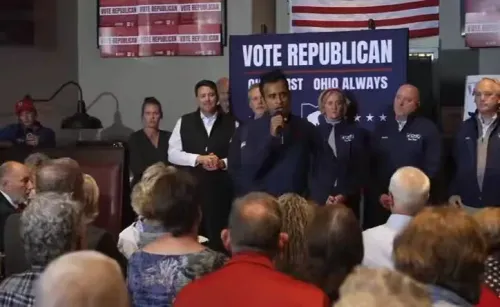
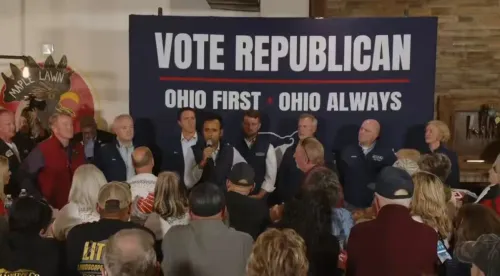
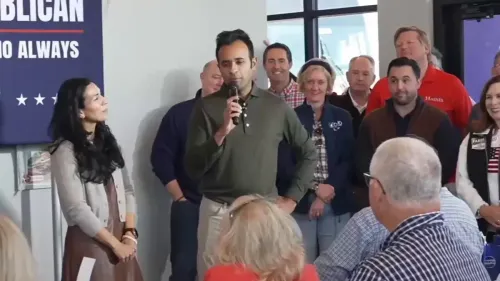
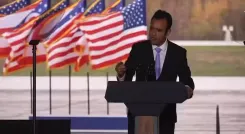
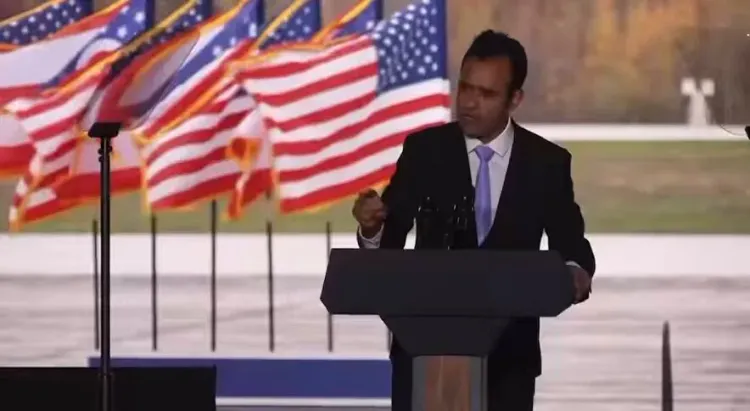
With voting just hours away, entrepreneur Vivek Ramaswamy drew a sharp line in the sand on the night of November 2, 2026 — framing the upcoming election not as an ideological contest but as a gut-check on basic governance. In a pointed social-media post, he called for slashing property taxes, restoring law and order on American streets, and cutting electric bills through expanded energy production.
Three Demands, One Binary Choice
Ramaswamy's post distilled a sprawling political moment into three concrete asks: lower property taxes, law enforcement on the streets, and cheaper electricity through higher domestic energy output. His framing — 'This isn't right vs. left. It's right vs. wrong. It's common sense vs. crazy' — deliberately sidesteps partisan labelling to pitch conservative priorities as plain logic rather than ideology.
The strategy is familiar. Since the 2022 midterm cycle, Republican candidates and advocates have consistently packaged fiscal restraint, public-safety restoration, and energy expansion as apolitical common sense, hoping to pull in voters who resist tribal party identity but feel the pinch of household bills and neighbourhood disorder.
Ramaswamy's Platform, Refined Over Two Cycles
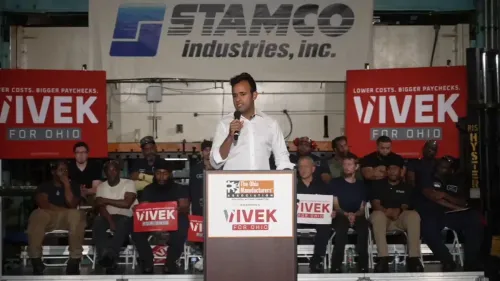
The founder of Strive Asset Management and a 2024 Republican presidential candidate, Ramaswamy built his national profile on reducing federal regulations, cutting taxes, and maximising domestic energy output — themes he championed through primary debates before exiting the race. His subsequent role as co-lead of the Department of Government Efficiency (DOGE) advisory effort kept him in the orbit of fiscal-hawkish policymaking after the campaign ended.
The three-point checklist in his post maps directly onto that record. Property-tax relief targets homeowners squeezed by rising valuations. The law-and-order plank speaks to urban and suburban residents who have flagged street safety as a top concern in successive polling cycles. And the energy-production argument — produce more, pay less — has been a cornerstone of Republican energy messaging since at least the 2010s, applied to fossil fuels, nuclear, and the broader push against supply-restricting regulations.
What Rides on November 4
State legislative chambers and a cluster of ballot measures on property-tax caps and energy-permitting reforms sit on Tuesday's ballot across multiple states, making Ramaswamy's message more than rhetorical. A strong showing for candidates aligned with these priorities could accelerate state-level action on all three fronts — tax relief, policing budgets, and permitting reform — in early 2027 legislative sessions.
The election-eve timing of the post is itself a signal: Ramaswamy is not attempting a nuanced policy brief. He is closing arguments — and doing it with a sledgehammer.
Whether voters read 'common sense' the same way Ramaswamy does will be known by Wednesday morning.
Point of View
' he is fishing in the politically unaffiliated pool — precisely the swing constituency that has decided the last two US election cycles. The three issues chosen — property taxes, street safety, energy costs — are not randomly assembled; they are the highest-salience kitchen-table concerns that polling has consistently shown cross party lines. If his preferred candidates perform well on November 4, expect these three pillars to become the organising logic of the 2027 Republican legislative agenda at the state level.
NationPress
3 Nov 2026
Frequently Asked Questions
What did Vivek Ramaswamy post before the 2026 elections?
On November 2, 2026, Ramaswamy posted a three-point election-eve message calling for immediate property-tax cuts, restoration of law and order on American streets, and lower electric bills through expanded domestic energy production.
What is Vivek Ramaswamy's political background?
Ramaswamy is the founder and executive chairman of Strive Asset Management. He ran as a Republican presidential candidate in 2024 and later served as co-lead of the Department of Government Efficiency (DOGE) advisory effort.
What does Ramaswamy mean by 'common sense vs. crazy'?
Ramaswamy used the phrase to frame conservative priorities — lower taxes, law enforcement, cheaper energy — as self-evident practical governance rather than partisan ideology, deliberately avoiding the traditional left-vs-right binary.
How does Ramaswamy's energy message connect to his past positions?
During the 2024 presidential primary, Ramaswamy consistently advocated for removing regulations on domestic energy production to lower consumer costs — a position he has carried into post-campaign political commentary.
What policy outcomes could follow the November 4, 2026 elections?
State legislative sessions in early 2027 are expected to take up property-tax relief bills and energy-permitting reforms; ballot measures on both issues are on Tuesday's docket in multiple states.