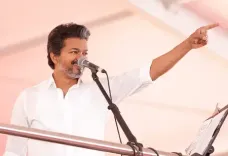
Ramaswamy draws Ohio battle lines 27 days from election
Synopsis
Entrepreneur Vivek Ramaswamy, 27 days before an Ohio election, posted a three-contrast case — lower property taxes, reduced electric bills, and Medicaid fraud crackdown — against what he cast as the opposing position of higher costs and official indifference, closing with a pledge of faith in Ohio voters.
Key Takeaways
Vivek Ramaswamy posted a pointed pre-election contrast on October 8, 2026 , with 27 days remaining before an Ohio vote.
Three core contrasts: lower property taxes vs. hikes, lower electric bills vs. higher energy costs, and Medicaid fraud enforcement vs. inaction.
The framing targets kitchen-table financial concerns — taxes, energy bills, and healthcare waste — rather than abstract ideology.
Ramaswamy's political arc runs from a 2024 presidential primary to the DOGE advisory role to now engaging directly in Ohio state politics.
His closing line — 'I believe in the people of our state to choose wisely' — is a confidence signal designed to put pressure on opponents.
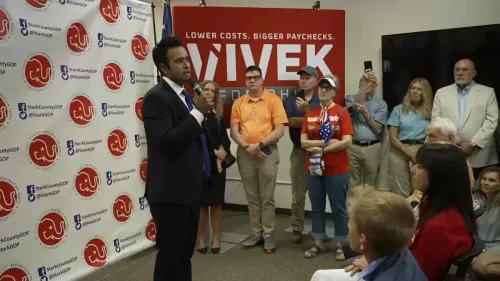
With exactly 27 days separating Ohio voters from a consequential state election, entrepreneur Vivek Ramaswamy — founder and executive chairman of Strive Asset Management and former co-lead of the US Department of Government Efficiency (DOGE) advisory effort — drew a stark contrast on Thursday, October 8, 2026, framing the race as a direct choice between fiscal discipline and government expansion.
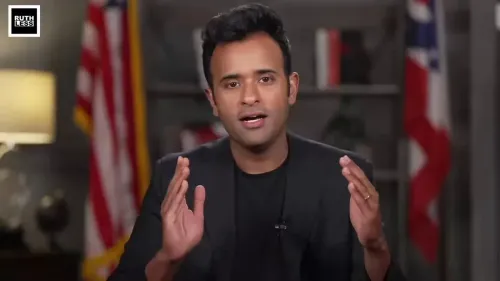
In a post that reads like a closing argument, Ramaswamy stacked three sharp binary choices: lower property taxes against tax hikes, reduced electric bills against rising energy costs, and active Medicaid fraud enforcement against what he characterised as official indifference. The message was disciplined and deliberately plain — no jargon, no policy footnotes, just a three-punch contrast designed to land at kitchen-table level.
Three contrasts, one calculated strategy
The structure of the post is itself the story. By framing the election as a series of 'A vs. B' choices rather than a platform of promises, Ramaswamy is borrowing a rhetorical device that has worked in high-stakes political advertising for decades — force the voter to pick a side before they reach the ballot box. Property taxes, energy bills, and Medicaid waste are not abstract; they show up monthly on statements and premium notices, and that is precisely the point.
The Medicaid fraud line is the sharpest of the three. Medicaid is a joint federal-state programme, and states carry significant discretion in how aggressively they pursue improper payments. Casting a political opponent as someone who would 'ignore' that fraud is a direct bid for fiscal-conservative and independent voters who are sceptical of government spending but depend on public health infrastructure.
Ramaswamy's political evolution — from DOGE to Ohio
Ramaswamy's move toward state-level politics follows a visible trajectory. After a 2024 Republican presidential primary campaign that elevated his national profile, he pivoted to the DOGE advisory role under the new administration, giving him a platform on federal efficiency debates. A state-level candidacy or surrogate role in Ohio would represent the next logical step — translating a national efficiency argument into local ballot terms that directly affect household finances.
His sign-off — 'I believe in the people of our state to choose wisely' — is both a vote of confidence in the electorate and a subtle framing device: it positions opponents as the ones afraid of that choice. In a competitive state like Ohio, where margins are routinely thin, that kind of rhetorical confidence is itself a closing message.
Twenty-seven days is both an eternity and a blink in modern politics. Ramaswamy is betting the clock runs out on complexity — and runs in favour of clarity.
Point of View
Each grounded in a cost that voters feel monthly. It reflects a broader Republican playbook of linking government inefficiency directly to household expense — a strategy that proved potent in the DOGE communications cycle at the federal level and is now being localised for Ohio. The Medicaid fraud emphasis is particularly telling; it threads a needle between cutting government waste and protecting a programme millions of Ohio residents depend on, signalling an intent to hold the political centre while keeping the fiscal-hawk base energised. With no research confirming the specific race or Ramaswamy's formal role in it, the post functions either as a candidate's own campaign rhetoric or as a high-profile surrogate's closing salvo — either way, it sets the terms of debate with 27 days to shape them.
NationPress
8 Oct 2026
Frequently Asked Questions
Is Vivek Ramaswamy running for office in Ohio in 2026?
Ramaswamy's post references 'our state' and an election in 27 days from October 8, 2026, strongly implying a personal stake in an Ohio race, though his exact role — candidate or surrogate — is not confirmed in publicly available research at this time.
What is Vivek Ramaswamy's connection to Ohio?
Ramaswamy was born and raised in Ohio, which has been his home state throughout his career as an entrepreneur and political figure, making Ohio a natural focus for any state-level political engagement.
What is DOGE and what was Ramaswamy's role in it?
The Department of Government Efficiency (DOGE) was a federal advisory initiative launched in 2025; Ramaswamy served as co-lead alongside Elon Musk before stepping away to pursue other activities, including political efforts in Ohio.
What are the main issues Ramaswamy is highlighting in the Ohio election?
He is highlighting three contrasts: property tax cuts versus hikes, lower electric bills versus rising energy costs, and active Medicaid fraud enforcement versus ignoring it — all household-level financial concerns.
What is Strive Asset Management?
Strive Asset Management is an investment firm founded by Vivek Ramaswamy that promotes 'excellence-first' investing, pushing back against ESG (environmental, social, and governance) criteria in corporate decision-making.