South Korea, UN Command launch joint probe into DMZ mine blast that injured 3 soldiers
Synopsis
A 40-strong joint South Korea–UN Command survey team has entered the DMZ to probe a suspected mine blast that injured three South Korean soldiers — with forensic fragments now being tested to determine if North Korea laid the mines. The findings could reshape Seoul's stance toward Pyongyang at an already tense moment on the peninsula.
Key Takeaways
A joint South Korea–UN Command survey team of approximately 40 personnel entered the DMZ on 27 September 2026 to investigate a suspected mine explosion.
The blast, which occurred south of the Military Demarcation Line , left two officers seriously injured ; a third soldier was also hurt.
Forensic analysis of collected mine fragments is under way to determine whether the mines are of South Korean or North Korean origin .
South Korean President Lee Jae Myung's office pledged 'an objective, prompt and thorough investigation,' ruling out any cover-up.
The explosion site lies on a new reconnaissance route inside the DMZ, complicating access for investigators.
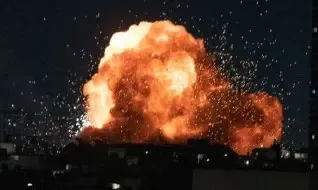
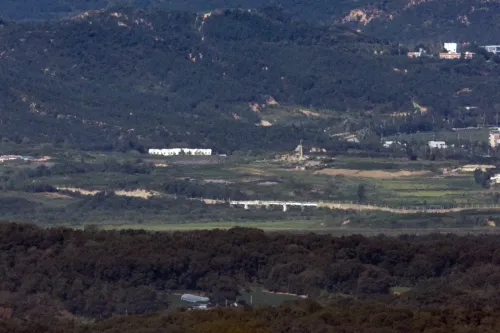
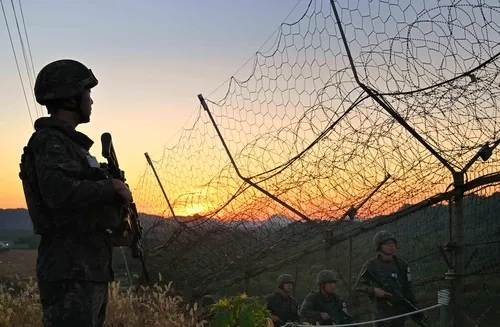
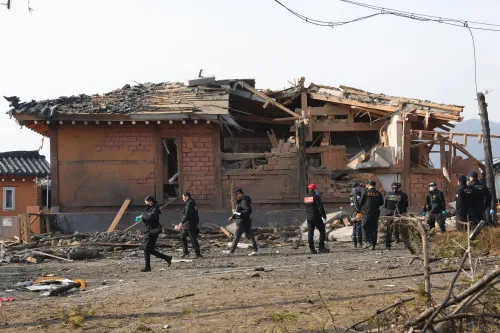
South Korea's military and the UN Command (UNC) have jointly conducted an on-site investigation into a suspected mine explosion inside the Demilitarised Zone (DMZ) that injured three South Korean soldiers, officials confirmed on Sunday, 27 September 2026. The joint probe is one of the most significant UNC-led field investigations along the heavily fortified Korean border in recent memory.
Survey Team Enters the DMZ
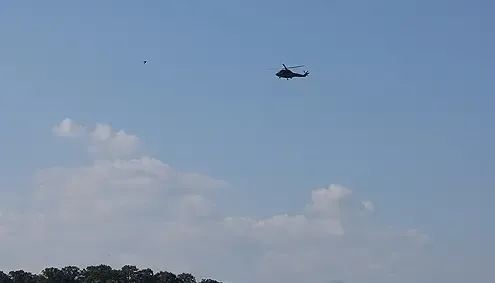
The Joint Chiefs of Staff (JCS) confirmed that a survey team of approximately 40 personnel reached the vicinity of the suspected explosion site inside the DMZ. The team conducted a systematic sweep of the area using mine detectors, marking the first coordinated field inspection since the blast occurred.
The joint probe comes six days after the explosion, which took place south of the Military Demarcation Line (MDL) — the boundary dividing the two Koreas — and left two officers seriously injured.
What South Korea's Presidential Office Said
A senior South Korean presidential official, speaking to reporters in Mexico City while accompanying President Lee Jae Myung on a state visit to Mexico, pledged a swift and transparent investigation. 'An objective, prompt and thorough investigation is under way,' the official said on Thursday.
The official outlined the key questions investigators are working to answer: whether the devices were indeed mines, what type they were, and — critically — whether they were laid by North Korea. 'A thorough fact-finding (probe) is needed to determine whether they were mines, and if they were mines, what kinds of mines they were, as well as whether they were buried by North Korea, and if not, what happened,' the official stated.
Why the Investigation Is Complicated
The explosion site adds a layer of complexity to the probe: it lies on a new reconnaissance route inside the DMZ, making it hazardous for investigators to access. The presidential official acknowledged the difficulty while ruling out any possibility of a cover-up. 'Although dangerous, we will (investigate) promptly to announce the results,' the official said.
Forensic analysis of mine fragments collected at the scene is also under way to determine whether the explosive materiel is of South Korean or North Korean origin — a finding that would significantly shape Seoul's diplomatic and military response.
Context and What Comes Next
The DMZ, stretching roughly 250 kilometres across the Korean Peninsula, is among the most heavily mined strips of land in the world, containing an estimated millions of landmines from both sides. Unexplained explosions inside the zone are rare but not unprecedented; previous incidents have sparked diplomatic standoffs between Seoul and Pyongyang.
This is notably the second time in recent weeks that an incident in the DMZ has drawn both South Korean and UNC attention, underscoring the fragile security environment on the peninsula. The outcome of the forensic analysis and joint field survey is expected to determine whether the government escalates the matter diplomatically with North Korea or treats it as an internal safety incident. Results of the investigation are anticipated in the coming days.
Point of View
Seoul will face intense domestic pressure to respond at a moment when inter-Korean dialogue is already frozen. Equally telling is the detail that the blast occurred on a 'new reconnaissance route,' which raises questions about how thoroughly the DMZ's expanding surveillance infrastructure is being mapped for legacy ordnance risks. The UNC's direct involvement signals Washington's stake in the outcome — a reminder that any escalation here is never purely bilateral.
NationPress
27 Sept 2026
Frequently Asked Questions
What happened in the DMZ mine blast?
A suspected mine explosion occurred inside the Demilitarised Zone (DMZ) south of the Military Demarcation Line, injuring three South Korean soldiers — two of them seriously. The blast happened approximately six days before the joint South Korea–UN Command investigation was launched on 27 September 2026.
Who is investigating the DMZ explosion?
South Korea's Joint Chiefs of Staff (JCS) and the UN Command (UNC) are conducting a joint on-site investigation. A 40-person survey team swept the blast site using mine detectors, while forensic experts separately analyse mine fragments collected at the scene.
Could North Korea be responsible for the DMZ mine blast?
Investigators have not yet determined the origin of the mines. Forensic analysis of collected fragments is under way to establish whether the explosive materiel is of North Korean or South Korean manufacture. A South Korean presidential official said establishing this is a central goal of the probe.
Why is the investigation difficult to carry out?
The explosion site is located on a new reconnaissance route inside the DMZ, making it hazardous to access. South Korean officials have acknowledged the danger but pledged a prompt investigation, coordinating closely with the UN Command to manage safety risks.
What will happen once the investigation concludes?
The results of the joint field survey and forensic analysis are expected within the coming days. If the mines are found to be of North Korean origin, Seoul could escalate the matter diplomatically with Pyongyang; if they are of South Korean origin, the focus would shift to internal safety and route-mapping protocols.