South Korea's Lee visits DMZ landmine soldiers, vows full compensation
Synopsis
South Korean President Lee Jae Myung made a quiet, camera-free hospital visit to soldiers wounded by North Korean-planted mines inside the DMZ — and left with a pointed instruction: make sure their compensation is airtight. With the UNC formally calling it an armistice violation and Pyongyang dismissing the findings, the incident is a live flashpoint on the Korean Peninsula.
Key Takeaways
President Lee Jae Myung visited wounded soldiers at a military hospital on 30 September , pledging full treatment, rehabilitation, and compensation support.
Two mine explosions on the southern side of the DMZ on 21 September injured three South Korean soldiers , two seriously.
A joint South Korean military and UNC investigation found the mines were planted by North Korean forces , calling it a violation of the Korean Armistice.
Kim Yo-jong , sister of Kim Jong-un , dismissed the investigation, accusing Seoul of fabricating results.
The hospital visit was held without media or cameras in consideration of the soldiers' young children.
The wounded soldiers expressed the wish to continue their military service despite their injuries.
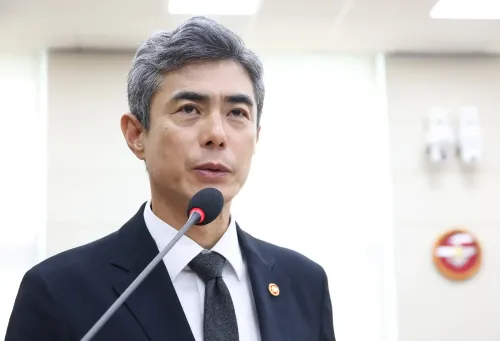
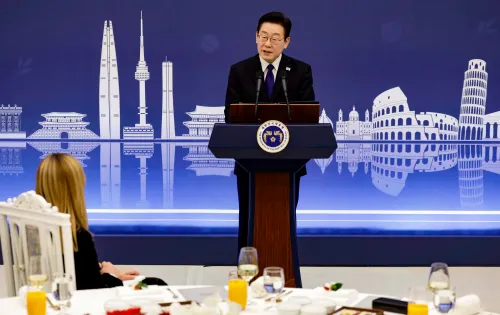
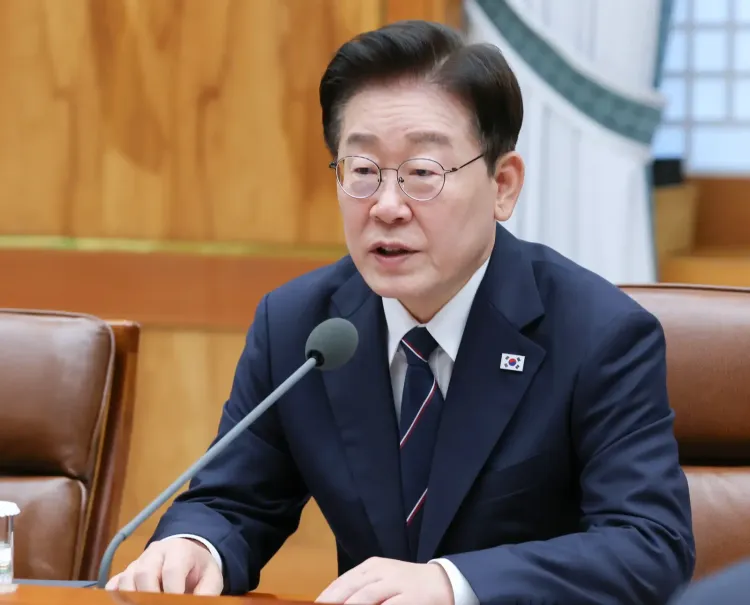
South Korean President Lee Jae Myung on Wednesday, 30 September made an unannounced visit to soldiers wounded in a landmine explosion inside the Demilitarised Zone (DMZ), pledging full treatment support, rehabilitation assistance, and due compensation for their injuries. The visit, conducted without media presence or photographs, was confirmed by presidential spokesperson Kim Sung-wan.
What Happened at the DMZ
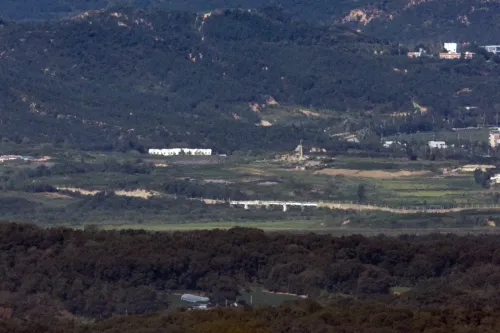
On 21 September, two separate mine explosions on the southern side of the DMZ — the heavily fortified buffer zone dividing the two Koreas — left three South Korean soldiers wounded, with two sustaining serious injuries. A joint investigation conducted by the South Korean military and the United Nations Command (UNC) subsequently determined that the mines had been planted by North Korean forces. The UNC characterised the planting as a 'violation' of the Korean Armistice Agreement that halted the 1950–53 Korean War.
What President Lee Told the Soldiers
At the military hospital, Lee urged the wounded soldiers to concentrate on their recovery and assured them of the government's commitment to their welfare. He specifically questioned officials on whether adequate compensation mechanisms were in place for those wounded in action, instructing them to ensure the soldiers were sufficiently covered. Lee stressed that proper compensation is 'directly related to the morale of the armed services.'
The president additionally directed officials to review broader assistance measures for the injured personnel and to keep their family members informed of developments. The hospital visit was deliberately kept private — without cameras or press — in consideration of the young children of the wounded soldiers, according to the spokesperson.
North Korea Rejects Investigation Findings
Kim Yo-jong, the influential sister of North Korean leader Kim Jong-un, flatly dismissed the joint South Korea-UNC investigation, accusing Seoul of 'cooking up' the results with what she described as malicious intent. Pyongyang has offered no alternative account of how the mines came to be placed on the southern side of the DMZ.
Soldiers' Response and What Comes Next
Despite their injuries, the wounded soldiers expressed a desire to continue serving, with spokesperson Kim quoting one as saying, 'I want to dedicate myself to the country in any position.' Notably, the episode adds fresh tension to an already fraught inter-Korean relationship, coming amid ongoing concerns about North Korea's military posture along the border. Officials are now expected to formally review compensation and rehabilitation frameworks for combat-zone injuries, with findings to be shared with the soldiers' families.
Point of View
Camera-free hospital visit was a calculated signal — to the military, to the public, and to Pyongyang — that Seoul intends to hold North Korea accountable for what the UNC has now formally labelled an armistice violation. Yet the optics of compensation promises sit uneasily alongside the bigger strategic question: if North Korean mines are being laid on the southern side of the DMZ undetected, what does that say about surveillance and deterrence along the world's most heavily armed border? Kim Yo-jong's swift dismissal of the joint investigation follows a now-familiar Pyongyang playbook of pre-emptive denial, but it does nothing to defuse the underlying military tension. How Seoul and Washington respond — or choose not to — will define whether this incident becomes a precedent or a pressure point.
NationPress
30 Sept 2026
Frequently Asked Questions
What caused the DMZ landmine explosion that wounded South Korean soldiers?
On 21 September, two mine explosions on the southern side of the Demilitarised Zone (DMZ) wounded three South Korean soldiers, two of them seriously. A joint South Korean military and United Nations Command investigation concluded the mines were planted by North Korean forces, which the UNC described as a violation of the Korean Armistice Agreement.
Why did President Lee Jae Myung visit the wounded soldiers without media present?
President Lee's hospital visit on 30 September was deliberately kept free of cameras and press coverage out of consideration for the young children of the wounded soldiers, according to presidential spokesperson Kim Sung-wan. The low-profile format was meant to preserve the privacy and dignity of the families involved.
What did North Korea say about the DMZ mine investigation?
Kim Yo-jong, the powerful sister of North Korean leader Kim Jong-un, rejected the findings of the South Korea-UNC joint investigation, accusing Seoul of 'cooking up' the results with malicious intent. Pyongyang has not provided an alternative explanation for how the mines appeared on the southern side of the DMZ.
What compensation did President Lee promise to the wounded soldiers?
President Lee instructed officials to ensure the wounded soldiers receive due compensation for injuries sustained in action, stressing that adequate compensation is directly tied to the morale of the armed services. He also ordered a review of broader assistance measures and directed that the soldiers' families be kept informed of outcomes.
What is the significance of the UNC calling the mine-planting an armistice violation?
The Korean Armistice Agreement, signed in 1953 to halt the Korean War, prohibits actions that escalate military tension in the DMZ. The United Nations Command labelling the North Korean mine-planting a 'violation' carries formal diplomatic weight, as the UNC is the multilateral body responsible for enforcing the armistice on the South Korean side.