Odisha Launches State-Level PMAY Drive for Pucca Houses
Synopsis
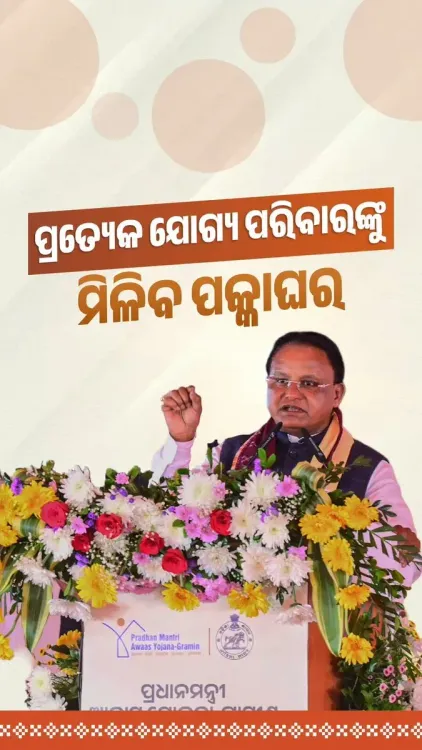
The Chief Minister's Office of Odisha announced the state-level launch of Pradhan Mantri Awas Yojana on 14 November 2026, committing to deliver pucca houses to every eligible family and ensuring no deserving beneficiary is excluded from the national housing scheme.
Key Takeaways
The Chief Minister's Office of Odisha announced the state-level launch of Pradhan Mantri Awas Yojana on 14 November 2026 .
The government pledged that every eligible family in Odisha will receive housing support and no deserving beneficiary will be left out.
PMAY was originally launched nationally in 2015 under India's Housing for All mission, with rural and urban components.
Odisha is responsible for beneficiary identification, construction oversight, and channelling central funds at the district level.
Key milestones to watch include beneficiary list finalisation and district-wise construction progress across the state.
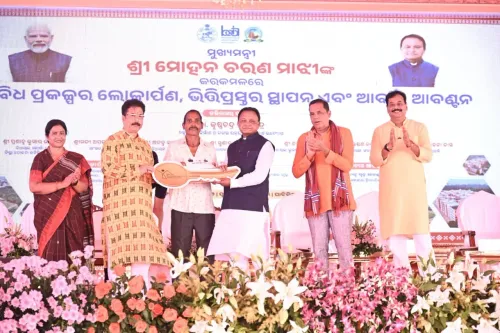
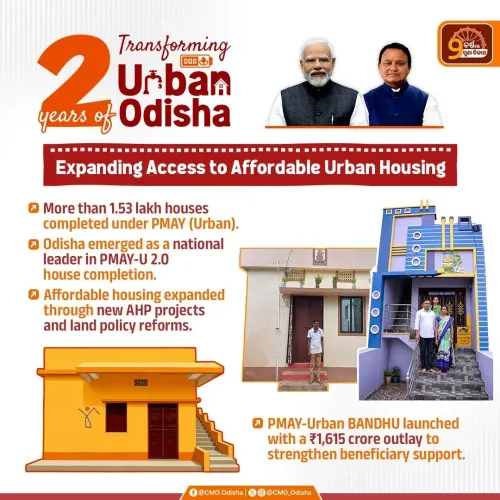
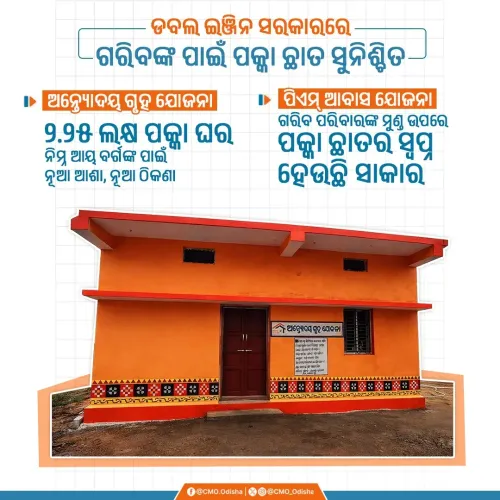
Every deserving family in Odisha getting a pucca roof over their head — that is the promise the state government has now put into motion. The Chief Minister's Office of Odisha announced on Saturday, 14 November 2026 that the state-level launch of the Pradhan Mantri Awas Yojana (PMAY) is underway, with an explicit commitment that no eligible beneficiary will be left behind.
The pledge at the centre of the launch
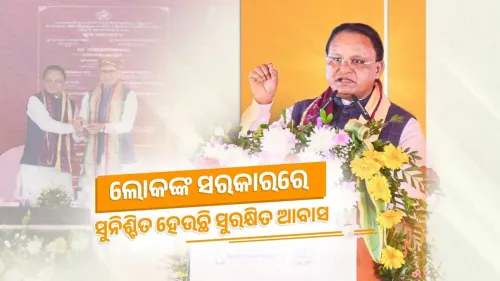
The CMO's post, shared in both Odia and English, frames the rollout as a core promise of the 'people's government' — ଲୋକଙ୍କ ସରକାର ('Lok's sarkar'). The statement reads: 'The Government is committed to ensuring housing support for every eligible family in Odisha, leaving no deserving beneficiary behind.' The dual-language messaging signals an intent to reach voters directly in their mother tongue while keeping the policy framing aligned with the national scheme's terminology.
What PMAY means for Odisha's low-income families
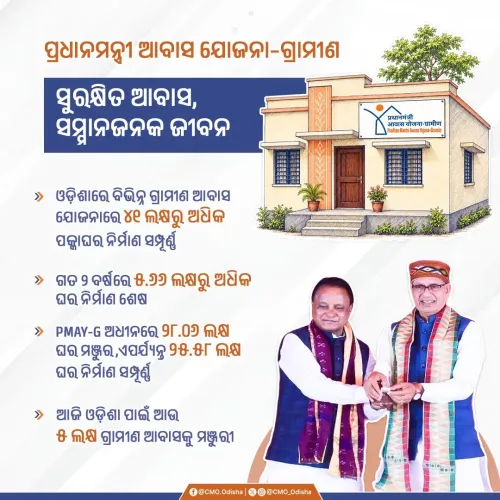
Pradhan Mantri Awas Yojana was launched nationally in 2015 under the Government of India's Housing for All mission, with separate rural (PMAY-G) and urban (PMAY-U) components. The scheme provides financial assistance to eligible low-income households to construct or upgrade to pucca — that is, permanent, all-weather — houses. Odisha, like other states, is responsible for identifying beneficiaries, overseeing construction, and channelling central funds to the ground level.
The state-level launch marks the formal activation of this cycle within Odisha, setting in motion beneficiary list finalisation, district-wise allocation, and construction oversight by rural and urban local bodies. The key watch points going forward will be how quickly district administrations finalise eligible lists and whether construction timelines hold across the state's diverse geographies.
Cooperative federalism in welfare delivery
Odisha's launch fits a well-established pattern of cooperative federalism: the Centre sets the scheme architecture and funds a significant share of costs, while states adapt beneficiary selection criteria to local conditions and drive last-mile delivery. Multiple states have conducted parallel PMAY launches since 2015, each calibrating the rollout to local housing gaps. Odisha's announcement continues that tradition, with the government stressing zero exclusion of deserving households as its headline metric.
The real test, as always with large-scale housing schemes, will be in the district-level data — who gets listed, how fast construction begins, and whether the most vulnerable households clear the verification process without bureaucratic friction. Odisha has put its word on the line. The ground will keep the score.
Point of View
And states compete on implementation quality to claim political credit. The CMO's explicit 'no beneficiary left behind' framing is a deliberate signal ahead of local governance cycles, raising the accountability bar by making exclusion a reputational cost. Whether Odisha can convert this announcement into verified, construction-complete households will determine whether the launch is a policy milestone or a press-release moment. The broader pattern suggests that states with strong district-level administrative capacity tend to outperform on PMAY targets; Odisha's track record on that front will be the real story to watch.
NationPress
14 Nov 2026
Frequently Asked Questions
What is the Pradhan Mantri Awas Yojana launched in Odisha?
Pradhan Mantri Awas Yojana (PMAY) is a central government flagship scheme, launched nationally in 2015, that provides financial assistance to eligible low-income families to build or upgrade to permanent pucca houses. Odisha has now launched the scheme at the state level to extend this benefit to every eligible household in the state.
Who is eligible for PMAY pucca houses in Odisha?
Eligibility under PMAY is based on income criteria and housing conditions set by the central government, with states identifying beneficiaries locally. The Odisha government has stated its commitment to ensuring every deserving family is included and no eligible beneficiary is left out.
When did Odisha launch the state-level PMAY programme?
The Chief Minister's Office of Odisha announced the state-level launch of PMAY on 14 November 2026.
What is the difference between PMAY-G and PMAY-U?
PMAY-G (Gramin) targets rural households while PMAY-U (Urban) addresses housing needs in towns and cities. Both components provide financial assistance for pucca house construction, with states responsible for beneficiary identification and construction oversight in each category.
How will Odisha ensure no eligible family is excluded from PMAY?
The government has publicly committed to leaving no deserving beneficiary behind, which typically involves district-level beneficiary list finalisation, verification drives, and monitoring by rural and urban local bodies. Specific exclusion criteria and verification processes for the November 2026 launch are subject to official district-level guidelines.