Odisha CMO: Pucca homes bring dignity and security to families
Synopsis
The Chief Minister's Office of Odisha framed pucca housing as a guarantee of family identity and dignity, anchoring the state's housing push in the language of self-respect rather than construction statistics alone.
Key Takeaways
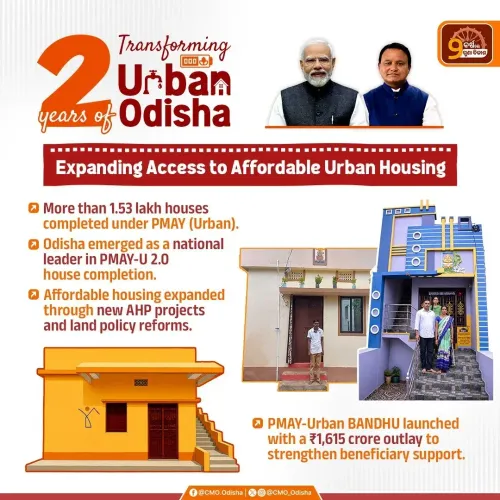
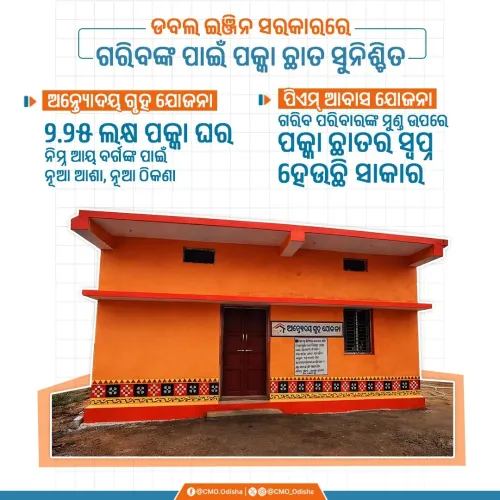
The Chief Minister's Office of Odisha posted on 13 October 2026 emphasising pucca housing as a symbol of family identity and self-respect.
The message, in both Odia and English , states that owning a home brings 'happiness and confidence' to families.
The government framed pucca housing delivery as enabling families to live with 'their own identity, dignity and security.' Pradhan Mantri Awas Yojana (PMAY) , launched in 2015 , is India's flagship scheme to provide pucca houses to rural and urban poor households; Odisha participates alongside state-level programmes.
No specific beneficiary numbers or completion statistics were cited in the post; official progress reports remain the metric to watch.
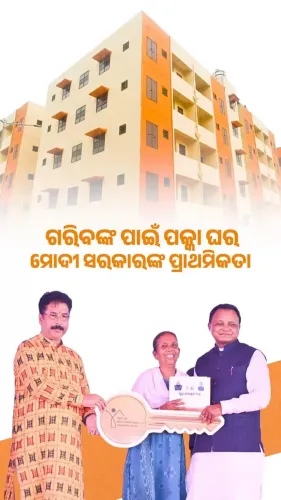
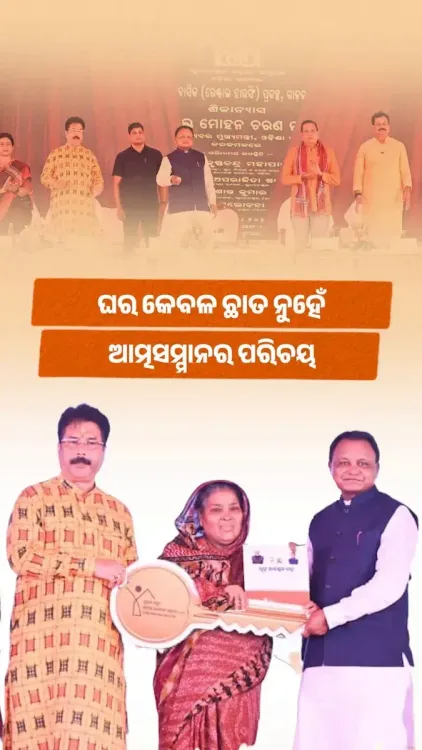
A home is more than four walls — it is proof that a family belongs, and that the state sees them. On Tuesday, 13 October 2026, the Chief Minister's Office of Odisha posted a message on X that framed pucca housing not merely as a construction target but as an act of social restoration, declaring that providing permanent homes gives families 'their own identity, dignity and security.'
The post, written in both Odia and English, opens with a line that resonates far beyond a government update: 'Ghara kebala rahibara sthana nuhein' — 'A home is not merely a place to live; it is the identity of the family and a symbol of self-respect.' That framing — shelter as dignity, not just infrastructure — signals how Odisha's government is choosing to publicly position its housing push.
Kutcha to pucca: what the shift actually means
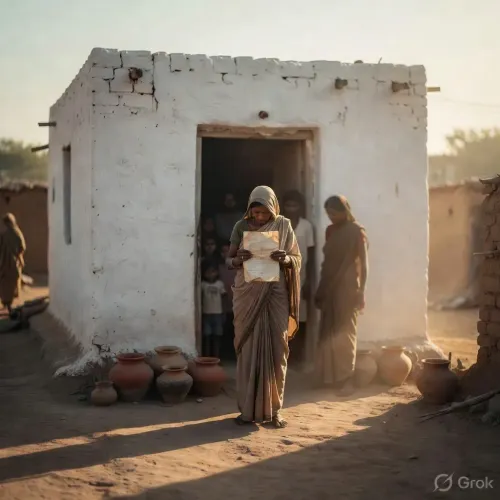
For millions of rural and low-income households across India, a kutcha dwelling — mud walls, thatched roof, no secure foundation — is not just uncomfortable. It is a vulnerability: to floods, to cyclones, to the slow erosion of time. A pucca house with brick walls and a concrete or tiled roof changes the calculus entirely, and Odisha's coastal geography makes that stakes-gap especially vivid.
India's flagship Pradhan Mantri Awas Yojana (PMAY), launched in 2015, set out to close that gap for rural and urban poor households nationwide. Odisha has participated in the scheme while running complementary state-level housing programmes, channelling central and state funds toward beneficiaries who qualify under income and dwelling criteria.
Dignity as the measure of a housing scheme
What is notable about Tuesday's post is its explicit language of self-worth. Governments often lead with numbers — houses sanctioned, units completed, funds disbursed. The CMO's message leads instead with the emotional outcome: 'happiness and confidence' entering the lives of families once their dream of owning a home is realised.
That rhetorical choice matters. It positions housing delivery as a social contract — the government's obligation to ensure that every family can live with a 'swatantra parichaya,' an identity of its own — rather than as a line item in an annual report.
Watching what the numbers say next
The post does not cite specific figures for houses sanctioned or completed under current programmes in Odisha. The state's actual delivery record — how many units have been handed over, how many remain pending, and how the pace compares to national targets — will be the real test of whether the sentiment translates into construction on the ground. Progress reports on PMAY and state housing schemes in Odisha are the key metrics to watch in the months ahead.
The kicker lands itself: when a government anchors its housing programme in the language of dignity rather than data alone, the benchmark it sets for itself is higher — and far more visible to the families still waiting.
Point of View
The Odisha CMO is making a politically deliberate pivot — one that aligns with a broader national trend of framing welfare delivery as rights-based rather than charity-based. This rhetorical shift carries electoral weight in a state with a large rural poor population and a history of cyclone vulnerability that makes permanent shelter viscerally important. The move also pre-empts criticism by setting an expectation of emotional outcomes — happiness, confidence, self-worth — that are harder to audit than unit counts, while simultaneously elevating the perceived stakes of housing shortfalls. Whether the sentiment is matched by verifiable ground-level delivery will determine how durable this framing proves.
NationPress
13 Oct 2026
Frequently Asked Questions
What is the Odisha government's pucca housing scheme?
Odisha participates in the central government's Pradhan Mantri Awas Yojana (PMAY) , launched in 2015, which aims to provide pucca (permanent, brick-and-concrete) houses to rural and urban poor households. The state also runs complementary state-level housing programmes alongside PMAY.
What did the Odisha CMO post about housing on 13 October 2026?
The Chief Minister's Office of Odisha posted in Odia and English that a home is not just a place to live but a symbol of family identity and self-respect, and that providing pucca houses gives families the opportunity to live with dignity and security.
What is a pucca house and why does it matter?
A pucca house has permanent materials — brick walls, a concrete or tiled roof — as opposed to a kutcha dwelling made of mud or thatch. For low-income families, especially in cyclone-prone coastal Odisha, a pucca house offers structural safety, legal identity, and long-term economic security.
What is Pradhan Mantri Awas Yojana (PMAY)?
Pradhan Mantri Awas Yojana is India's flagship housing scheme launched in 2015 by the central government to provide affordable pucca houses to rural and urban poor households. States including Odisha receive central funding under the scheme and match it with state contributions.
How many houses has Odisha built under PMAY?
The 13 October 2026 post from the Odisha CMO did not cite specific figures. Official progress data on houses sanctioned and completed under PMAY and state housing programmes in Odisha would be available through government progress reports.