Odisha CMO Highlights PMAY Urban Push for Affordable Homes
Synopsis
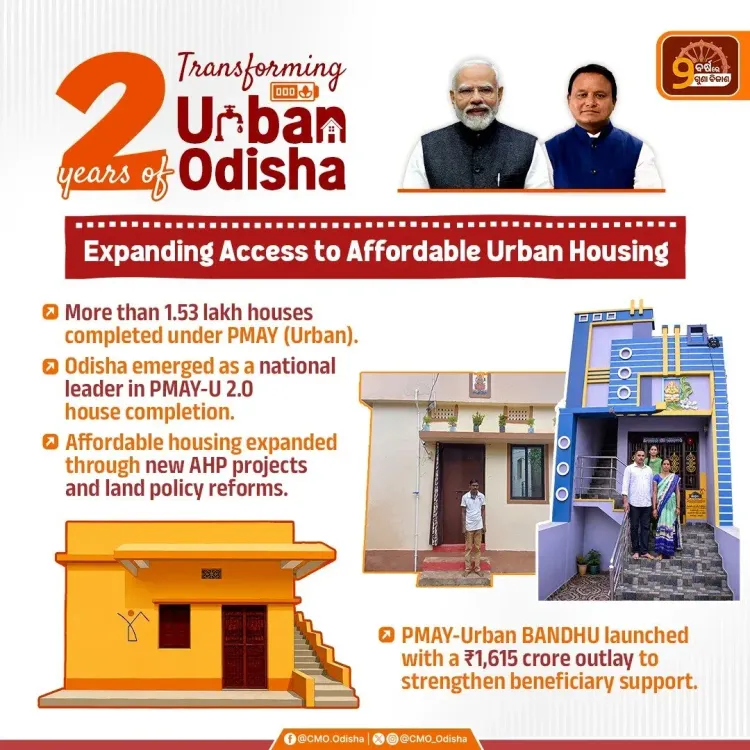
The Chief Minister's Office of Odisha on 22 July 2026 reaffirmed the state's commitment to affordable urban housing, citing accelerated PMAY (Urban) rollout, enhanced beneficiary support, and progressive reforms as the pathway to helping thousands of low-income families own dignified homes.
Key Takeaways
The Chief Minister's Office of Odisha declared affordable housing central to the state's inclusive urban development vision on 22 July 2026 .
PMAY (Urban) , launched by the Government of India in June 2015 , is the flagship scheme being accelerated to deliver pucca homes to eligible urban households.
Odisha is supplementing central PMAY (Urban) funding with state-level housing board mechanisms and direct beneficiary support .
Key reform areas include streamlining land titling, beneficiary identification, fund disbursement, and construction assistance to reduce delivery bottlenecks.
Primary beneficiaries are low-income and economically weaker section urban households in Odisha's cities and towns.
Next milestones to watch include state budget disclosures and Ministry of Housing reports on house completions and fund utilisation.
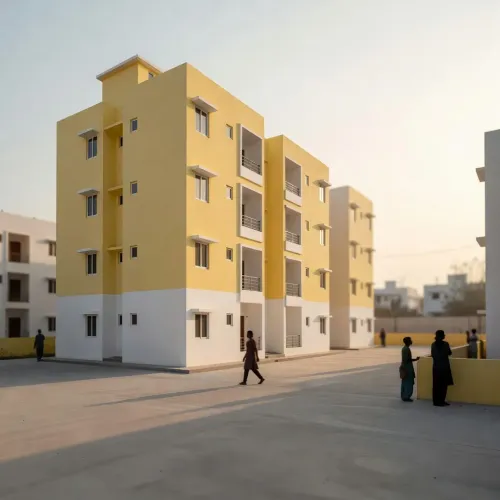
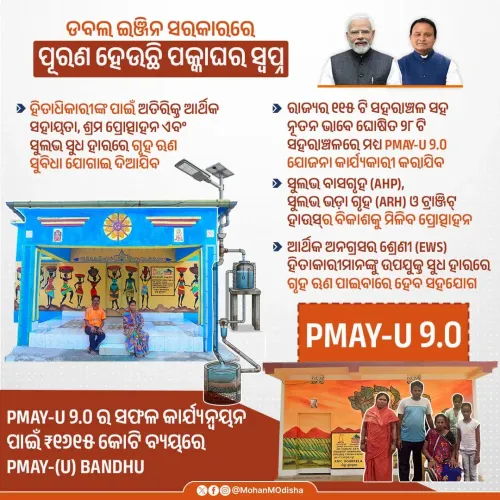
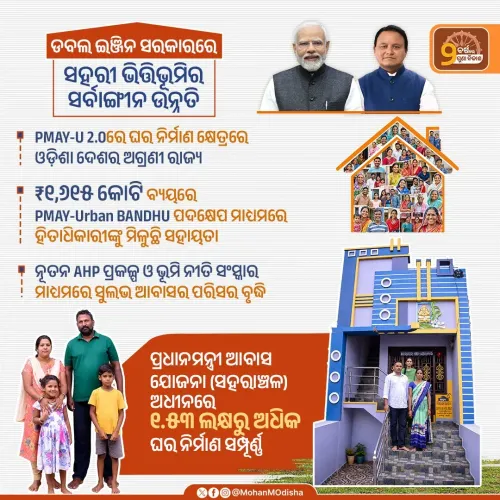
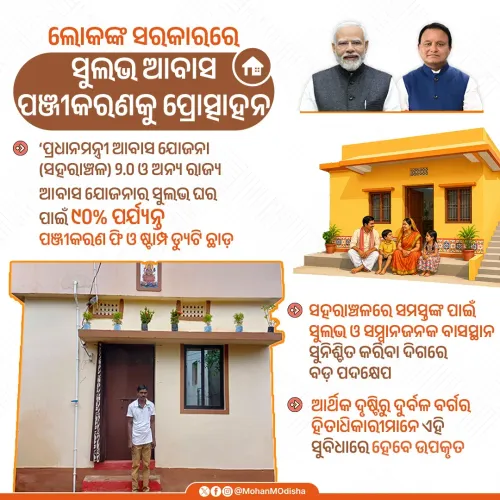
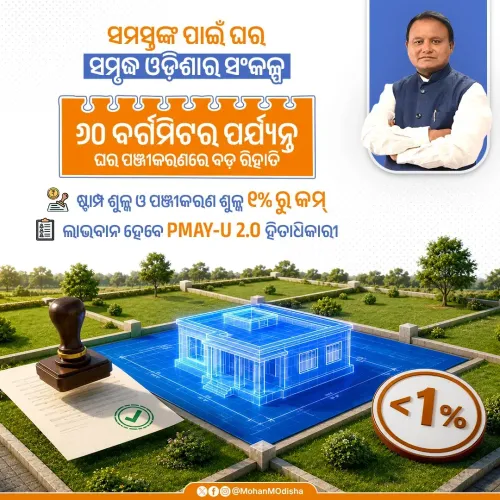
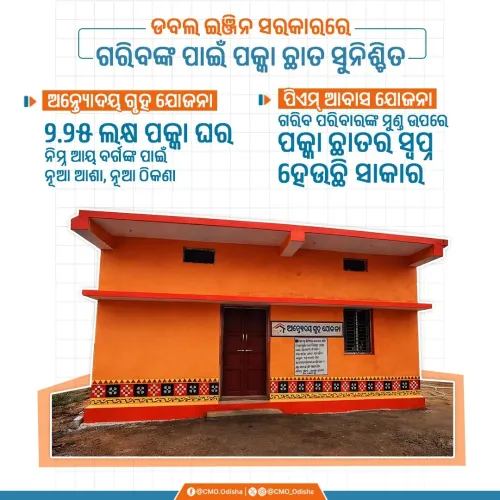
The Chief Minister's Office of Odisha reaffirmed on Wednesday, 22 July 2026 that affordable housing sits at the core of the state's inclusive urban development agenda, citing accelerated implementation of Pradhan Mantri Awas Yojana (Urban), stronger beneficiary support, and progressive housing reforms as key drivers helping thousands of families own a dignified home.
Context
The CMO's post stated: 'Affordable housing remains central to Odisha's vision of inclusive urban development. Accelerated implementation of PMAY (Urban), strengthened beneficiary support and progressive housing reforms are helping thousands of families realise the dream of owning a dignified home.' The statement positions Odisha as actively converging state-level housing policy with the central government's flagship urban housing mission.
PMAY (Urban) was launched by the Government of India in June 2015 with the goal of providing pucca housing to all eligible urban households through four verticals: credit-linked subsidy, beneficiary-led construction, affordable housing in partnership, and in-situ slum redevelopment. The original target of completing all sanctioned houses by 2022 was subsequently extended to accommodate ground-level implementation challenges across states.
Policy Backdrop
Odisha has pursued PMAY (Urban) implementation in coordination with the Ministry of Housing and Urban Affairs, supplementing central funding with state-level housing board mechanisms and direct beneficiary support. This model of central-state convergence has become a template across several Indian states seeking to address urban housing deficits without overburdening state finances.
The emphasis on 'progressive housing reforms' signals efforts to streamline processes such as land titling, beneficiary identification, and fund disbursement — administrative bottlenecks that have historically slowed urban housing delivery across India. Strengthening beneficiary support typically encompasses financial counselling, construction assistance, and grievance redressal to ensure sanctioned houses are actually completed and occupied.
Stakeholders and Impact
The primary beneficiaries of PMAY (Urban) in Odisha are low-income and economically weaker section urban households — families living in slums, rental accommodation, or inadequate housing in the state's cities and towns. For these households, the scheme represents access to subsidised home loans or direct construction support that would otherwise be financially out of reach.
Urban local bodies and housing boards serve as implementing agencies, making their administrative capacity a critical variable in how quickly benefits reach eligible families. The CMO's emphasis on 'accelerated implementation' suggests a state-level push to move faster on sanctioned projects and reduce the gap between approvals and actual house completions.
What's Next
Progress on Odisha's PMAY (Urban) targets is expected to be detailed in forthcoming state budget announcements and periodic reports submitted to the Ministry of Housing and Urban Affairs. Analysts will watch for data on house completions, fund utilisation rates, and beneficiary satisfaction to assess whether the state's stated acceleration translates into measurable outcomes on the ground.
As India's urban population continues to grow, the pressure on states to deliver affordable housing at scale will only intensify. Odisha's framing of housing as central to 'inclusive urban development' aligns with a broader national conversation about ensuring that urbanisation benefits extend to the poorest city-dwellers, not just the middle class.
Point of View
The post implicitly acknowledges that administrative friction, not just funding, has been the historical constraint on PMAY (Urban) outcomes. This positions Odisha within a cohort of BJP-governed states that have made central-scheme convergence a political asset, using scheme delivery data as proof of governance competence. The forward-looking tone also suggests the state is preparing to present housing metrics as a headline achievement in the run-up to budget season or local body elections.
NationPress
21 Oct 2026
Frequently Asked Questions
What is PMAY Urban and how does it work in Odisha?
PMAY (Urban), or Pradhan Mantri Awas Yojana (Urban), is a Government of India scheme launched in June 2015 to provide pucca homes to eligible urban households through credit-linked subsidies, beneficiary-led construction, and slum redevelopment. In Odisha, the state government implements it in coordination with the Ministry of Housing and Urban Affairs, adding state-level beneficiary support and housing board mechanisms.
Who benefits from affordable housing schemes in Odisha cities?
The primary beneficiaries are low-income and economically weaker section urban households — families living in slums, inadequate housing, or rental accommodation in Odisha's cities and towns who cannot afford market-rate homes or home loans without government support.
What did the Odisha CMO say about housing on 22 July 2026?
The Chief Minister's Office of Odisha stated that affordable housing remains central to the state's inclusive urban development vision, and that accelerated PMAY (Urban) implementation, strengthened beneficiary support, and progressive housing reforms are helping thousands of families own a dignified home.
What are the housing reforms being pursued in Odisha?
The reforms referenced in the CMO's statement broadly cover streamlining land titling, improving beneficiary identification processes, faster fund disbursement, and enhanced construction assistance — administrative steps aimed at reducing the gap between sanctioned houses and actual completions.
When was PMAY Urban launched and what was its original deadline?
PMAY (Urban) was launched in June 2015 with a target to complete all sanctioned houses by 2022. The deadline was subsequently extended to address ground-level implementation challenges across states, including in Odisha.