Punjab Govt Panel to Meet Akal Takht Committee in Amritsar on Nov 18

Synopsis
Punjab's government Coordination Committee, formed to resolve concerns over the 'Jaagat Jot Sri Guru Granth Sahib Satkar (Amendment) Act, 2026', will hold direct talks with Sri Akal Takht Sahib's five-member panel at Circuit House, Amritsar, on November 18, 2026, after its fourth meeting reaffirmed full willingness to consider amendments.
Key Takeaways
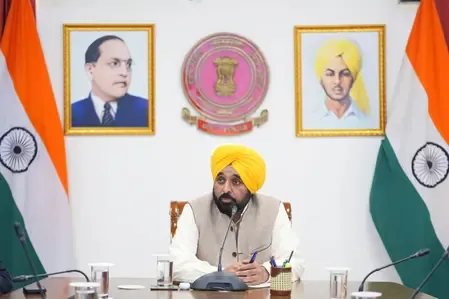
The fourth meeting of Punjab's Coordination Committee was held on November 14, 2026 , with all members unanimously reaffirming willingness to deliberate on amendments to the Act.
The committee will travel to Circuit House, Sri Amritsar Sahib , on November 18, 2026 at 12 noon for direct talks with Sri Akal Takht Sahib's five-member panel.
The visit is also designed to 'facilitate the participation' of the Akal Takht committee — a deliberate diplomatic gesture by the state government.
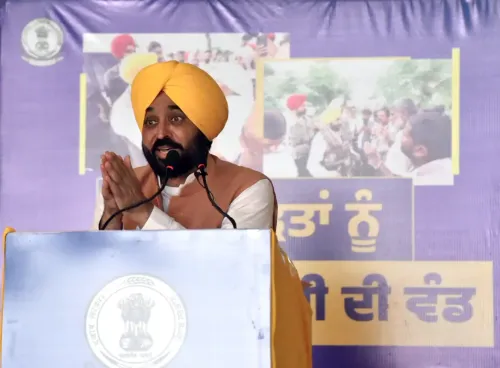
The dispute centres on certain provisions of the 'Jaagat Jot Sri Guru Granth Sahib Satkar (Amendment) Act, 2026' passed by the Bhagwant Mann -led Punjab government.
The November 18 deliberations could determine whether further legislative amendments are tabled in the Punjab Assembly.
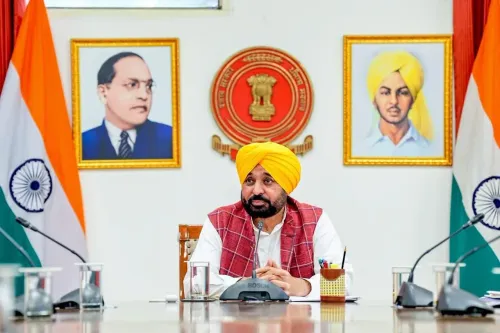
A sensitive religious-legislative standoff in Punjab is moving toward formal dialogue. The Chief Minister's Office of Punjab announced on Saturday, November 14, 2026 that the government's Coordination Committee — formed to address concerns over the 'Jaagat Jot Sri Guru Granth Sahib Satkar (Amendment) Act, 2026' — will travel to Circuit House, Sri Amritsar Sahib, on November 18, 2026 at 12 noon to hold direct deliberations with a five-member committee constituted by Sri Akal Takht Sahib, Sikhism's highest temporal authority.
The Fourth Meeting and What It Decided
This announcement came after the fourth sitting of the Coordination Committee, where all members unanimously reaffirmed the panel's 'full willingness' to deliberate on necessary amendments to the 2026 Act. The committee stated it was 'making every possible effort' toward an amicable resolution of what the government itself has described as a 'highly sensitive matter.'
Crucially, the November 18 visit to Amritsar has been planned not just for talks, but also to 'facilitate the participation' of the Akal Takht's five-member committee — a diplomatic gesture that signals the Punjab government's intent to meet the religious body on its own ground rather than summon it to Chandigarh.
Why the 2026 Act Triggered a Standoff
The 'Jaagat Jot Sri Guru Granth Sahib Satkar (Amendment) Act, 2026' was enacted by the Bhagwant Mann-led Punjab government to amend existing rules governing the respectful treatment of the Guru Granth Sahib — the eternal living scripture and Guru of the Sikhs. Certain provisions of the amendment drew objections from within the Sikh community and from religious institutions, prompting the government to constitute the Coordination Committee as a bridge-building mechanism.
Punjab governments have historically navigated such moments with caution. Legislation touching Guru Granth Sahib protocols sits at the intersection of state law and religious authority — a space where directives from Sri Akal Takht Sahib carry enormous moral weight among the Sikh community, often outpacing statutory authority in practical terms.
Amritsar, November 18: What Hangs in the Balance
The joint deliberations at Circuit House, Sri Amritsar Sahib, will be the first direct face-to-face engagement between the two committees. The outcome could determine whether the Punjab Assembly tables further amendments to the Act or whether the current text can be reconciled with the concerns raised by the Akal Takht's panel.
The stakes extend beyond legislative drafting. How CM Bhagwant Mann's government manages this dialogue will be watched closely by the Sikh diaspora and religious bodies, for whom any perceived disrespect toward Guru Granth Sahib protocols is a matter of deep faith — not merely policy.
If November 18 produces consensus, it could set a template for how the Punjab government navigates future legislation that intersects with Sikh religious authority. If it stalls, the pressure on the Assembly to repeal or substantially rework the Act will intensify sharply.
Point of View
A move that is as much political as it is procedural. Punjab's AAP administration, which came to power partly on a promise of clean, responsive governance in a state with deep Sikh religious sensitivities, cannot afford to be seen as steamrolling religious institutions on a matter as charged as Guru Granth Sahib protocols. The four-meeting cadence of the Coordination Committee also signals that the government is managing optics of due process carefully. The real test, however, arrives on November 18: if the Akal Takht's panel withholds engagement, the legislative and political cost to the Mann government could be substantial.
NationPress
14 Nov 2026
Frequently Asked Questions
What is the 'Jaagat Jot Sri Guru Granth Sahib Satkar (Amendment) Act, 2026'?
It is a Punjab state law that amends existing rules on the respectful treatment of the Guru Granth Sahib, the eternal scripture and Guru of the Sikhs. Certain provisions of the 2026 amendment have drawn objections from within the Sikh community and religious institutions, prompting the government to form a Coordination Committee to build consensus.
What is Sri Akal Takht Sahib and why does its committee matter?
Sri Akal Takht Sahib is the highest temporal authority in Sikhism, located in Amritsar. Its directives on matters of Sikh faith and religious practice carry enormous moral weight in the community, often influencing how state legislation is received and implemented in Punjab.
When and where will the Punjab government committee meet the Akal Takht panel?
The Punjab government's Coordination Committee will meet the five-member committee constituted by Sri Akal Takht Sahib at Circuit House, Sri Amritsar Sahib, on November 18, 2026 at 12 noon.
How many times has the Coordination Committee met so far?
As of November 14, 2026, the Coordination Committee had held its fourth meeting. All members unanimously reaffirmed the panel's full willingness to deliberate on necessary amendments to the 2026 Act.
What could happen after the November 18 Amritsar talks?
If the two committees reach consensus, the Punjab government may table further amendments to the Act in the state Assembly. If the talks stall, pressure on the Mann government to substantially rework or repeal the legislation is likely to grow.