Rajasthan CMO Directs PHED to Activate Contingency Drinking Water Plan
Synopsis
The Rajasthan Chief Minister's Office publicly directed the Public Health and Engineering Department on 14 November 2026 to activate contingency-based drinking water arrangements, tagging CM Bhajan Lal Sharma in a move that puts departmental accountability on record.
Key Takeaways
The Rajasthan CMO issued a public directive on 14 November 2026 ordering the PHED to ensure adequate drinking water supply under a contingency plan.
Chief Minister Bhajan Lal Sharma was directly tagged, signalling top-level accountability for implementation.
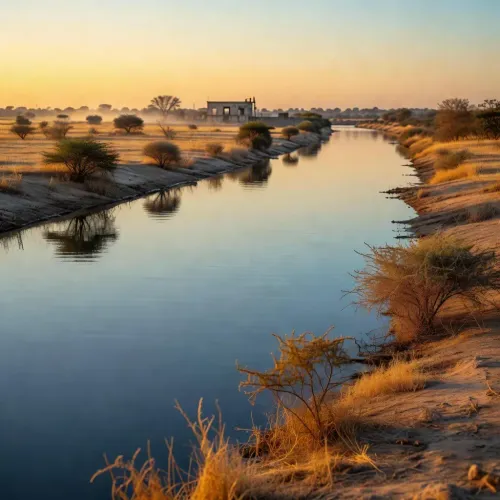
Rajasthan's arid and semi-arid geography makes contingency water planning a recurring administrative necessity.
The national Jal Jeevan Mission (launched 2019 ) frames the broader policy context, targeting rural household tap connections.
Rural households across Rajasthan's water-stressed districts are the primary stakeholders of this directive.
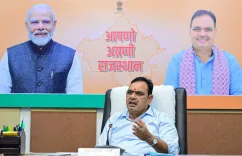
With Rajasthan's perennial water stress demanding constant administrative vigilance, the Chief Minister's Office of Rajasthan issued a pointed directive on Saturday, 14 November 2026, instructing the state's Public Health and Engineering Department (PHED) to ensure adequate drinking water arrangements based on a contingency plan — tagging Chief Minister Bhajan Lal Sharma directly in the order.
The post, shared under the hashtag #आपणो_अग्रणी_राजस्थान ('Our Leading Rajasthan'), reads: 'The Public Health and Engineering Department should make proper arrangements for drinking water based on the contingency plan.' Short. Direct. No ambiguity about who is being held accountable.
Why Rajasthan Always Has a Contingency Plan Ready
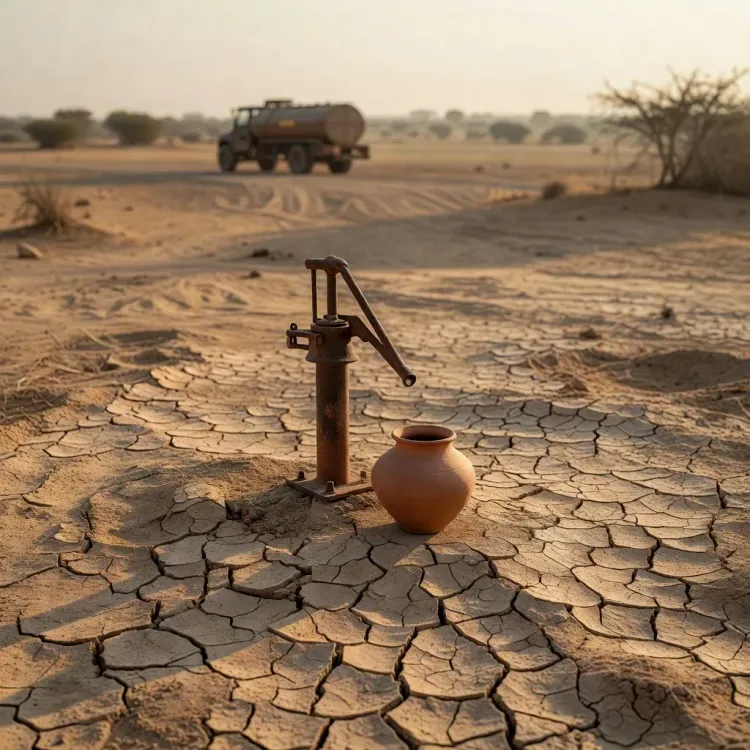
Rajasthan is not a state that can afford to improvise on water. Spanning one of the world's largest arid zones, the state's PHED is mandated to maintain emergency protocols for drinking water supply whenever regular sources come under stress — whether from delayed monsoons, groundwater depletion, or seasonal demand spikes. Successive governments have issued comparable directives, making contingency planning a structural feature of the state's water governance rather than a crisis response.
The national Jal Jeevan Mission, launched in 2019, set the ambition of functional household tap connections across rural India — and Rajasthan, with its vast rural hinterland and dispersed population, has been among the states where last-mile delivery remains a live challenge. Contingency plans typically bridge the gap between scheme coverage and actual supply on the ground.
CM Bhajan Lal Sharma in the Frame
Bhajan Lal Sharma, who has led the state as Chief Minister since December 2023, was directly tagged in the directive — a signal that the instruction carries the weight of the top office, not merely departmental routine. The CMO's use of the official X account to publicly flag the order also functions as a transparency mechanism, putting the PHED's compliance on record.
District-level implementation of the contingency plan — and how quickly the PHED activates supply measures — will be the real test. Rural households across the state's arid districts are the ones who feel the gap between a government order and a working tap.
An administrative directive is only as strong as the pipeline it travels through.
Point of View
Visibly managing Rajasthan's chronic water stress is both a governance imperative and a political necessity, given that rural water access was a key election issue. The directive also underscores a broader pattern: Jal Jeevan Mission coverage alone has not eliminated the need for state-level contingency infrastructure, revealing the gap between national scheme targets and ground-level delivery that Rajasthan continues to navigate.
NationPress
14 Nov 2026
Frequently Asked Questions
What did the Rajasthan CMO direct the PHED to do?
The Rajasthan Chief Minister's Office directed the Public Health and Engineering Department to ensure adequate drinking water arrangements based on a contingency plan, as posted on 14 November 2026.
Who is the Chief Minister of Rajasthan in 2026?
Bhajan Lal Sharma of the BJP has been the Chief Minister of Rajasthan since December 2023.
What is the PHED in Rajasthan?
The Public Health and Engineering Department (PHED) is the state agency responsible for rural drinking water supply, sanitation infrastructure, and related engineering works in Rajasthan.
Why does Rajasthan need a drinking water contingency plan?
Rajasthan's arid and semi-arid climate creates recurring water stress, making contingency planning a standard administrative practice to maintain supply during seasonal shortages or monsoon failures.
What is the Jal Jeevan Mission and how does it relate to Rajasthan?
Jal Jeevan Mission is a national programme launched in 2019 to provide functional household tap connections in rural areas. Rajasthan, with its large rural population and water scarcity, has been a key focus state, though contingency plans remain necessary to bridge supply gaps.