Rajasthan CMO flags Saras Sakhi Yojana for rural women
Synopsis
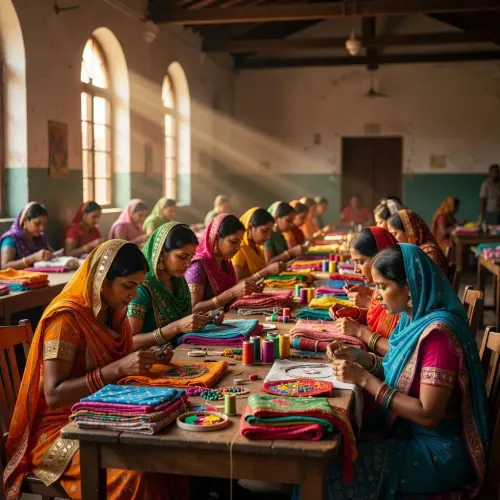
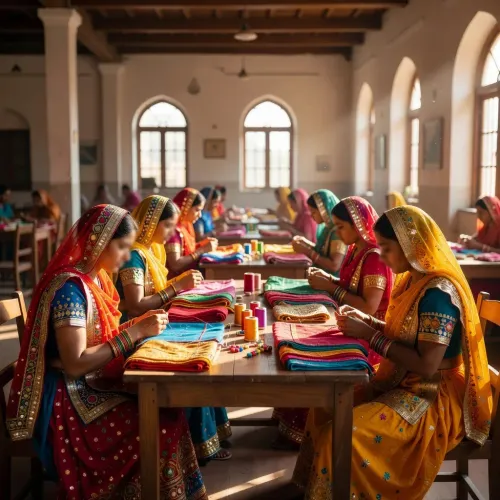
The Chief Minister's Office of Rajasthan spotlighted the Saras Sakhi Yojana on 14 November 2026, describing it as an innovative initiative for rural women's self-reliance and economic prosperity under CM Bhajanlal Sharma's government.
Key Takeaways
The Chief Minister's Office of Rajasthan promoted the Saras Sakhi Yojana on 14 November 2026 via an official post on X.
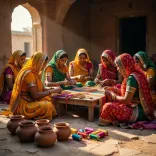
The scheme is described as an 'innovative initiative' aimed at self-reliance and economic prosperity for rural women in Rajasthan.
Chief Minister Bhajanlal Sharma , who took office in December 2023 , was directly tagged in the post, signalling his personal association with the scheme.
The post was shared under the hashtag #आपणो_अग्रणी_राजस्थान ('Our Leading Rajasthan'), part of the government's broader state-branding effort.
Specific details such as launch date, budget allocation, and eligibility criteria have not been officially confirmed in public records.
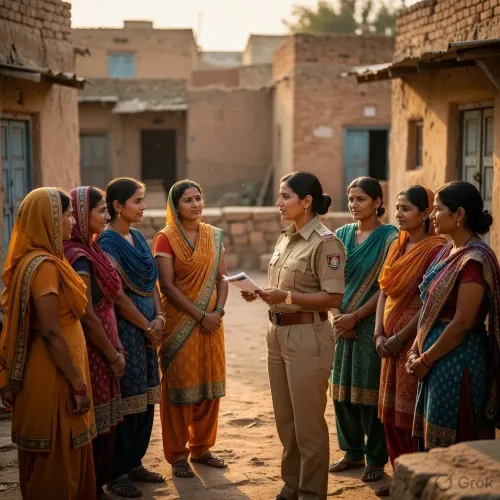
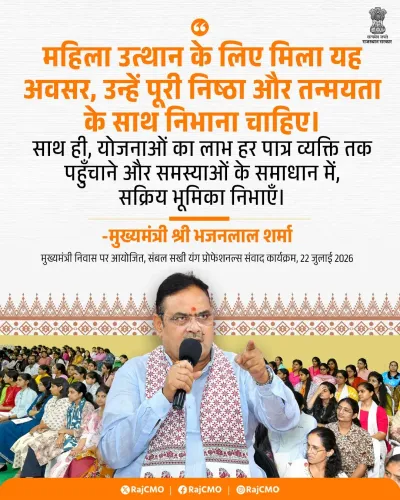
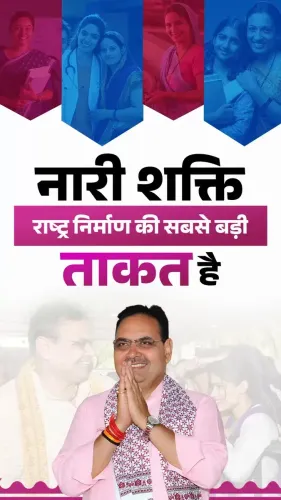
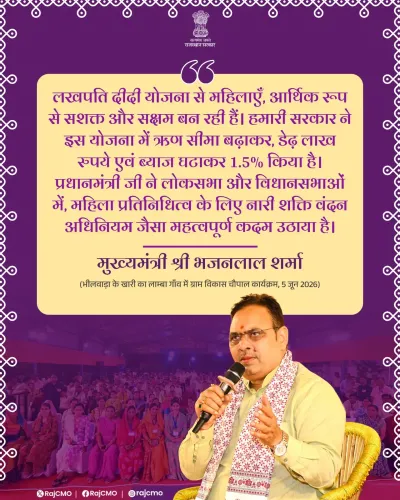
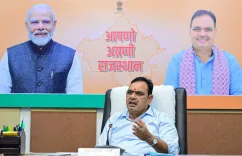
A scheme designed to turn rural women into economically independent earners is getting fresh spotlight from the highest office in Rajasthan. The Chief Minister's Office of Rajasthan on Saturday, 14 November 2026 described the Saras Sakhi Yojana as an 'innovative initiative' aimed at self-reliance and economic prosperity for women in the state's villages — tagging Chief Minister Bhajanlal Sharma directly in the post.
The post, shared under the hashtag #आपणो_अग्रणी_राजस्थान ('Our Leading Rajasthan'), positions the scheme as a flagship expression of the Sharma government's rural-women agenda. In the CMO's own words, the Saras Sakhi Yojana is 'ग्रामीण महिलाओं की आत्मनिर्भरता एवं आर्थिक समृद्धि की दिशा में अभिनव पहल' — 'an innovative initiative towards self-reliance and economic prosperity of rural women.'
Saras Sakhi Yojana and the self-reliance push
Bhajanlal Sharma took charge as Chief Minister in December 2023 after the BJP's victory in the Rajasthan assembly elections, and his administration has since sought to build a visible identity around women's economic empowerment. The Saras Sakhi Yojana fits squarely into that frame — targeting rural women, a demographic that has historically faced sharper gender gaps in income and formal employment across the state.
Rajasthan has a long institutional track record with self-help group models and women-focused welfare schemes, and state governments across the political spectrum have used such programmes to deepen grassroots economic participation. The Saras Sakhi Yojana appears to follow that lineage, though the precise rollout structure, budget allocation, and district-level targets have not yet been officially detailed in public records.
What the scheme's name signals
The word 'Saras' — meaning graceful or beautiful — carries cultural resonance in Rajasthan, while 'Sakhi' means companion or friend, a term long associated with women's collective movements in rural India. The branding itself is deliberate: it frames the government not as a provider but as a partner in women's economic journeys. Whether the scheme delivers on that promise will depend on the specifics — eligibility criteria, financial linkages, and measurable income outcomes in districts where rural female workforce participation remains low.
The CMO's amplification of the scheme on a high-visibility platform signals that the Sharma government intends to keep it at the centre of its welfare narrative heading forward. The real test, as always, is the ground-level reach.
Point of View
Though the absence of disclosed budgetary and operational details leaves the scheme's actual scale open to scrutiny. Rajasthan's rural female workforce participation has persistently lagged national averages, making this a politically and socially high-stakes arena. How quickly the government moves from announcement to auditable outcomes will determine whether the Saras Sakhi Yojana becomes a genuine policy landmark or a well-branded aspiration.
NationPress
14 Nov 2026
Frequently Asked Questions
What is the Saras Sakhi Yojana in Rajasthan?
The Saras Sakhi Yojana is a Rajasthan government scheme aimed at promoting self-reliance and economic prosperity among rural women in the state. It has been described by the Chief Minister's Office as an innovative initiative, though full operational details have not yet been officially disclosed.
Who launched the Saras Sakhi Yojana?
The scheme is associated with the Rajasthan government under Chief Minister Bhajanlal Sharma, who has been in office since December 2023. The Chief Minister's Office officially highlighted the scheme on 14 November 2026.
Who benefits from the Saras Sakhi Yojana?
The scheme targets rural women in Rajasthan, focusing on improving their economic participation and financial independence.
What does Saras Sakhi mean?
'Saras' means graceful or beautiful in Hindi, while 'Sakhi' means companion or friend — a term associated with women's collective and self-help movements in rural India. Together, the name frames the scheme as a supportive partnership with rural women.
What is the hashtag #आपणो_अग्रणी_राजस्थान about?
The hashtag translates to 'Our Leading Rajasthan' and is used by the Rajasthan government as part of its broader state-branding and development narrative on social media.