CM Bhajanlal Sharma Pushes Rajasthan Petrochemical Zone as Investment Hub
Synopsis
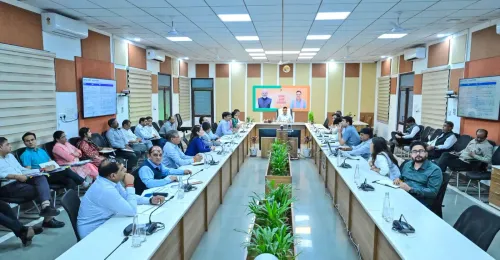
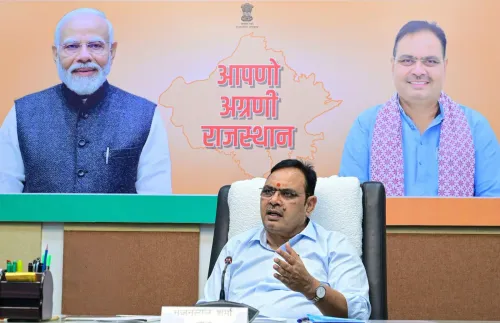
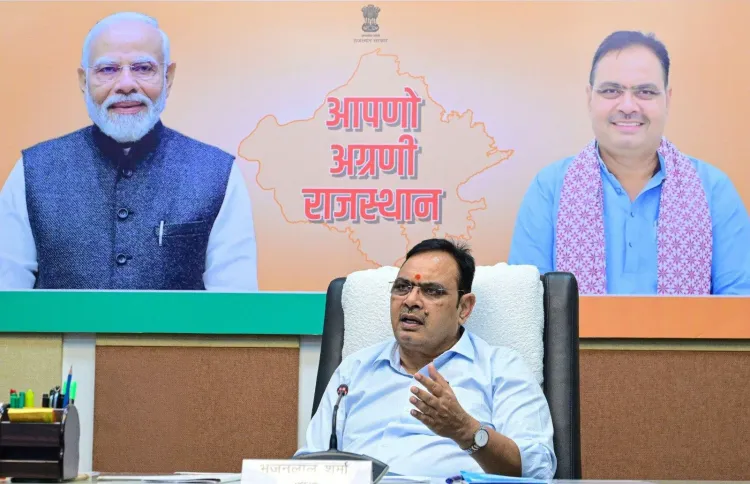
Chief Minister Bhajanlal Sharma chaired a high-level review of the Rajasthan Petrochemical Zone on 14 November 2026, ordering time-bound development and mandating that actual industrial production — not just land allotment — must begin within stipulated deadlines.
Key Takeaways
CM Bhajanlal Sharma chaired a high-level meeting on 14 November 2026 focused on the Rajasthan Petrochemical Zone .
Officials were directed to complete all zone-development processes in a strictly time-bound manner .
Sharma explicitly stated that industrial plot allotment must translate into actual production activity within stipulated timeframes — not remain a formality.
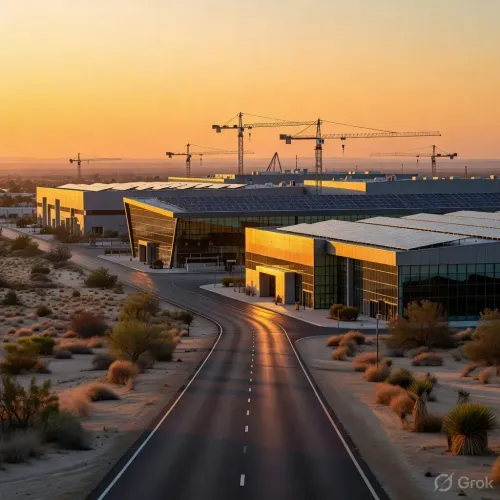
The zone is intended to position Rajasthan as an attractive industrial destination for petrochemical investors.
The initiative aligns with national efforts to expand downstream oil and gas processing capacity in western India.
The BJP government in Rajasthan, in power since December 2023 , has consistently prioritised time-bound industrial execution as a policy benchmark.
Rajasthan's industrial ambitions got a sharp push on Saturday, 14 November 2026, when Chief Minister Bhajanlal Sharma chaired a high-level review meeting on the development of the Rajasthan Petrochemical Zone — and made one thing unmistakably clear: land allotment alone will not cut it.
The directive that goes beyond paperwork
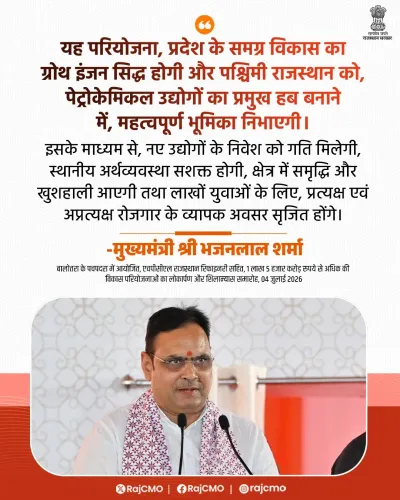
The Chief Minister's Office of Rajasthan announced that Sharma issued direct instructions to officials to complete all zone-development processes in a samayabaddh tarike se (time-bound manner) and to position the zone as an 'attractive industrial destination' for investors. More pointedly, he stressed that the allotment of industrial plots must not remain a mere formality — actual industrial activity on allocated land must begin within the stipulated timeframe.
That distinction matters. Across India's industrial corridor history, land allotment has frequently outpaced real production, leaving zones underutilised for years. Sharma's directive targets precisely that gap.
Why petrochemicals, why now
Rajasthan's pivot to petrochemicals fits squarely into a national push to expand downstream oil and gas processing capacity in western India. The state has historically leaned on agriculture and tourism as economic pillars; dedicated industrial zones represent a deliberate effort to diversify that base and generate large-scale manufacturing employment.
The Rajasthan Petrochemical Zone is a state initiative designed to cluster petrochemical manufacturing and attract both upstream feedstock processors and downstream product manufacturers into a single, planned ecosystem. A focused zone model lowers logistics costs for investors and simplifies regulatory clearances — two factors that routinely decide where large industrial capital lands.
What officials have been tasked to deliver
Beyond the headline directive, the meeting's emphasis on investor attractiveness signals that follow-up steps — including potential investor summits and memoranda of understanding — are likely in the pipeline. Officials have been told to treat the zone not as an administrative exercise but as a live economic product that must compete for capital against other states.
Rajasthan's broader industrial strategy under the current BJP government, since December 2023, has repeatedly stressed ease-of-doing-business improvements and time-bound project execution as benchmarks — and this meeting reinforces that posture with sector-specific urgency.
The real test will come when the first production units inside the zone switch on their machinery. That moment — not the allotment ceremony — is what Bhajanlal Sharma is now on record demanding.
Point of View
The credibility of that accountability framework will be decisive. The meeting also reflects a broader BJP governance pitch — that industrial policy is measured in factory chimneys, not ribbon-cutting ceremonies. Whether enforcement mechanisms back the rhetoric will define the zone's trajectory in the next 12 to 18 months.
NationPress
14 Nov 2026
Frequently Asked Questions
What is the Rajasthan Petrochemical Zone?
The Rajasthan Petrochemical Zone is a state-led initiative to develop a dedicated industrial area for petrochemical manufacturing, designed to attract investment and cluster related industries in a planned ecosystem.
What did CM Bhajanlal Sharma announce about the petrochemical zone?
CM Sharma directed officials to complete all development processes in a time-bound manner and ensured that actual industrial activity must begin on allotted plots within set deadlines, not just formal land allotment.
Why is Rajasthan focusing on petrochemicals?
Rajasthan is diversifying beyond agriculture and tourism by building industrial zones; petrochemicals align with national goals to expand downstream oil and gas processing in western India.
When did Bhajanlal Sharma become Chief Minister of Rajasthan?
Bhajanlal Sharma became Chief Minister of Rajasthan in December 2023, leading the BJP government's industrial and economic development agenda.
What happens if investors get land in the zone but do not start production?
CM Sharma has directed that allotment of industrial plots must not remain a formality — actual production within the stipulated timeframe is to be ensured, implying accountability measures for non-performing allottees.