Rajasthan CM Bhajanlal Maps State Growth, Puts Water First
Synopsis
The Chief Minister's Office of Rajasthan announced on 30 October 2026 that CM Bhajan Lal Sharma's government has signed key water-availability agreements as the opening priority of its state development roadmap, underscoring the BJP administration's focus on Rajasthan's chronic water scarcity.
Key Takeaways
The Rajasthan CMO announced on 30 October 2026 that the state government has finalised important water-availability agreements as the first step in its development roadmap.
Chief Minister Bhajan Lal Sharma of the BJP has been in office since December 2023 , following the party's state assembly election win.
The announcement was made under the hashtag #आपणो_अग्रणी_राजस्थान ('Our Frontrunner Rajasthan'), signalling a branded development campaign.
Water infrastructure is a perennial priority in Rajasthan , which covers over 10 percent of India's land area but faces chronic arid conditions.
The Jal Jeevan Mission (launched 2019 ) provides a national framework within which state-level water agreements typically operate.
Specific terms, partners, and funding details of the current agreements remain publicly undisclosed; state assembly sessions are the next forum to watch.
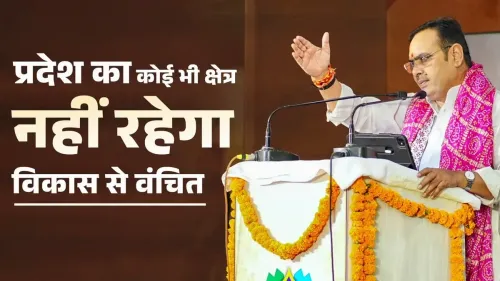
Water before everything else. That is the opening move in Rajasthan Chief Minister Bhajan Lal Sharma's development roadmap for the state — and on Friday, 30 October 2026, the Chief Minister's Office of Rajasthan made it official, announcing that the state government has signed key agreements in the water-availability sector as the first milestone under its broader blueprint for Rajasthan's growth.
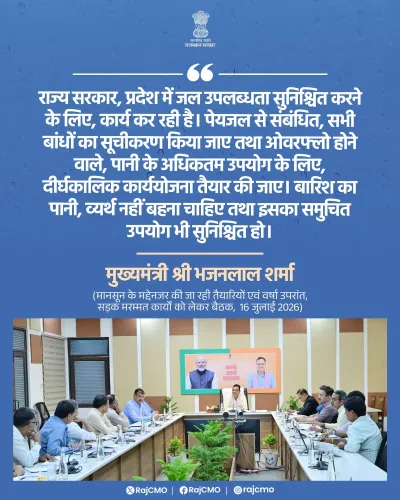
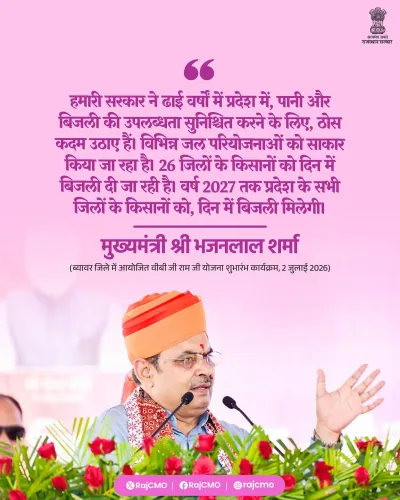
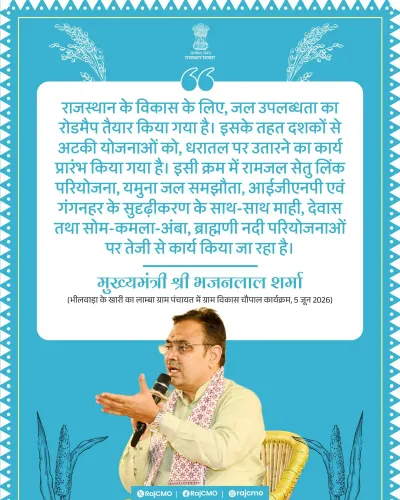
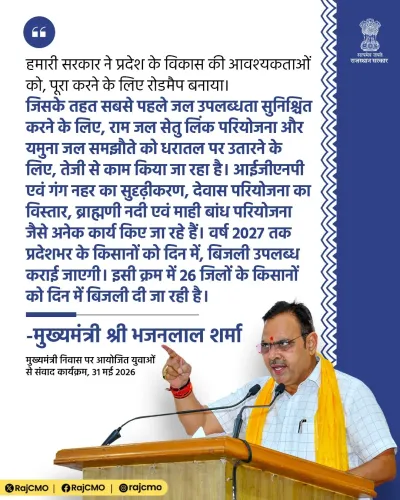
The CMO posted on X with the hashtag #आपणो_अग्रणी_राजस्थान ('Our Frontrunner Rajasthan'), framing the water pacts as the opening chapter of a larger state-level development strategy. The post reads: 'राज्य सरकार ने राजस्थान के विकास का रोडमैप बनाया जिसके तहत, सबसे पहले जल उपलब्धता के क्षेत्र में, महत्वपूर्ण समझौते किए गए' — 'The state government has prepared a development roadmap for Rajasthan, under which, as a first priority, important agreements have been concluded in the area of water availability.'
Why Rajasthan Always Starts With Water
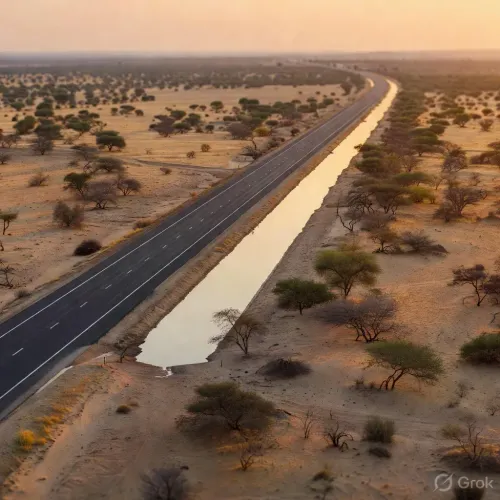
Rajasthan is no ordinary Indian state when it comes to water — it covers over 10 percent of the country's land mass but receives a fraction of the national average rainfall. Its arid and semi-arid landscape has made inter-state river-sharing pacts and canal infrastructure a matter of existential priority for generations of governments, not just a policy preference.
Farmers in the state's desert districts and rural households across its western belt have lived with the arithmetic of scarcity for decades. Successive administrations — regardless of party — have anchored their development agendas on water, because without it, every other promise — from agricultural productivity to industrial investment — remains conditional.
BJP's Roadmap and the Jal Jeevan Backdrop
Sharma, who was sworn in as Chief Minister in December 2023 following the BJP's state assembly election victory, has now formally articulated a sequenced development roadmap. Placing water agreements at the top of that sequence sends a deliberate signal: the administration is anchoring its growth story on the most politically and economically sensitive resource in the state.
The move draws on a national framework already in motion. The Jal Jeevan Mission, launched by the central government in 2019, has been channelling support to states including Rajasthan to expand rural drinking water infrastructure. State-level agreements of this kind typically dovetail with that mission's pipeline — literally and figuratively — linking central funding with state-negotiated supply arrangements.
What the Agreements Could Mean for Farmers and Villages
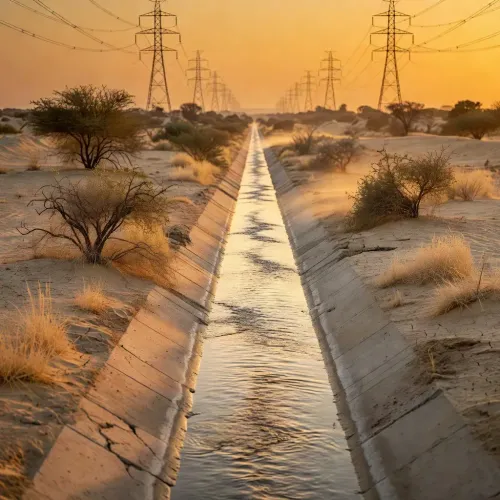
The direct beneficiaries of any meaningful water-availability compact in Rajasthan are the state's farming communities and its millions of rural households. Canal expansion, groundwater recharge projects, or inter-state river water-sharing arrangements all translate, at the ground level, into irrigated fields and taps that run. The specific terms, partner agencies, and funding allocations attached to the current agreements have not yet been disclosed publicly.
What to watch next: the Rajasthan state assembly sessions ahead, where details of these agreements — including budgetary provisions and implementation timelines — are expected to surface. The roadmap framing also signals that water is the first, not the only, domain; more sectoral announcements are likely to follow.
In a state where politics has always followed the water, Bhajan Lal Sharma has chosen to open his development account with the one currency every Rajasthani understands.
Point of View
The Bhajan Lal Sharma administration is making a strategically astute choice — in Rajasthan, water access is both the most urgent material need and the most potent political symbol. Framing it as 'step one' of a sequenced blueprint positions the BJP government as systematic and delivery-focused, a contrast with the ad hoc optics that often plague state governance announcements. The alignment with the central government's Jal Jeevan Mission also reinforces the BJP's centre-state coordination narrative ahead of future electoral cycles. The real test, however, will be in the specifics: until agreement terms, timelines, and funding are public, the roadmap remains a political statement rather than a policy commitment.
NationPress
30 Oct 2026
Frequently Asked Questions
What agreements has the Rajasthan government signed for water availability?
The Rajasthan government has announced that it has concluded important water-availability agreements as the first step of its state development roadmap, though the specific terms, parties, and funding details had not been publicly disclosed as of the announcement on 30 October 2026.
Who is the Chief Minister of Rajasthan in 2026?
Bhajan Lal Sharma of the Bharatiya Janata Party is the Chief Minister of Rajasthan, having been sworn into office in December 2023 after the BJP's victory in the state assembly elections.
Why is water such a critical issue for Rajasthan?
Rajasthan is largely arid and semi-arid, covering over 10 percent of India's land area while receiving well below the national average rainfall. The state relies heavily on inter-state river-sharing pacts and canal projects for both irrigation and drinking water supplies.
What is the Jal Jeevan Mission and how does it relate to Rajasthan?
The Jal Jeevan Mission is a national programme launched in 2019 to expand rural drinking water access across India. Rajasthan is among the states receiving support under the mission to build water infrastructure, and state-level agreements typically align with this framework.
What does #AapnoAgraniRajasthan mean?
The hashtag #आपणो_अग्रणी_राजस्थान translates from Rajasthani as 'Our Frontrunner Rajasthan' and is being used by the CMO as the campaign identifier for the current BJP state government's development agenda.