CM Rio urges ENWO to press on for women and children
Synopsis
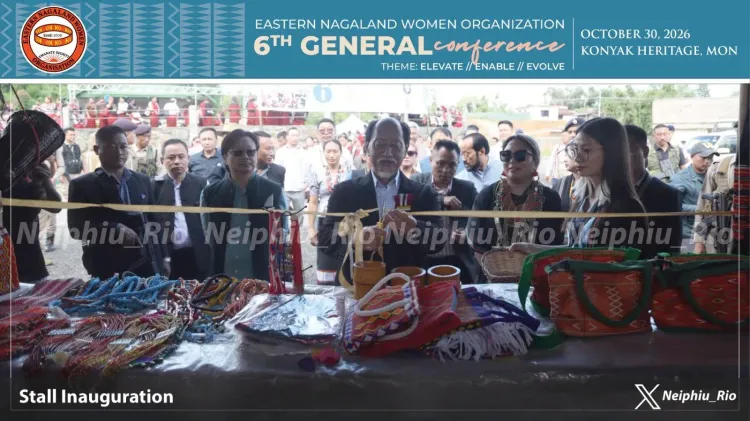
Nagaland CM Neiphiu Rio publicly urged the Eastern Nagaland Women's Organisation to press forward with courage and unity at its ongoing conference, calling for fresh ideas and stronger partnerships to address challenges faced by women and children in the state.
Key Takeaways
CM Neiphiu Rio posted a public message of support for the ENWO conference on October 30, 2026 .
He urged the organisation to continue its work with 'courage, unity, and determination.' The message calls for 'fresh ideas, stronger partnerships' to emerge from the conference deliberations.
The focus is on challenges faced by women and children in Nagaland society.
Eastern Nagaland has distinct tribal identities, giving the CM's call for unity added political resonance.
A message of solidarity from the highest office in Nagaland landed at an ongoing women's conference on Friday, October 30, 2026 — Nagaland Chief Minister Neiphiu Rio publicly urging the Eastern Nagaland Women's Organisation (ENWO) to push forward with courage and unity as it deliberates on the challenges facing women and children in the state.
'I urge the ENWO to continue its noble work with courage, unity, and determination,' CM Rio wrote on X. 'May the deliberations of this Conference lead to fresh ideas, stronger partnerships, and renewed determination to address the challenges faced by women and children in our society.'
Why ENWO's work matters in Nagaland's social fabric
Nagaland's governance landscape is distinctive — statutory law and customary tribal frameworks coexist, and women's organisations occupy a critical space in bridging the two. Groups like the ENWO operate at the community level, addressing issues ranging from child welfare and domestic violence to education access, in areas where formal government reach can be limited.
Northeastern India's tribal societies have long relied on grassroots women's bodies to amplify concerns that formal institutions are slower to address. The Chief Minister's call for 'fresh ideas and stronger partnerships' signals an openness from the state government to align welfare programmes with outcomes the ENWO conference might recommend.
CM Rio's backing — and what it signals for state policy
Chief Minister Rio, a multi-term veteran of Nagaland politics and president of the Nationalist Democratic Progressive Party (NDPP), has periodically used public statements to support civil society organisations working on gender-sensitive governance. Such endorsements carry weight in a state where the Chief Minister's office holds significant moral authority alongside its administrative role.
The emphasis on 'unity' is also pointed — Eastern Nagaland districts have distinct tribal identities and have at times pressed for greater administrative autonomy, making inter-community cohesion a live political theme. A public call for unity from the CM, directed at a women's conference spanning those communities, carries layered significance.
What the ENWO conference resolves — and whether those resolutions find their way into Nagaland's state welfare programmes — will be the real test of whether this message of encouragement translates into action.
Point of View
' Rio signals a governance approach that relies on community organisations as co-architects of policy, not just beneficiaries of it. The nod to 'unity' carries extra weight in Eastern Nagaland, where demands for a separate administrative arrangement remain a live issue. How the ENWO responds — and whether its resolutions are formally absorbed into state programmes — will reveal whether this is strategic alignment or ceremonial goodwill.
NationPress
30 Oct 2026
Frequently Asked Questions
What is the ENWO in Nagaland?
The Eastern Nagaland Women's Organisation (ENWO) is a civil-society body representing women from the eastern districts of Nagaland, working on issues related to women's welfare, child welfare, and community development in tribal areas.
Why did CM Neiphiu Rio address the ENWO conference?
CM Rio posted a public message urging the ENWO to continue its work with courage and unity, expressing hope that its conference deliberations would produce fresh ideas and partnerships to help women and children in Nagaland.
What role do women's organisations play in Nagaland governance?
In Nagaland, where customary tribal laws coexist with statutory frameworks, women's organisations like the ENWO fill critical gaps in welfare delivery, advocacy, and community-level dispute resolution that formal government structures do not always reach.
What challenges do women and children face in Nagaland?
Women and children in Nagaland face challenges spanning education access, healthcare, domestic welfare, and representation within customary tribal governance structures that have historically been male-dominated.