CM Himanta Cites NFHS-6 Data on Assam's Orunodoi Scheme
Synopsis
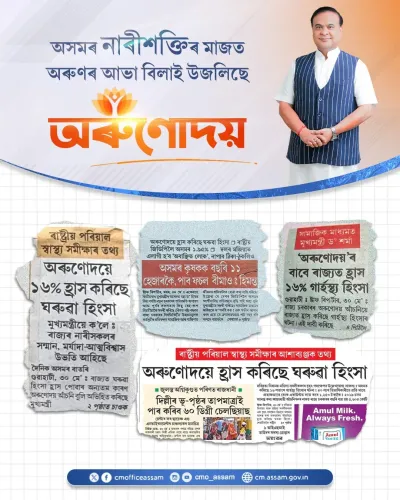
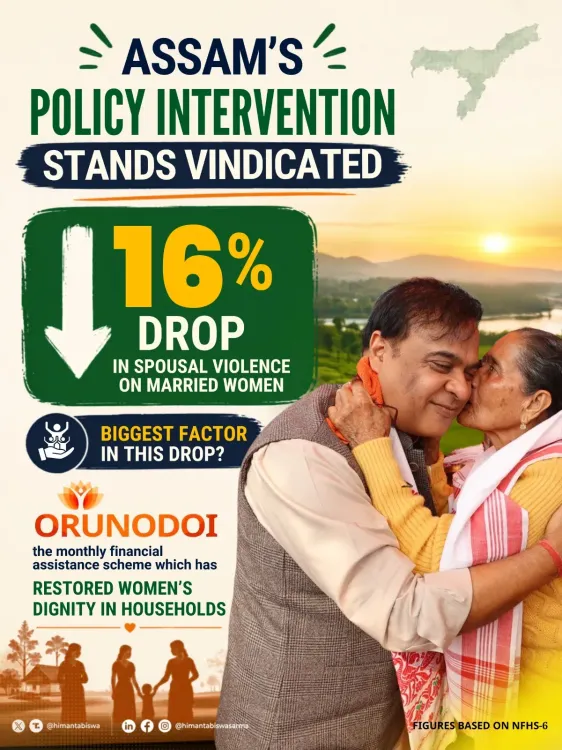
Assam Chief Minister Himanta Biswa Sarma cited NFHS-6 data on 30 May 2026 showing a 16 per cent decline in spousal violence against married women in Assam, attributing the shift to the Orunodoi monthly cash-transfer scheme launched in December 2020 for women from low-income households.
Key Takeaways
NFHS-6 data cited by CM Sarma shows a 16 per cent decline in spousal violence against married women in Assam .
The Orunodoi scheme, launched in December 2020 , provides a monthly direct bank transfer of Rs 1,250 to women heads of poor households.
CM Sarma described economic empowerment as 'one of the strongest tools for social change' and credited Orunodoi as a key factor in the decline.
The finding aligns with a broader national pattern linking female financial inclusion to lower domestic-violence rates observed across multiple NFHS rounds.
Independent corroboration through detailed NFHS-6 state reports and third-party evaluations is still awaited.
As NEDA convenor, Sarma could use the data to advocate similar women-centric transfer schemes across North-East states.
Assam Chief Minister Himanta Biswa Sarma on Saturday, 30 May 2026, cited fresh data from the National Family Health Survey-6 (NFHS-6) to argue that the state's flagship women's cash-transfer programme, Orunodoi, has contributed to a measurable decline in spousal violence against married women in Assam.
Context
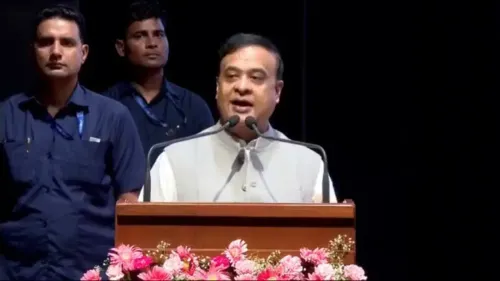
Posting on X, CM Sarma stated that NFHS-6 data records a 16 per cent decline in spousal violence against married women in Assam, and identified the Orunodoi scheme as 'a key factor behind this change.' He framed the finding as a vindication of his long-held position that 'economic empowerment is one of the strongest tools for social change.' The Chief Minister added that financial security for women leads directly to stronger household decision-making and greater dignity within families.
The NFHS is a large-scale, multi-round survey that tracks health, nutrition, and domestic-violence indicators across Indian states. The previous round, NFHS-5, was conducted in 2019–21 and serves as the baseline against which the new figures are being compared.
Policy Backdrop
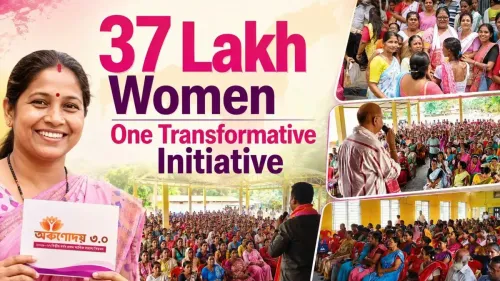
The Orunodoi scheme was launched by the Assam government in December 2020 as a direct benefit transfer programme targeting women who are heads of poor households. Beneficiaries receive a monthly cash transfer of Rs 1,250, credited directly to their bank accounts to promote financial autonomy.
The scheme sits within a broader pattern seen across Indian states of using unconditional or semi-conditional cash transfers to women as a lever for improving gender-based development indicators. Earlier NFHS rounds had already flagged correlations between female economic participation and lower rates of spousal violence in several regions, lending a prior evidential basis to the argument CM Sarma is now advancing.
Since taking charge in 2021, the Sarma-led government has placed women-centric welfare schemes alongside infrastructure expansion and demographic-security measures as pillars of its social development agenda in Assam.
Stakeholders and Impact
The primary beneficiaries of Orunodoi are married women from low-income households across Assam. If the NFHS-6 attribution holds under independent scrutiny, the data would represent one of the more concrete state-level demonstrations that direct cash transfers to women can reduce domestic violence — a finding with potential policy implications for other states.
Women's rights advocates and public-health researchers are likely to examine the methodology behind the 16 per cent figure closely, particularly the question of whether the decline can be causally attributed to Orunodoi alone or reflects a combination of social and economic factors over the same period.
What's Next
The publication of detailed NFHS-6 state-level reports and any independent third-party evaluations of Orunodoi will be critical in substantiating the causal link CM Sarma has drawn. Analysts will also watch whether the Assam government moves to expand the scheme's coverage or monthly transfer amount on the back of this data.
More broadly, the findings — if corroborated — could accelerate similar women-focused direct benefit transfer programmes in other North-East states under the North-East Democratic Alliance (NEDA), where Sarma serves as convenor, and potentially influence the design of centrally sponsored welfare schemes.
Point of View
The Assam government is positioning cash transfers not merely as poverty relief but as instruments of gender justice, a framing that widens the scheme's political appeal. The claim also fits a national BJP pattern of using welfare data to counter opposition narratives on women's safety. However, the causal attribution to a single scheme will face scrutiny; how robustly the NFHS-6 methodology isolates Orunodoi's effect from other concurrent interventions will determine whether this becomes a replicable policy model or a contested data point.
NationPress
19 Sept 2026
Frequently Asked Questions
What is the Orunodoi scheme in Assam?
Orunodoi is an Assam government direct benefit transfer programme launched in December 2020 that provides a monthly cash transfer of Rs 1,250 directly to the bank accounts of women who are heads of economically weaker households, aimed at promoting their financial autonomy.
What does NFHS-6 say about spousal violence in Assam?
According to data cited by Chief Minister Himanta Biswa Sarma, NFHS-6 records a 16 per cent decline in spousal violence against married women in Assam, with the Orunodoi scheme identified as a key contributing factor.
How does Orunodoi reduce domestic violence?
The scheme provides women with independent financial resources, which the Assam government argues increases their bargaining power within households, contributes to stronger family decision-making, and reduces economic dependence — factors linked by research to lower rates of spousal violence.
What is NFHS-6 and when was it conducted?
The National Family Health Survey-6 (NFHS-6) is the latest round of India's large-scale multi-state survey tracking health, nutrition, and domestic-violence indicators. It follows NFHS-5, which was conducted in 2019–21.
Who is Himanta Biswa Sarma?
Himanta Biswa Sarma is the Chief Minister of Assam and a senior BJP leader. He has led the state since May 2021 and also serves as the convenor of the North-East Democratic Alliance (NEDA), a grouping of BJP-aligned parties in the North-East.