CM Himanta spotlights Orunodoi as Assam's women rise
Synopsis
Assam CM Himanta Biswa Sarma celebrated the state's Orunodoi direct cash-transfer scheme on 17 August 2026, saying it is converting women beneficiaries into community leaders and embodying the spirit of Nari Shakti across Assam.
Key Takeaways
CM Himanta Biswa Sarma posted on 17 August 2026 spotlighting Assam's Orunodoi scheme as a driver of women's empowerment.
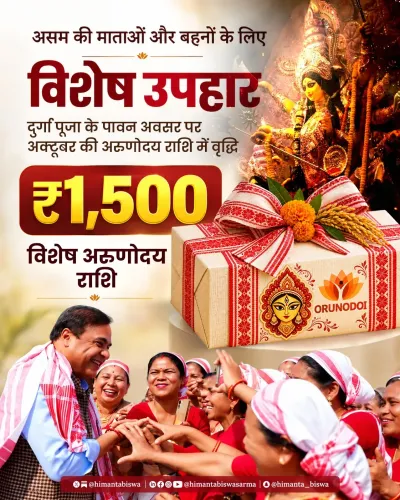
Orunodoi channels monthly direct cash transfers into the bank accounts of women from economically weaker Assam households.
Sarma framed beneficiaries not as passive recipients but as active sources of strength for their communities — a 'women rise, society rises' argument.
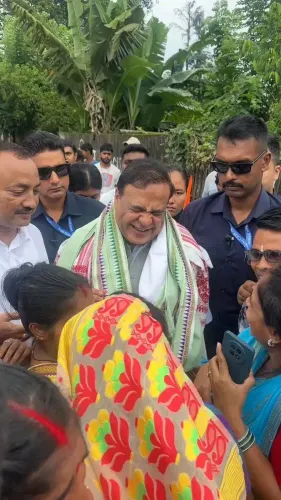
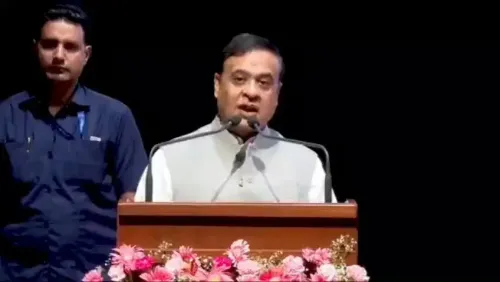
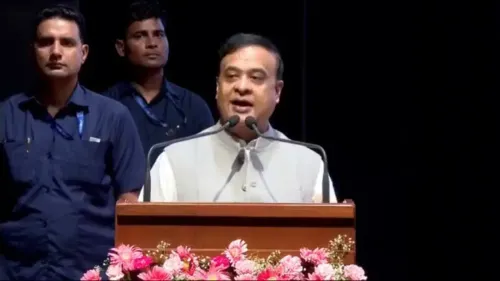
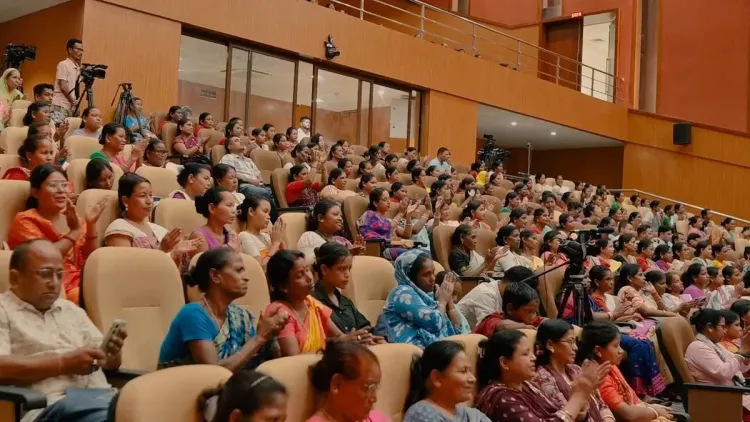
The post included a video, giving the message a ground-level human dimension beyond a standard policy announcement.
The #NariShakti framing aligns Assam's governance narrative with a broader BJP-led women-centric welfare push across Indian states.
Successive expansions of Orunodoi's beneficiary base and transfer amounts signal the scheme's growing political and budgetary priority in Assam.
When women rise, they lift society with them — and Assam Chief Minister Himanta Biswa Sarma is pointing to one scheme as proof. On Monday, 17 August 2026, the Chief Minister took to X to celebrate the Nari Shakti (women's power) of Assam, crediting the state's flagship Orunodoi direct-benefit programme with transforming thousands of women from beneficiaries into pillars of their communities.
What Orunodoi does — and who it reaches
Orunodoi, which translates broadly to 'sunrise' or 'dawn' in Assamese, is a direct cash-transfer scheme run by the Government of Assam that channels monthly financial support directly into the bank accounts of women from economically weaker households. The programme is designed to give women independent purchasing power — covering household essentials, health, and education — without routing money through male family members. By placing funds in women's hands, the scheme aims to shift economic agency at the household level.
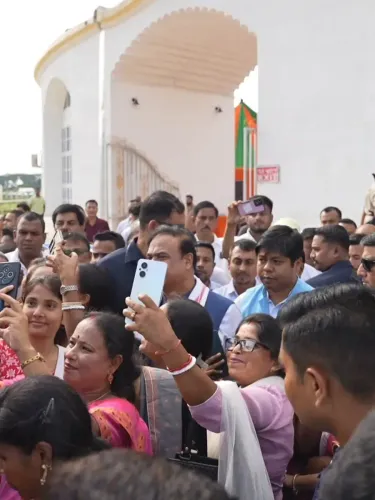
Chief Minister Sarma's post frames the programme not merely as welfare, but as a catalyst for social change: women who are themselves supported by Orunodoi are, in his telling, becoming 'a source of strength for others' — mentoring, organising, and pulling fellow community members upward alongside them.
Nari Shakti as a political and governance signature
The #NariShakti framing is deliberate. Women-led development has become a central plank of BJP-governed states, and Assam has positioned Orunodoi as its most visible proof point. The scheme has seen successive expansions since its launch, with the beneficiary base and monthly transfer amounts revised upward in multiple state budget cycles. For CM Sarma, showcasing the programme on a national platform serves a dual purpose: reinforcing governance credibility and signalling that the Northeast is not a passive recipient of central welfare policy, but an active laboratory for it.
The accompanying video in the post — featuring, presumably, real Orunodoi beneficiaries — gives the message a ground-level human texture that a policy announcement alone cannot. Women speaking in their own voices about economic independence land differently than a minister's press release.
The larger arc: Northeast women and economic agency
Assam's push on women's economic empowerment sits within a broader national conversation about closing gender gaps in financial inclusion. Direct-benefit transfers targeted at women have shown measurable results in states across India — reducing household poverty, improving child nutrition outcomes, and increasing women's participation in local governance. Whether Orunodoi's specific design delivers those outcomes at scale in Assam is a question researchers and auditors will ultimately answer — but the political momentum behind the programme is unmistakable.
For now, CM Sarma is making a clear bet: that in Assam, the story of women's empowerment is the story of the state's progress itself.
If the data backs the narrative, Orunodoi could become a model other northeastern states look to replicate — and that would be the real sunrise the scheme's name promises.
Point of View
Making it harder for opponents to critique without appearing to oppose empowerment itself. For the BJP in the Northeast, where identity and development politics intersect sharply, Orunodoi doubles as both a governance proof point and a coalition-building tool among women voters. The real test will be whether independent assessments of the scheme's reach and impact validate the narrative Sarma is now amplifying nationally.
NationPress
1 Oct 2026
Frequently Asked Questions
What is the Orunodoi scheme in Assam?
Orunodoi is a direct cash-transfer programme run by the Assam government that deposits monthly financial assistance directly into the bank accounts of women from low-income households, giving them independent economic agency.
Who benefits from Orunodoi in Assam?
Women from economically weaker sections of Assam society are the primary beneficiaries, with the scheme designed to cover household essentials, health, and education expenses.
What did CM Himanta Biswa Sarma say about Orunodoi on 17 August 2026?
CM Sarma said Orunodoi beneficiaries are not just becoming empowered themselves but are becoming 'a source of strength for others,' framing the scheme as proof that when women rise, they lift society with them.
What does Orunodoi mean in Assamese?
Orunodoi broadly means 'sunrise' or 'dawn' in Assamese, reflecting the scheme's intent to bring a new beginning of economic independence for women in the state.
How does Orunodoi relate to the Nari Shakti initiative?
CM Sarma positioned Orunodoi as Assam's on-the-ground expression of Nari Shakti — women's power — arguing that direct financial support translates into broader social leadership by women in their communities.