CM Himanta Vows No Barrier Between Assam Women and Welfare
Synopsis
Assam Chief Minister Himanta Biswa Sarma on 10 November 2026 pledged to protect women from social evils and ensure they receive all welfare benefits, reaffirming personal accessibility and citing the state's expanding direct-benefit programmes including the flagship Orunodoi scheme.
Key Takeaways
CM Himanta Biswa Sarma publicly pledged on 10 November 2026 that no barrier will prevent Assam's women from accessing welfare benefits or reaching him directly.
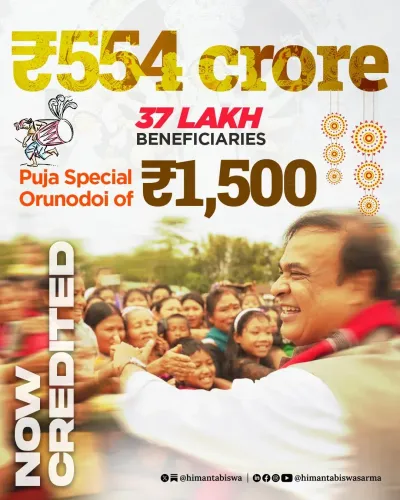
The commitment comes against the backdrop of Assam's Orunodoi scheme , launched in 2020 , which delivers monthly direct financial assistance to women from economically weaker households.
Sarma framed administrative accessibility — not just scheme design — as a core governance promise.
Assam has progressively expanded women-focused direct-benefit programmes under the current state government.
Progress on welfare coverage and grievance redressal is monitored through Assam Legislative Assembly sessions and annual budgets.
No social evil, no bureaucratic wall, no barricade — Assam Chief Minister Himanta Biswa Sarma has put that pledge on record for the state's women, reaffirming on Tuesday, 10 November 2026 that his administration is working to shield them from social harms and ensure every welfare benefit reaches its rightful recipient.
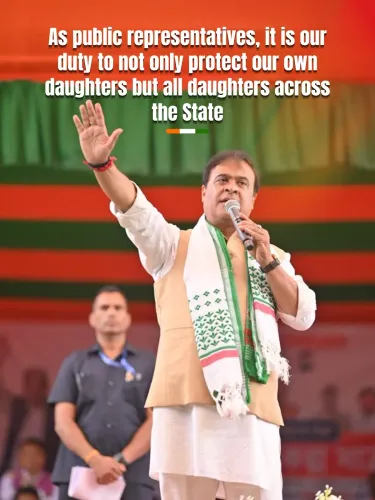
Posting on X, Sarma wrote: 'We are making sure that our sisters don't fall prey to social evils and are able to get all welfare benefits. I am always there to help them realise their goals and no barricade can stop them from reaching me.' The language is direct and personal — a sitting Chief Minister staking his accessibility as a government guarantee.
Orunodoi and the architecture of women's welfare in Assam
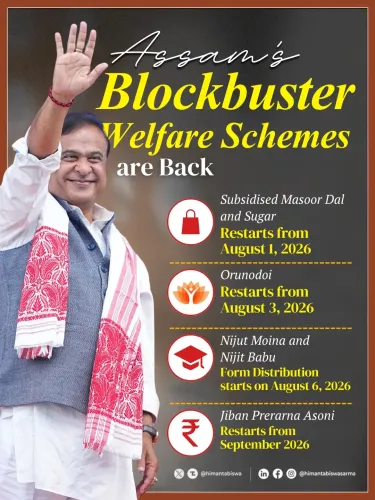
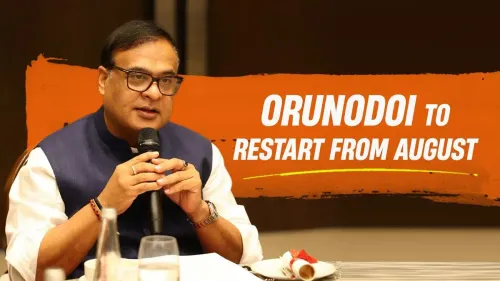
Assam's Orunodoi scheme, launched in 2020, sits at the centre of this commitment. The programme channels monthly direct financial assistance into the accounts of women from economically weaker households — cutting out intermediaries and putting cash in the hands of beneficiaries. It was one of the first major policy acts of the Sarma-era BJP government in the state and has since become a flagship marker of its governance identity.
That architecture — direct benefit, women as primary recipients, state machinery as facilitator — reflects a broader pattern across Northeast India, where gender-specific vulnerabilities intersect with remote geography and limited institutional reach. The emphasis on the Chief Minister himself being personally reachable signals an intent to collapse the distance between citizen complaint and executive response.
Accessibility as policy: what 'no barricade' means in practice
Sarma's framing goes beyond routine welfare messaging. The phrase 'no barricade can stop them from reaching me' positions administrative accessibility — not just scheme delivery — as a governance promise. For women in Assam's districts and remote communities, the gap between entitlement and actual receipt has historically been a live problem: identity document gaps, local gatekeepers, digital illiteracy.
The state government has, over successive budget cycles, expanded the scope of women-focused direct-benefit programmes, with Assam Legislative Assembly sessions tracking both coverage and grievance redressal. Progress on that front will be the measure against which this pledge is ultimately judged.
A Chief Minister's post is easy. A welfare ecosystem with no barricades is the hard part — and Assam's women are watching.
Point of View
Personal protector of women's welfare and dignity. By anchoring the pledge to accessibility — 'no barricade can stop them from reaching me' — he sidesteps institutional critique and makes himself the guarantee. The Orunodoi scheme gives the rhetoric structural backing, but the gap between entitlement and delivery in remote Assam communities remains the unresolved tension. As the 2026 political cycle deepens, welfare performance among women beneficiaries will be a key ledger entry.
NationPress
10 Nov 2026
Frequently Asked Questions
What did Assam CM Himanta Biswa Sarma say about women's welfare on 10 November 2026?
CM Himanta Biswa Sarma pledged that his government is ensuring women do not fall prey to social evils and can access all welfare benefits, adding that no barrier will stop them from reaching him.
What is the Orunodoi scheme in Assam?
Orunodoi is an Assam government scheme launched in 2020 that provides monthly direct financial assistance to women from economically weaker households, aiming at financial inclusion and welfare delivery.
How does the Assam government support women through direct-benefit programmes?
Assam has expanded direct-benefit transfer schemes like Orunodoi, channelling financial assistance directly to women beneficiaries to reduce dependence on intermediaries and improve welfare reach.
What social evils is the Assam government targeting to protect women?
CM Sarma's statement broadly references protection from social harms that make women vulnerable; Assam's welfare push focuses on financial inclusion and reducing gender-specific vulnerabilities, particularly in remote communities.
How can women in Assam access welfare benefits and reach the Chief Minister?
CM Sarma has positioned his administration as directly accessible, emphasising that administrative and social barriers should not prevent women from claiming entitlements, with grievance redressal tracked through state assembly sessions.