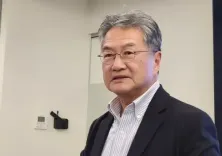
OPCON transfer to South Korea may stall, ex-US diplomat warns
Synopsis
A former top US diplomat has cast serious doubt on the pace of the wartime OPCON transfer to South Korea, saying there is 'no consensus' in Washington — not just on operational control, but also on Seoul's bids for uranium enrichment rights and nuclear submarines. With the OPCON issue framed as political in Seoul and merely technical in Washington, the two allies are arguably talking past each other on one of the alliance's most consequential unresolved questions.
Key Takeaways
Former US diplomat Joseph Yun said the wartime OPCON transfer to South Korea is unlikely to move rapidly, citing a lack of consensus in Washington .
Yun also said there is no US consensus on South Korea 's requests for uranium enrichment rights or nuclear submarines.
South Korean President Lee Jae Myung 's administration wants wartime OPCON back before his term ends in 2030 .
The transfer is 'conditions-based' with no fixed date; Washington emphasises fulfilment of readiness conditions before any handover.
South Korea originally ceded wartime operational control during the 1950–53 Korean War ; peacetime OPCON was returned in 1994 , but wartime control remains with the US.
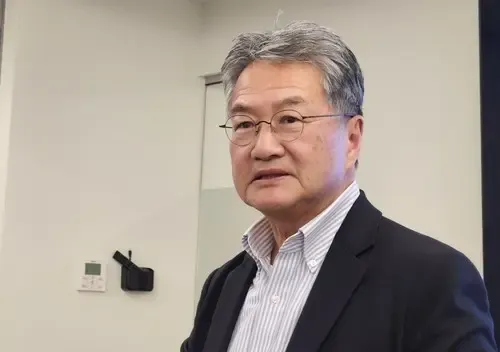
A former senior United States diplomat said on Tuesday, 10 November 2026 that the long-discussed transfer of wartime operational control (OPCON) from Washington to Seoul is unlikely to progress quickly, pointing to deep divisions within the US establishment on the issue. The warning came from Joseph Yun, former acting US ambassador to South Korea and former special representative for North Korea, speaking virtually at a forum hosted by the Korea-US Parliamentarians' Union.
Yun's Core Assessment
"I cannot imagine (the OPCON transfer efforts) moving very rapidly," Yun said at the forum. He went further, noting that the same absence of agreement extends to two other sensitive alliance issues: South Korea's bid to secure uranium enrichment rights for peaceful civilian purposes, and its push to acquire nuclear-powered submarines.
"There is no consensus in Washington that Korea ought to have enrichment or nuclear submarines," Yun said, offering a candid forecast over the remaining two years of US President Donald Trump's administration — particularly in the wake of the November 2026 US midterm elections, in which Democrats won control of both the Senate and the House of Representatives.
The State of OPCON Negotiations
South Korea and the United States have been pursuing a so-called "conditions-based" OPCON transfer with no fixed target date. South Korean President Lee Jae Myung's administration wants to retake wartime OPCON before his five-year term expires in 2030, but Washington has consistently stressed the importance of fulfilling specific military capability conditions before any transition. The two allies have also agreed to cooperate on uranium enrichment and the nuclear submarine project, as outlined in a joint fact sheet released last year following a bilateral summit between Lee and Trump.
An Alliance Divided Over Perception
Yun raised a pointed concern about how differently the two nations view the transfer. South Korea sees OPCON reacquisition as a fundamentally "political" milestone — often framed as the restoration of the country's military sovereignty — while the US treats it as a purely "technical" question of readiness.
"In South Korea, people want to have the OPCON back with no weakening of the alliance. That is impossible," he said. His remarks echo a broader apprehension: that once wartime OPCON is transferred, the US security burden on the Korean Peninsula would diminish, potentially reducing its military commitment. Proponents of Seoul retaining a strong US commitment argue this risk could be offset by South Korea's significantly expanded defence capabilities in recent years.
Historical Context
The roots of the OPCON arrangement stretch back to the 1950–53 Korean War, when South Korea handed operational control of its troops to the US-led UN Command. Control was subsequently transferred to the allies' Combined Forces Command when that command was established in 1978. Seoul regained peacetime OPCON in 1994, but wartime operational control has remained with the United States ever since.
The issue remains deeply divisive within South Korea: proponents frame the transfer as an act of sovereign restoration, while critics argue it could dangerously erode the bilateral alliance at a time when North Korea's nuclear capabilities continue to evolve. With no consensus emerging in Washington and significant structural disagreements on both sides, the OPCON file appears set for further delays.
Point of View
Yun's signal that there is 'no consensus' in Washington on uranium enrichment and nuclear submarines suggests the joint fact sheet from last year's summit may have over-promised on deliverables neither government has the political bandwidth to deliver. With Democrats now controlling both chambers after the midterms, the Trump administration's room to cut bilateral deals on sensitive security questions has narrowed further — making 2030 a highly optimistic deadline for South Korea.
NationPress
10 Nov 2026
Frequently Asked Questions
What is the OPCON transfer between the US and South Korea?
OPCON, or wartime operational control, refers to the authority to command South Korean forces during a wartime scenario — a right that has remained with the United States since the Korean War. South Korea and the US have been negotiating a 'conditions-based' transfer of this authority back to Seoul, without a fixed target date.
Why did Joseph Yun say the OPCON transfer may not move quickly?
Joseph Yun said there is 'no consensus' within Washington on whether South Korea should retake wartime OPCON, warning that the transition could weaken the bilateral alliance. He noted that South Korea sees the transfer as a political issue while the US treats it as a purely technical readiness question.
What is South Korea's position on OPCON and the 2030 deadline?
South Korean President Lee Jae Myung's administration wants to retake wartime OPCON before his five-year term ends in 2030. Seoul frames the transfer as a restoration of military sovereignty, though opponents within South Korea argue it could weaken the alliance amid North Korea's growing nuclear threat.
Why is uranium enrichment and the nuclear submarine issue also stalled?
Joseph Yun stated that there is no US consensus on South Korea acquiring uranium enrichment rights for civilian purposes or nuclear-powered submarines. Despite both issues being referenced in a joint summit fact sheet released last year by the two sides, Yun's remarks suggest Washington has not moved toward a formal commitment.
How did South Korea lose wartime OPCON in the first place?
South Korea transferred operational control of its troops to the US-led UN Command during the 1950–53 Korean War. Control was later moved to the allies' Combined Forces Command in 1978. Seoul recovered peacetime OPCON in 1994, but wartime operational control has remained in US hands ever since.