South Korea's Ahn Gyu-back: No major hurdles in wartime OPCON transfer with US
Synopsis
South Korean Defence Minister Ahn Gyu-back is heading to Washington insisting the OPCON transfer is on track — but US Forces Korea's own timeline points to 2029 at the earliest, not Seoul's preferred 2028. The gap between the allies' schedules, combined with nuclear submarine negotiations, makes this one of the most consequential US-South Korea defence meetings in years.
Key Takeaways
Defence Minister Ahn Gyu-back departed for Washington on 10 May for talks with US Defence Secretary Pete Hegseth on wartime OPCON transfer.
Seoul is targeting 2028 for the OPCON transition, while US Forces Korea commander Gen.
Xavier Brunson cited no later than Q1 2029 to Congress.
Ahn said both sides made "significant progress" under the conditions-based agreement reached in 2015 .
Setting a definitive target year for OPCON transfer is a key agenda item for Monday's meeting.
South Korea's push for nuclear-powered submarines is also on the agenda, with Ahn saying negotiations could begin before the end of the first half of 2025 .
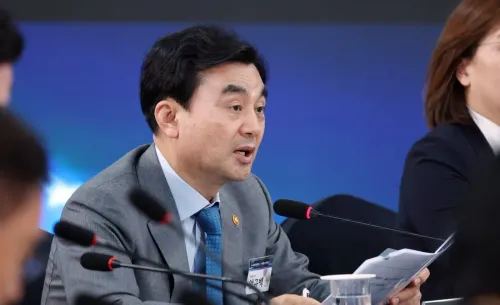
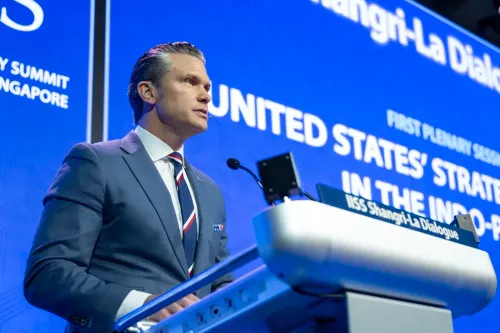
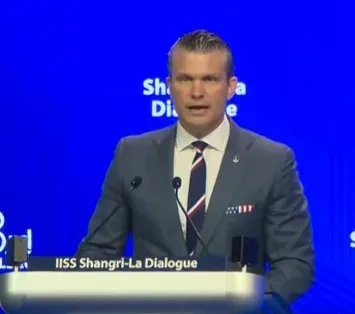
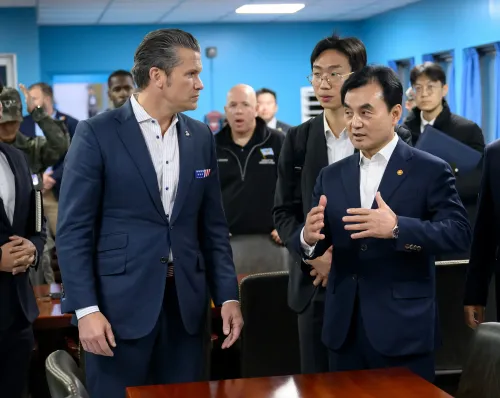
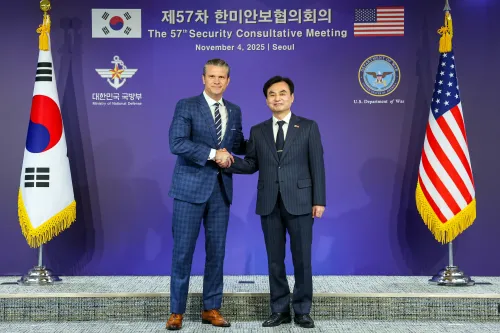
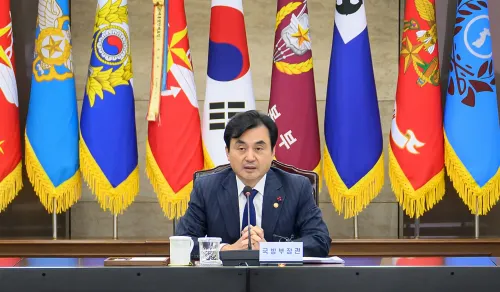
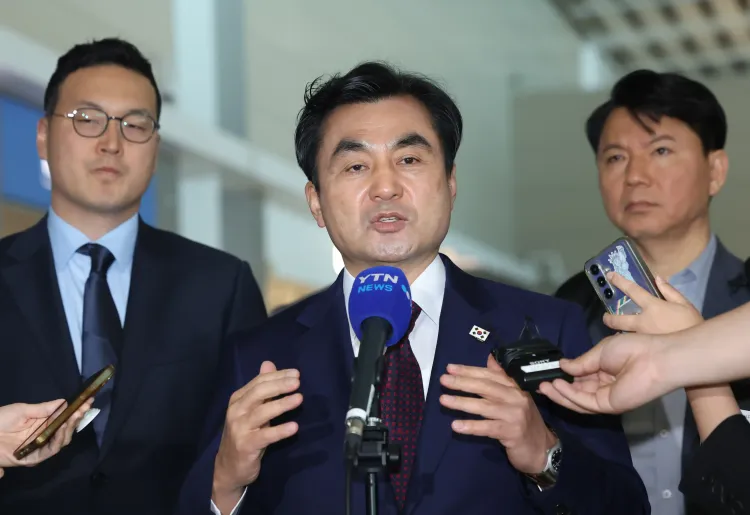
South Korean Defence Minister Ahn Gyu-back said on Sunday, 10 May that South Korea and the United States face "no major issues" in accelerating the transfer of wartime operational control (OPCON), asserting that the two allies have made "significant progress" in meeting the agreed conditions for the transition. Ahn made the remarks before departing for Washington for talks with US Defence Secretary Pete Hegseth, scheduled for Monday (US time).
Key Developments
Seoul is seeking to retake wartime command of its own troops from the US before the Lee Jae Myung government's five-year term ends in 2030, with South Korea reportedly targeting 2028 for the transition. Speaking to reporters at Incheon International Airport, west of Seoul, Ahn said the two sides had been "preparing for the transition in a systematic, stable and consistent manner."
"South Korean and US officials made significant progress in 2015 regarding the wartime OPCON transfer under a conditions-based agreement," Ahn told reporters. "Because those preparations have continued steadily, I do not believe there is any major issue with accelerating the OPCON transition," he added.
The Divergence in Timelines
Ahn's optimism comes amid signs of a gap in expectations between the two allies. US Forces Korea commander Gen. Xavier Brunson told Congress last month that the two countries seek to meet the conditions required for the transfer no later than the first quarter of 2029 — suggesting the transition may not be completed even before US President Donald Trump's term ends on 20 January 2029. Seoul's preferred target of 2028, if confirmed, would represent a notably more ambitious timeline than Washington currently appears to endorse.
Ahn indicated that setting a definitive target year for the wartime OPCON transfer will be among the key agenda items during his talks with Hegseth. At last year's annual consultative meeting between the two defence chiefs, both sides agreed to finalise the second phase of the road map for the transition and to determine a target year at their subsequent meeting.
Nuclear-Powered Submarines on the Agenda
Beyond the OPCON question, Ahn also underscored the importance of advancing South Korea's push for nuclear-powered submarines, a matter that was agreed upon by the two countries' leaders during their summit in October. He expressed confidence that the process could move forward with limited US support on the fuel side, given South Korea's existing submarine-related capabilities.
"If the US provides some level of support on the fuel side, I don't believe there would be major difficulties in moving forward with the process," Ahn said. When asked if negotiations on nuclear-powered submarines could begin before the end of the first half of the year, he replied, "Of course."
What's Next
The Washington talks between Ahn and Hegseth are expected to produce clarity on the OPCON target year and the next steps on the submarine cooperation framework. Both issues carry significant strategic weight for the US-South Korea alliance, as Seoul seeks greater operational autonomy while simultaneously deepening defence-industrial ties with Washington. The outcome of Monday's meeting will be closely watched by regional security analysts and North Korea observers alike.
Point of View
Which has historically leveraged alliance commitments as bargaining chips, remains in office. Ahn's confident public framing ahead of the Hegseth meeting may be as much about managing domestic expectations as it is about the actual state of negotiations. The nuclear submarine thread adds further complexity: fuel support from the US is not a trivial ask, and any formal agreement would carry non-proliferation implications that go well beyond the bilateral relationship. What gets agreed in Washington this week will signal how much strategic independence Seoul can realistically claim before 2030.
NationPress
24 Sept 2026
Frequently Asked Questions
What is wartime OPCON transfer between South Korea and the US?
Wartime operational control (OPCON) refers to the authority to command South Korean and US troops on the Korean Peninsula during a conflict. The US has held this authority since the Korean War, and South Korea has been seeking to reclaim it under a conditions-based agreement framework established in 2015.
What is South Korea's target year for the OPCON transfer?
South Korea is reportedly targeting 2028 for the wartime OPCON transition, before the Lee Jae Myung government's five-year term ends in 2030. However, US Forces Korea commander Gen. Xavier Brunson told Congress that conditions may not be met until the first quarter of 2029.
What will Defence Minister Ahn Gyu-back discuss with Pete Hegseth in Washington?
The talks are expected to cover setting a definitive target year for the wartime OPCON transfer and advancing cooperation on nuclear-powered submarines. Both issues were flagged as key agenda items by Ahn before his departure from Incheon International Airport.
What is the status of South Korea's nuclear-powered submarine programme?
South Korea and the US agreed to move forward on nuclear-powered submarine cooperation during a leaders' summit in October. Ahn said negotiations could begin before the end of the first half of the year, citing South Korea's existing submarine capabilities and the need for US fuel-side support.
Why does the OPCON transfer timeline matter strategically?
Retaking wartime OPCON would give South Korea independent command of its own forces in a conflict, marking a significant shift in the alliance's power structure. The timeline is sensitive because it intersects with the Trump administration's term, North Korea's posture, and South Korea's broader push for greater defence autonomy.