Could South Korea's Retaking of Wartime Operational Control from the US Enhance the Alliance?
Synopsis
As South Korea aims for a pivotal transition of wartime operational control from the US, President Lee Jae Myung's statements reveal a strategic vision to strengthen the bilateral alliance. This move comes amid escalating defense capabilities and increased responsibilities, promising a new chapter in US-South Korea relations.
Key Takeaways
President Lee Jae Myung emphasizes the importance of regaining wartime OPCON.
The move aims to strengthen the US-South Korea alliance .
South Korea is enhancing its defense capabilities.
The transfer of OPCON is a response to increased security responsibilities.
Collaboration in nuclear submarine development is a key focus.
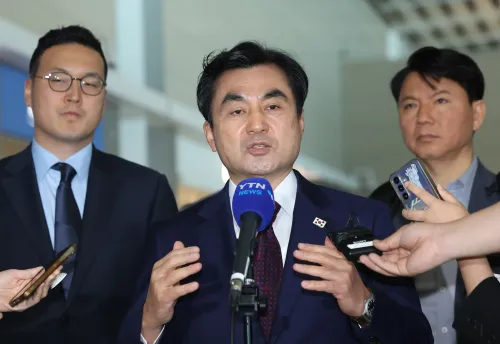
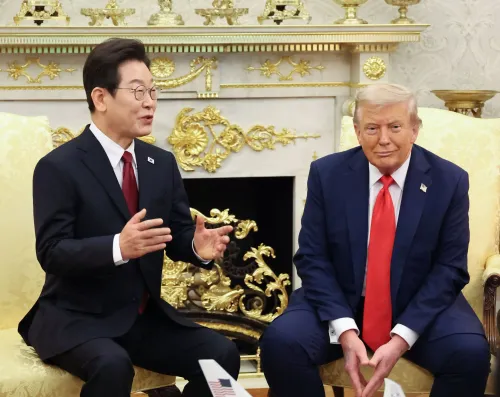
Seoul, Nov 4 (NationPress) - President Lee Jae Myung of South Korea stated on Tuesday that regaining wartime Operational Control (OPCON) from the United States during his presidency would present a crucial opportunity to enhance the bilateral partnership.
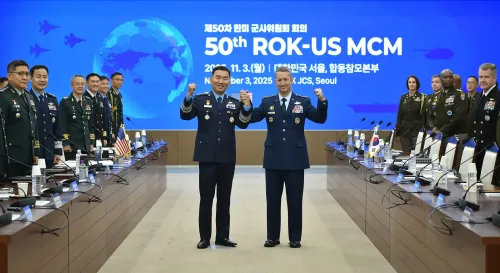
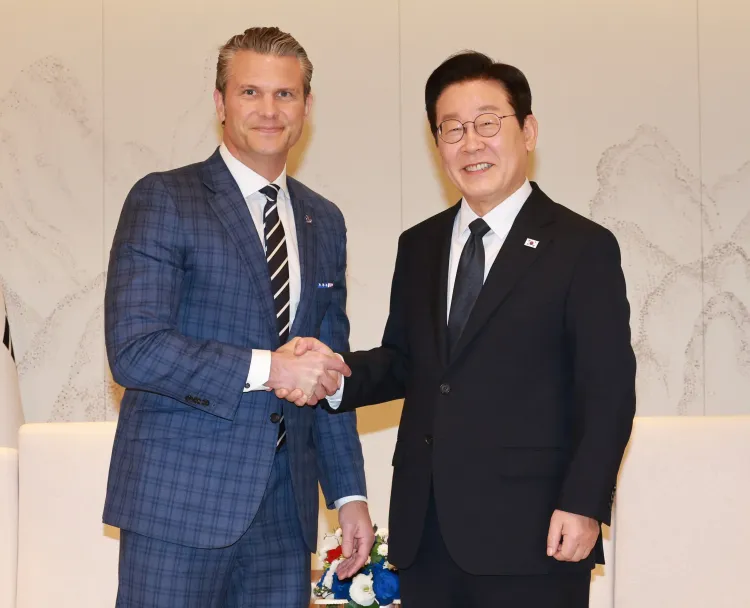
These comments were made during a discussion with US Defence Secretary Pete Hegseth at the presidential office, as reported by spokesperson Kang Yu-jung. The occasion coincided with the annual security dialogue aimed at modernizing the alliance.
“Achieving the transfer of wartime operational control within my term would be a significant chance to strengthen and evolve the alliance between the Republic of Korea and the United States,” Lee stated, as per a report by Yonhap News Agency. His tenure lasts until 2030.
“If the capabilities of the Korean military are notably enhanced, and the Republic of Korea takes a principal role in safeguarding the Korean Peninsula, the US defense obligations in the Indo-Pacific will also be alleviated,” he remarked.
The initiative for the transfer of control comes as the South Korean military is intensifying its efforts to bolster its independent defense capabilities, with the US urging Seoul to assume more significant security responsibilities.
The two nations have been collaborating on a condition-based transition of OPCON. South Korea relinquished operational control of its forces during the 1950-53 Korean War. While it regained peacetime OPCON in 1994, wartime OPCON remains with the US.
Lee also expressed appreciation for President Donald Trump's decision to permit South Korea to acquire nuclear-fuel submarines, asserting that it would “substantially enhance the Korean military's capabilities and the development of the bilateral alliance.”
Hegseth praised South Korea’s move to increase its defense budget and improve military capabilities through advanced conventional arms and the pursuit of nuclear-powered submarines, according to Kang.
The Pentagon chief also anticipated that strengthened collaboration in the shipbuilding sector, including joint naval vessel production, would bolster the defense capabilities of both nations, the spokesperson highlighted.
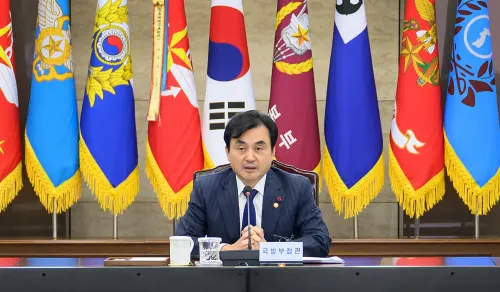
During earlier discussions with Defence Minister Ahn Gyu-back, Hegseth noted that Washington would strive to support the implementation of Trump’s commitment to allow South Korea to construct nuclear-powered submarines at a US shipyard.
This approval followed Lee's request to Trump during their summit at the Asia-Pacific Economic Cooperation summit held last Wednesday in Gyeongju, seeking permission for South Korea to obtain nuclear fuel for the submarine.
Trump later confirmed on social media that he had authorized South Korea to build a nuclear-powered submarine at a Philadelphia shipyard operated by Hanwha Ocean.
Point of View
The potential transition of wartime operational control from the US to South Korea signifies a crucial step toward greater autonomy and responsibility for South Korea. As the nation enhances its defense capabilities, this development may reshape the dynamics of security in the Indo-Pacific region, fostering a more balanced partnership with the US.
NationPress
18 Sept 2026
Frequently Asked Questions
What is Operational Control (OPCON)?
Operational Control (OPCON) refers to the authority to direct military operations and forces. In the context of South Korea, it involves the command of its military forces during wartime.
Why is the transfer of OPCON significant?
The transfer of OPCON is significant as it symbolizes South Korea's growing military capabilities and autonomy, allowing it to take a more active role in its defense and security.
What are the implications of increased South Korean defense spending?
Increased defense spending by South Korea aims to enhance military readiness and capabilities, potentially reducing the US defense burden in the region and strengthening the bilateral alliance.
How does this affect US-South Korea relations?
The move to regain OPCON is likely to enhance US-South Korea relations by fostering mutual respect and collaboration, while also addressing the evolving security landscape in the Indo-Pacific.
What role will nuclear-powered submarines play?
Nuclear-powered submarines will significantly boost South Korea's military capabilities, allowing for enhanced defense strategies and contributing to the overall strength of the alliance with the US.