South Korea to Set OPCON Transfer Timeline in 2025 Defence Talks
Synopsis
South Korea's defence ministry confirmed the wartime OPCON transfer timeline from the US will be set at the 2025 Security Consultative Meeting. A gap between Seoul's reported 2028 target and USFK's 2029 goal signals complex negotiations ahead — with President Lee Jae Myung's term ending in 2030 adding political urgency.
Key Takeaways
South Korea's defence ministry confirmed the wartime OPCON transfer timeline will be set at the 2025 Security Consultative Meeting (SCM) this autumn.
Xavier Brunson stated the allies aim to complete the OPCON transfer conditions no later than Q1 2029 .
Seoul is reportedly targeting 2028 for the transfer — creating a one-year gap with the US position that remains unresolved.
The transfer is "conditions-based" , requiring South Korea to demonstrate capability to lead combined forces, adequate strike/air defence assets, and a stable regional security environment.
Once completed, a four-star South Korean general will command combined wartime forces, with a four-star US general in a supporting role — reversing over 70 years of US command authority.
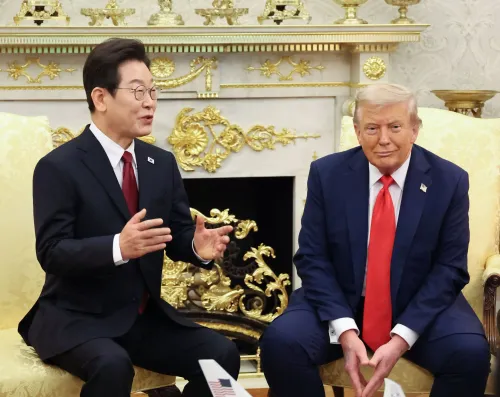
President Lee Jae Myung's five-year term ends in 2030 , adding political urgency to completing the transfer within his presidency.
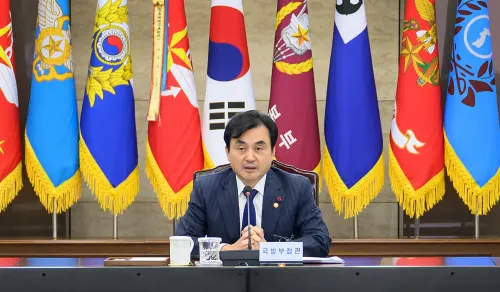
Seoul, South Korea — South Korea's defence ministry announced on Thursday, April 23 that a concrete timeline for the transfer of wartime operational control (OPCON) from the United States to South Korea will be formally decided at this year's annual Security Consultative Meeting (SCM) and subsequently proposed to the presidents of both nations. The announcement marks a significant step in Seoul's long-standing push to reclaim full military sovereignty over its own armed forces.
What Seoul's Defence Ministry Said
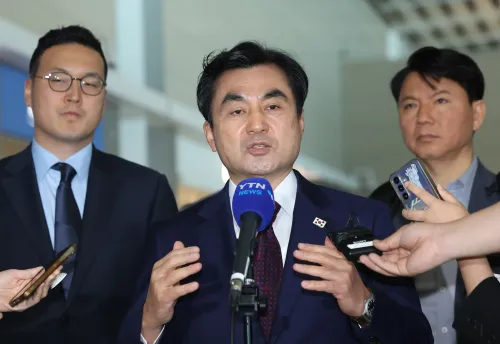
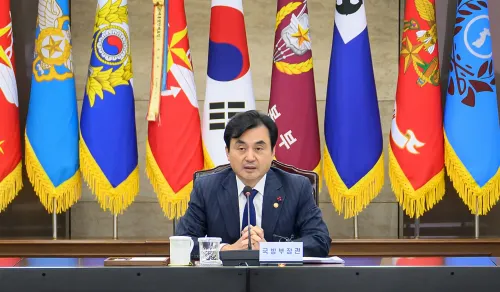
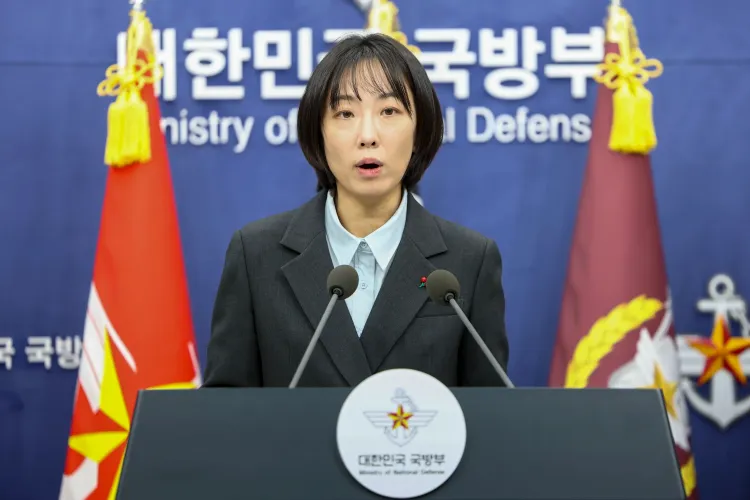
Ministry spokesperson Chung Binna confirmed the development during a regular press briefing, stating: "Based on suggestions by South Korean and US military authorities, the defence ministers will make a decision in the Security Consultative Meeting (SCM) and propose it to the presidents of the two countries."
Chung added that both Seoul and Washington are pursuing the OPCON transfer in a "systemic, stable and consistent" manner, with the defence ministry actively working to complete the handover as promptly as possible while strengthening bilateral cooperation.
Notably, the spokesperson did not specify an exact year for the transfer, even as speculation has grown that Seoul is targeting 2028 — a timeline that diverges from the one cited by the US Forces Korea (USFK) commander.
USFK Commander's 2029 Target vs Seoul's 2028 Ambition
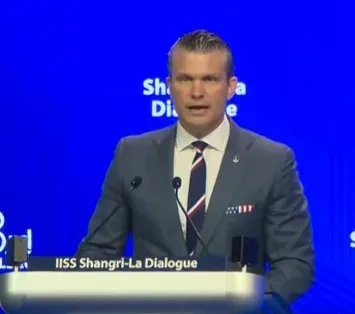
General Xavier Brunson, Commander of US Forces Korea, recently stated that the two allies aim to meet the conditions required for the OPCON transfer no later than the first quarter of 2029. This statement triggered the defence ministry's clarification regarding the SCM decision-making process.
The divergence between 2028 (Seoul's reported preference) and 2029 (the USFK commander's stated target) highlights the complexity of aligning two sovereign militaries on a transition of this magnitude. Analysts note that even a one-year difference carries significant strategic implications given the volatile security environment on the Korean Peninsula.
President Lee Jae Myung's five-year presidential term ends in 2030, making the completion of the OPCON transfer a politically significant milestone his administration is keen to achieve before leaving office.
Historical Background of OPCON Transfer
The roots of this issue stretch back more than seven decades. South Korea handed over operational control of its troops to the US-led United Nations Command during the 1950–53 Korean War. When the Combined Forces Command (CFC) was established in 1978, OPCON was transferred to that joint structure — still under a US four-star general's command.
South Korea reclaimed only peacetime operational control in 1994, leaving wartime command authority firmly in American hands for the past three decades. The current push to complete the transition represents the most advanced stage of this long diplomatic and military process.
This is not the first time a South Korean administration has attempted to set a deadline. Previous timelines — including targets set under the Roh Moo-hyun and Lee Myung-bak administrations — were postponed due to North Korean provocations and concerns about South Korea's military readiness.
Conditions That Must Be Met Before Transfer
The OPCON transfer is described as "conditions-based" rather than date-driven, meaning three core benchmarks must be satisfied before the handover can proceed. These include: South Korea's capability to lead combined Korea-US forces; its strike and air defence capabilities; and a regional security environment conducive to the transition.
Once the transfer is completed, a four-star South Korean general will assume command of the allies' combined forces during wartime, with a four-star US general serving in a supporting role — a structural reversal of the current arrangement that would symbolise South Korea's full military independence.
The conditions-based framework was agreed upon to prevent a premature transfer that could embolden North Korea or destabilise the alliance. Critics, however, argue that the conditions are deliberately vague, allowing either side to delay indefinitely when politically convenient.
Strategic Implications and What Comes Next
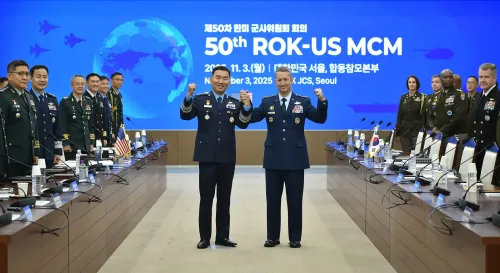
The SCM, an annual defence ministerial meeting held every autumn in either Seoul or Washington, will serve as the formal decision-making forum for setting the OPCON timeline. This year's meeting is expected to be one of the most consequential in recent history given the geopolitical pressures surrounding the Korean Peninsula, including North Korea's advancing nuclear programme and shifting dynamics in the broader Indo-Pacific region.
The outcome of the SCM will also be closely watched by China, Japan, and Russia, all of whom have strategic interests in the security architecture of the peninsula. A South Korean-led wartime command structure would signal a deeper, more autonomous defence posture that could reshape regional military calculations.
With the 2025 SCM expected to produce a landmark recommendation to both presidents, all eyes will be on whether Seoul and Washington can bridge their timeline differences and present a unified roadmap for one of the most consequential military transitions in post-war Asia.
Point of View
Not just military logistics — and the recurring delays over seven decades reveal how deeply Washington's strategic calculus has shaped Seoul's defence autonomy. The quiet divergence between Seoul's 2028 preference and the USFK commander's 2029 target is not a minor scheduling conflict; it reflects a deeper negotiation over who truly controls the pace of South Korea's military independence. Notably, every previous administration that attempted to set a firm OPCON deadline ultimately backed down under the weight of North Korean provocations or US pressure — raising the legitimate question of whether this timeline, too, will hold. The real test is not whether the conditions are met, but whether the political will on both sides survives the inevitable next crisis on the peninsula.
NationPress
18 Sept 2026
Frequently Asked Questions
What is wartime OPCON and why does South Korea want it back?
Wartime Operational Control (OPCON) refers to the authority to command South Korean and US combined forces during a war on the Korean Peninsula, currently held by a US four-star general. South Korea wants it transferred to assert full military sovereignty, a goal pursued since the 1990s.
When will the OPCON transfer timeline be officially decided?
The timeline will be decided at the 2025 Security Consultative Meeting (SCM), an annual defence ministerial meeting held every autumn in Seoul or Washington. The decision will then be proposed to the presidents of both South Korea and the United States.
What did USFK commander General Xavier Brunson say about the OPCON transfer?
General Xavier Brunson stated that the US-South Korea allies aim to meet the conditions required for the OPCON transfer no later than the first quarter of 2029. This differs from reports suggesting Seoul is targeting a 2028 handover.
What conditions must be met before the OPCON transfer can happen?
Three key conditions must be satisfied: South Korea's capability to lead combined Korea-US forces, sufficient strike and air defence capabilities, and a regional security environment conducive to the transfer. The framework is described as 'conditions-based' rather than date-driven.
Has the OPCON transfer been delayed before?
Yes, multiple previous South Korean administrations — including those of Presidents Roh Moo-hyun and Lee Myung-bak — set OPCON transfer deadlines that were subsequently postponed due to North Korean provocations and concerns about military readiness. South Korea only regained peacetime operational control in 1994.