How Does Hegseth View South Korea's Efforts for OPCON Transfer?
Synopsis
In a recent statement, US Defence Secretary Pete Hegseth praised South Korea's ambition to regain wartime operational control (OPCON) from the US. His comments highlight the evolving dynamics of defense responsibilities in a region facing persistent threats, emphasizing the importance of mutual security efforts among allies.
Key Takeaways
Hegseth praises South Korea's push for OPCON transfer.
South Korea's increasing defense capabilities are vital.
Shared defense responsibilities are essential for regional security.
Future discussions on OPCON will shape military strategy.
Collaboration between allies is crucial amidst threats.
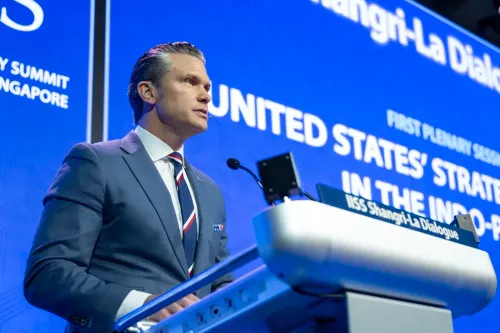
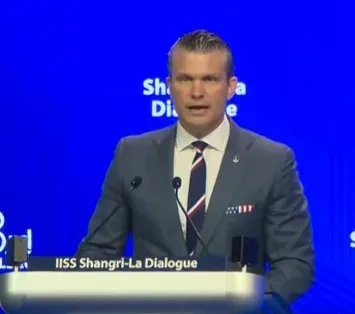
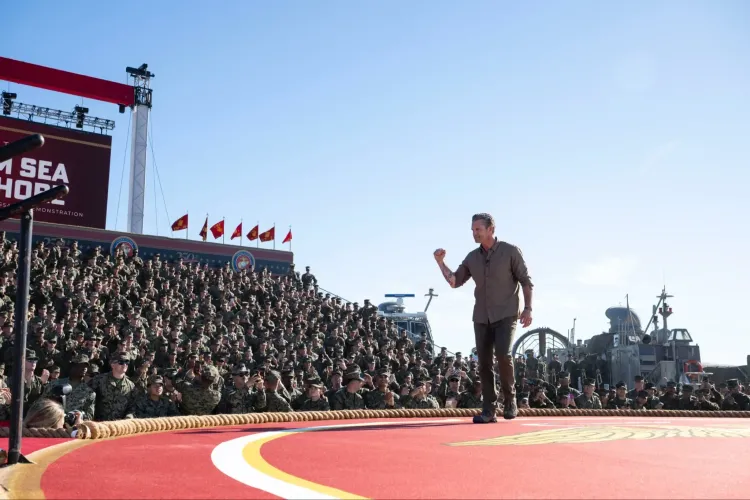
Kuala Lumpur, Oct 29 (NationPress) US Defence Secretary Pete Hegseth expressed a favorable opinion regarding South Korea's initiative to reclaim wartime operational control (OPCON) from the United States on Wednesday, labeling it a “great” effort and emphasizing his stance against a defense arrangement that solely relies on US leadership during crises.
Hegseth shared his insights during a press conference aboard a plane heading to Malaysia, addressing a query from Yonhap News Agency about South Korean President Lee Jae Myung's administration's goal to regain wartime OPCON by the end of its five-year term in 2030.
“I think it's great. More capabilities for our allies the better. We've been strong allies for many, many decades. That has not changed,” the Secretary remarked.
“South Korea's willingness to step up on defense spending is critically important too. They live right next to a real-time and persistent threat. They also understand the totality of the neighborhood that they are in,” he added, presumably referencing the ongoing threats posed by North Korea.
The Secretary characterized South Korea as a “combat credible” ally, highlighting the necessity for partners to assume greater security responsibilities.
“I think South Korea is a great example of a combat credible partner who's postured strongly, who has been a great host for our troops but also wants to and should be increasing willingness to take the lead. It's what we are asking our partners in Europe to take the lead,” he stated.
“It doesn't mean we are backing away. It doesn't mean we are not supporting. It is frankly common sense. Why would you want a relationship that requires only US leadership in contingencies when you've got a strong, motivated nation capable of doing that?”
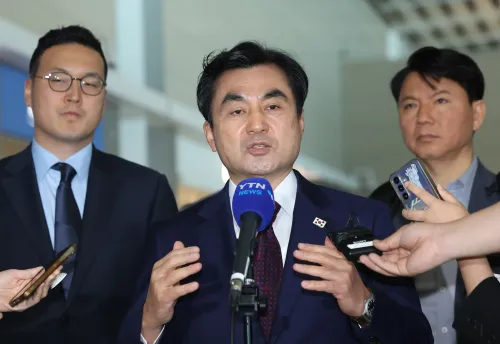
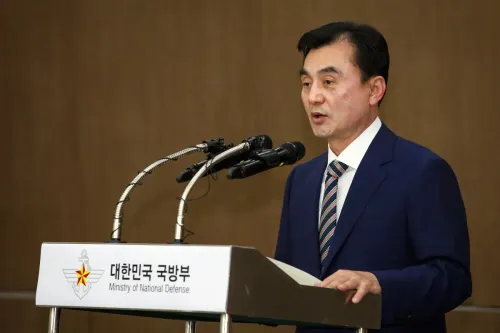
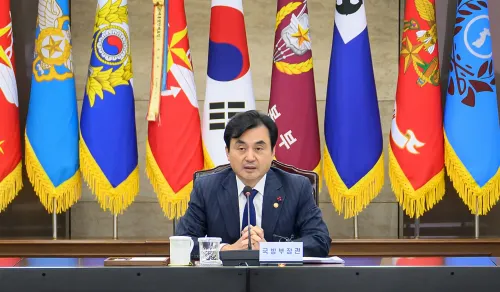
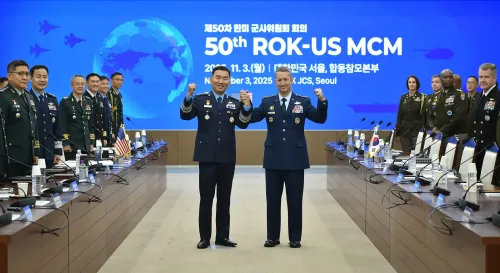
The issue of OPCON transfer is anticipated to be a significant topic during the discussions between South Korean Defense Minister Ahn Gyu-back and Hegseth at the allies' upcoming annual Security Consultative Meeting in Seoul next Tuesday.
Analysts noted that US President Donald Trump's administration might be open to the concept of Seoul taking the lead in wartime scenarios, given its push for allies and partners to shoulder greater security responsibilities for their own defense.
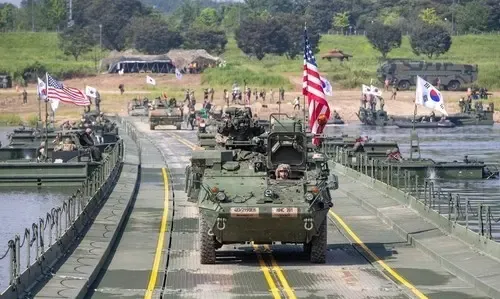
Seoul and Washington have been working on a conditions-based transition of OPCON. South Korea originally relinquished its OPCON during the Korean War from 1950 to 1953. It regained its peacetime OPCON in 1994, but wartime OPCON still remains under US jurisdiction.
During the press meeting, Hegseth refuted a recent report suggesting that the Pentagon's new National Defence Strategy could establish a US defense line that might include Japan but exclude South Korea and Taiwan, as reported by Yonhap News Agency.
“I am not aware of that ... It's not something I am familiar with,” he commented. “I don't think that report is accurate.”
He also clarified that the Trump administration is not aiming to create a NATO-like multilateral alliance system in the Indo-Pacific.
Pentagon officials have recently underscored the need for Asian allies to contribute more to “collective defense,” raising speculation about the US pursuing a multilateral security alliance in the region, as collective defense typically refers to a multilateral alliance like NATO.
“We are working through bilateral, trilateral relationships. There is a mutual interest between the two countries. It could be multiple countries as well,” he stated. “We are not looking to create a formal broad alliance.”
The Secretary also dismissed as “mischaracterization” claims that the draft of the Pentagon's new National Defence Strategy would signify a departure from focusing on deterring the threat from China.
“A shift away would be the wrong characterization. I don't want to get ahead of the National Security Strategy. We haven't released it yet,” he explained. “Just because you recognize a need to focus on our own hemisphere does not mean that we are distracted from the pacing threat in the reality of what the current China really means.”
Hegseth is currently on a tour of Asia, which includes visits to Japan, Malaysia, Vietnam, and South Korea.
Point of View
It is crucial to recognize that the evolving security dynamics in East Asia call for a collaborative approach. South Korea's desire to regain wartime operational control reflects its commitment to take on greater responsibilities. This move not only strengthens its position but also aligns with the United States' call for allies to share in the defense burden. Such developments are essential for fostering a stable and secure regional environment.
NationPress
24 Sept 2026
Frequently Asked Questions
Why is South Korea seeking to regain wartime OPCON?
South Korea aims to regain wartime OPCON to enhance its national defense capabilities and assert greater autonomy in military operations, particularly in response to threats from North Korea.
What did Hegseth say about South Korea's defense spending?
Hegseth emphasized the importance of South Korea stepping up its defense spending, highlighting the need for allies to be prepared against real-time threats.
What are the implications of a conditions-based OPCON transfer?
A conditions-based OPCON transfer means that South Korea will regain control when specific criteria are met, ensuring that it is adequately prepared to handle wartime scenarios independently.
How does this affect US-South Korea relations?
The push for OPCON transfer reflects a strengthening of US-South Korea relations, as both nations work towards a more collaborative and balanced security partnership.