Hegseth backs 'balanced' OPCON transfer to South Korea, honors US military role
Synopsis
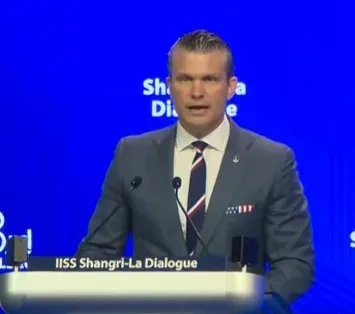
At the Shangri-La Dialogue in Singapore, US Defence Secretary Pete Hegseth backed South Korea’s push to retake wartime OPCON — but with a catch. Washington wants decades of US military roles ‘honoured’ in any transition, and a timeline gap between Seoul’s 2028 target and the USFK commander’s 2029 benchmark is quietly widening into a diplomatic fault line.
Key Takeaways
Pete Hegseth called for a “balanced” wartime OPCON transfer to South Korea at the Shangri-La Dialogue in Singapore on 31 May 2025 .
Seoul wants OPCON returned by 2028 ; USFK Commander Gen.
Xavier Brunson cited Q1 2029 as the conditions-met target.
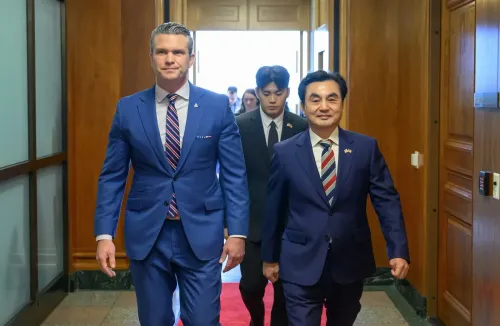
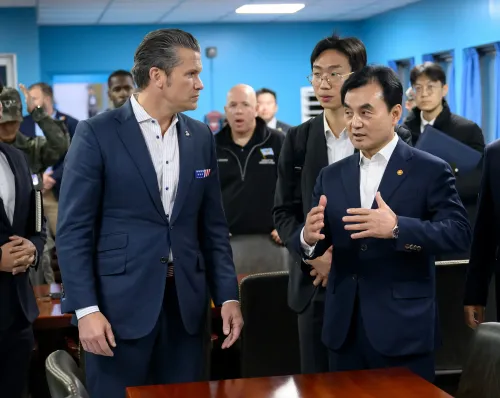
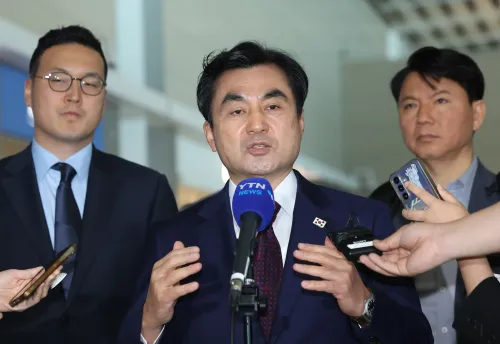
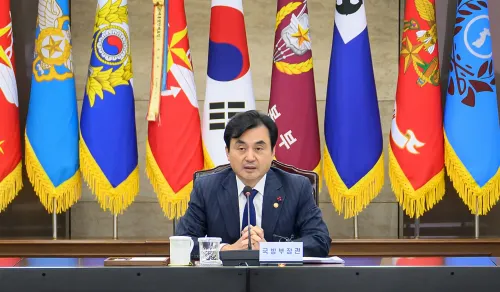
Hegseth called South Korea’s eagerness to retake OPCON a “breath of fresh air” and an instinct the US wants to “incentivize.” South Korean Defence Minister Ahn Gyu-back unveiled a road map for a nuclear-powered submarine programme, targeting the mid-2030s for the first vessel.
President Lee Jae Myung’s decision to raise defence spending to 3.5% of GDP was praised by Hegseth as a model for other US allies.
Brunson’s “dagger” remark drew a formal rebuke from the Chinese Embassy in Seoul , adding a diplomatic dimension to the forum.
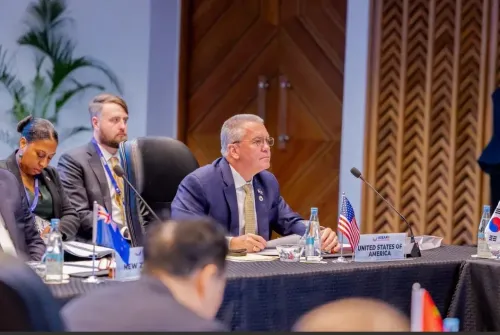
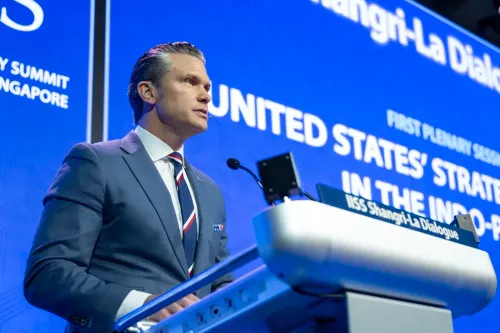
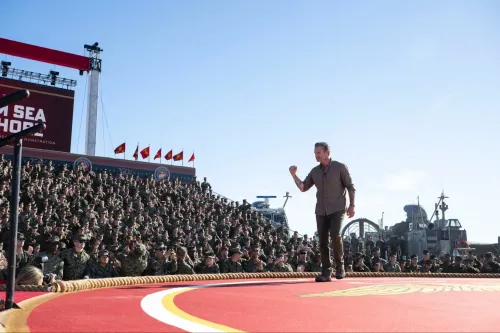
US Defence Secretary Pete Hegseth on Saturday, 31 May 2025 called for a “balanced” approach to transferring wartime operational control (OPCON) to South Korea, insisting that the decades-long role of US military personnel must be “honored” as the transition is phased in. Hegseth made the remarks at the Asia Security Summit — also known as the Shangri-La Dialogue — in Singapore, amid visible divergence between Seoul and Washington over the timeline and conditions for the handover.
Hegseth’s Position on OPCON
“I think we have to find the balance of where our military plans and the responsibilities that US uniformed members have had for decades now (are) honored, as we phase over to wartime OPCON transfer for the Republic of Korea, which we welcome the fact that they want that,” Hegseth said during the forum session.
He also described Seoul’s eagerness to retake wartime OPCON as a “breath of fresh air,” adding that an ally wanting to regain control “more quickly” was “an instinct we want to continue to incentivize.” He framed the transfer as expanding “optionality for both the Koreans and the United States” on the peninsula.
The Timeline Dispute
South Korea has proposed reclaiming wartime OPCON as early as 2028, aiming to complete the transfer before the Lee Jae Myung administration’s five-year term concludes in 2030, according to reports. However, doubts over Washington’s alignment with that schedule emerged after US Forces Korea (USFK) Commander Gen. Xavier Brunson suggested the two sides should aim to meet the required conditions by no later than the first quarter of 2029.
South Korea originally handed operational control of its troops to the US-led UN Command during the 1950–53 Korean War, and control was subsequently transferred to the allies’ Combined Forces Command when that command was established in 1978.
Brunson on Capabilities and Readiness
Also speaking at the Singapore forum, Gen. Brunson stressed that the OPCON transition must be underpinned by the “right capabilities, the right place and the right time.” He emphasised that the US position on the Korean Peninsula remains strategically significant and that any transfer must reflect “actual perspective” on military readiness.
Brunson’s separate remark describing the Korean Peninsula as a “dagger” toward China drew sharp criticism from Beijing, with the Chinese Embassy in Seoul accusing him of “crossing the line” by revealing what it called his belligerence. Brunson later clarified he was describing the operating environment using an “east-up” map orientation to illustrate how geography looks from different strategic vantage points.
Nuclear-Powered Submarine Programme
On South Korea’s push for a nuclear-powered submarine programme, Hegseth reaffirmed US support for allies seeking to expand their own undersea warfare capacity, calling it a move that would enhance deterrence and regional stability. “Allies and partners seeking similar capabilities in their own defense and in regional stability makes a lot of sense to us,” he said.
The US had previously backed South Korea’s ambition to build conventionally armed nuclear-powered attack submarines following a leaders’ summit in October. Earlier this week, South Korean Defence Minister Ahn Gyu-back unveiled a road map for the programme, targeting domestic development and the launch of the first vessel in the mid-2030s.
Defence Spending and Regional Posture
Hegseth also commended President Lee’s decision to raise defence spending to 3.5 per cent of GDP, describing it as a “hard-nosed” and “clear-eyed understanding of the threat environment.” He urged other regional allies and partners to follow the same path, saying: “The region will be far more stable and more secure when other allies and partners follow that path.”
The remarks signal a broader US push to redistribute defence burdens across its Indo-Pacific alliance network at a time of heightened tensions on the peninsula and beyond.
Point of View
But the USFK commander is already hedging toward 2029. The distinction matters — a year’s delay could push the transfer past the Lee administration’s term, effectively resetting the political clock. Washington’s simultaneous praise for Seoul’s defence spending increase and its nuclear submarine ambitions suggests the US is willing to trade capability concessions for a slower OPCON timeline. The Brunson ‘dagger’ controversy, meanwhile, is a reminder that US military posture on the peninsula is read very differently in Beijing — and that Indo-Pacific alliance management increasingly has a China variable built in.
NationPress
15 Oct 2026
Frequently Asked Questions
What is wartime OPCON and why does South Korea want it back?
Wartime operational control (OPCON) is the authority to command South Korean and US troops on the Korean Peninsula during a conflict. South Korea handed it to the US-led UN Command during the 1950–53 Korean War, and Seoul has been seeking its return as a matter of national sovereignty and military self-reliance, with the Lee Jae Myung administration targeting 2028 for the transfer.
What is the timeline dispute between Seoul and Washington over OPCON?
South Korea wants wartime OPCON returned by 2028, before President Lee Jae Myung’s five-year term ends in 2030. However, USFK Commander Gen. Xavier Brunson has indicated the two sides should aim to meet the required conditions by no later than Q1 2029, suggesting Washington may not share Seoul’s urgency.
What did Hegseth say about South Korea’s nuclear-powered submarine programme?
Hegseth reaffirmed US support for allies expanding their undersea warfare capacity, saying it ‘makes a lot of sense’ for regional stability. South Korean Defence Minister Ahn Gyu-back this week released a road map for domestically developing nuclear-powered attack submarines, with the first vessel targeted for the mid-2030s.
Why did Gen. Brunson’s ‘dagger’ remark cause controversy?
USFK Commander Gen. Xavier Brunson described the Korean Peninsula as a ‘dagger’ toward China while discussing strategic geography at the Shangri-La Dialogue. The Chinese Embassy in Seoul issued a formal statement accusing him of ‘crossing the line’ and revealing belligerence. Brunson later said he was illustrating the operating environment using an alternative map orientation.
What did Hegseth say about South Korea’s defence spending increase?
Hegseth praised President Lee Jae Myung’s decision to raise defence spending to 3.5% of GDP, calling it a ‘hard-nosed’ and ‘clear-eyed’ response to the threat environment. He urged other US allies and partners in the region to follow the same path, saying it would make the region ‘far more stable and more secure.’