Hegseth calls for 'balanced' OPCON transfer to South Korea, honours US military roles
Synopsis
At the Shangri-La Dialogue in Singapore, US Defence Secretary Pete Hegseth welcomed South Korea's drive to retake wartime OPCON — but attached a clear condition: US military roles built over decades must be 'honoured.' With Seoul pushing for a 2028 handover and Washington's own commander signalling early 2029 at the earliest, the gap between ally ambition and alliance readiness is now publicly visible.
Key Takeaways
Pete Hegseth called for a 'balanced' OPCON transfer to South Korea at the Shangri-La Dialogue on 30 May 2025 .
Seoul is pushing to retake wartime OPCON by 2028 , before President Lee Jae Myung 's term ends in 2030 .
Xavier Brunson suggested conditions may only be met by the first quarter of 2029 .
South Korea originally ceded operational control to the US-led UN Command during the 1950–53 Korean War ; control moved to the Combined Forces Command in 1978 .
Hegseth also reaffirmed US support for South Korea's nuclear-powered submarine programme as a deterrence enhancer.
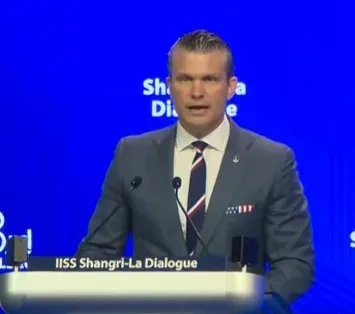
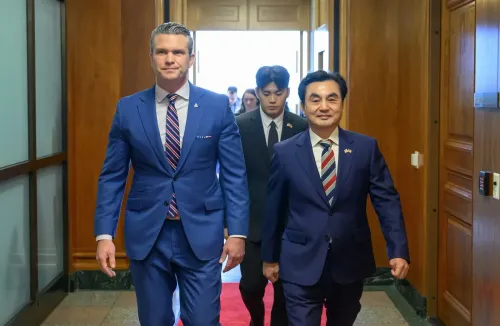
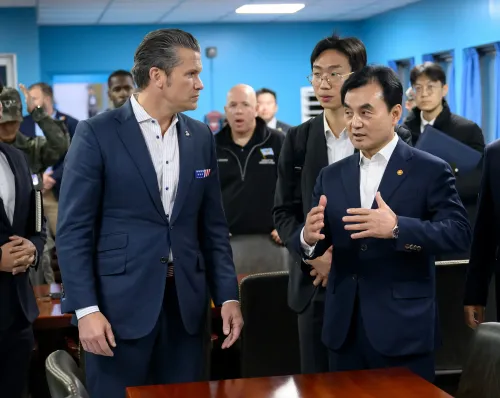
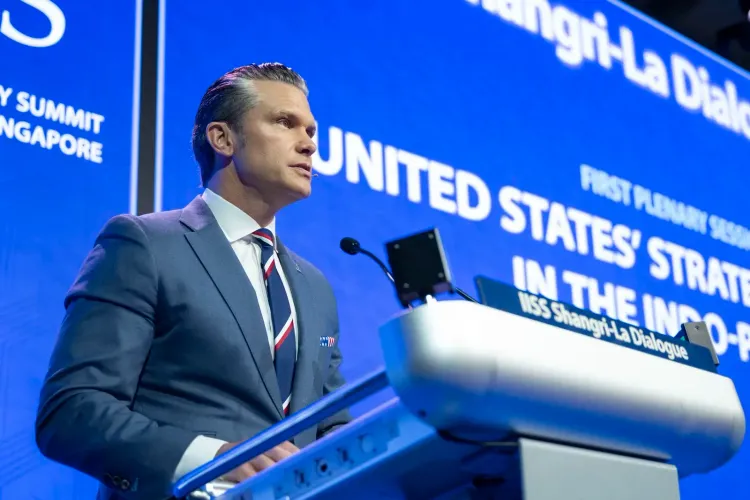
US Defence Secretary Pete Hegseth on Saturday, 30 May called for a 'balanced' approach to the transfer of wartime operational control (OPCON) to South Korea, insisting that the decades-long roles of US military personnel must be 'honoured' as the transition is phased in. Hegseth made the remarks at the Shangri-La Dialogue in Singapore, where diverging timelines between Seoul and Washington over the OPCON handover have come into sharper focus.
What Hegseth Said
'I think we have to find the balance of where our military plans and the responsibilities that US uniformed members have had for decades now (are) honoured, as we phase over to wartime OPCON transfer for the Republic of Korea, which we welcome the fact that they want that,' Hegseth said during the Asia Security Summit.
He described South Korea's eagerness to retake wartime OPCON as a 'breath of fresh air,' adding that the ally's desire to regain control 'more quickly' was 'an instinct we want to continue to incentivise.' He further noted that a faster transition would provide 'even more optionality for both the Koreans and the United States' on the Korean Peninsula.
The Timeline Dispute
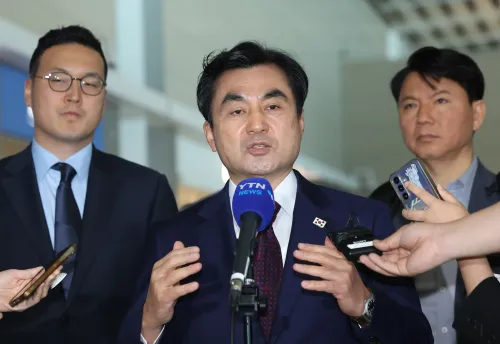
Seoul has proposed retaking wartime OPCON from Washington as early as 2028, aiming to complete the handover before the Lee Jae Myung administration's five-year term concludes in 2030. However, doubts have emerged over whether Washington shares that urgency.
US Forces Korea (USFK) Commander Gen. Xavier Brunson, also present at the Singapore forum, suggested the two sides aim to meet the conditions required for OPCON transfer by no later than the first quarter of 2029 — a timeline that falls short of Seoul's preferred window. Brunson stressed the importance of ensuring 'the right capabilities, the right place and the right time' before any transition is formalised.
Historical Context
South Korea handed over operational control of its troops to the US-led UN Command during the 1950–53 Korean War. Control was subsequently transferred to the allies' Combined Forces Command when that command was established in 1978. The question of repatriation has been a recurring point of negotiation between Seoul and Washington for decades, reflecting South Korea's evolving military capabilities and its desire for greater strategic autonomy.
Nuclear Submarine Programme
On South Korea's push for a nuclear-powered submarine programme, Hegseth reaffirmed US support for allies seeking to expand their own undersea warfare capacity. 'Allies and partners seeking similar capabilities in their own defence and in regional stability makes a lot of sense to us,' he said, framing such acquisitions as enhancing deterrence and regional stability on the Korean Peninsula and beyond.
What Comes Next
The gap between Seoul's 2028 target and Washington's implied early 2029 readiness benchmark will likely dominate bilateral defence talks in the months ahead. With the Lee administration's political clock ticking, pressure on both capitals to align on a credible, conditions-based roadmap is expected to intensify through the remainder of 2025.
Point of View
But the operational gap between Seoul's 2028 ambition and Brunson's implicit 2029 floor is a real friction point, not a scheduling detail. Washington's insistence on 'conditions-based' transfer has historically served as a deferral mechanism — and Seoul knows it. The Lee administration's five-year clock gives this negotiation genuine urgency for the first time in years. Whether that urgency translates into a credible joint roadmap, or another round of deferred milestones, will test the alliance's ability to manage South Korea's growing strategic autonomy without fracturing command coherence on the peninsula.
NationPress
15 Oct 2026
Frequently Asked Questions
What is wartime OPCON and why does South Korea want it back?
Wartime operational control (OPCON) refers to the authority to command South Korean forces during armed conflict, currently held by the US-led Combined Forces Command. South Korea wants to reclaim it to assert greater strategic autonomy and align with its expanded military capabilities.
When does South Korea want the OPCON transfer to happen?
Seoul has proposed completing the OPCON transfer by 2028, before President Lee Jae Myung's five-year term ends in 2030. However, USFK Commander Gen. Xavier Brunson has indicated that the required conditions may not be met until the first quarter of 2029.
What conditions does Washington require before transferring OPCON?
US officials, including Gen. Brunson, have stressed the need for 'the right capabilities, the right place and the right time' before the transfer can proceed. The conditions-based framework has long been Washington's benchmark for approving the handover.
What did Hegseth say about South Korea's nuclear submarine programme?
Hegseth reaffirmed US support for South Korea's push to develop nuclear-powered submarines, saying allies seeking such capabilities 'makes a lot of sense' as it enhances deterrence and regional stability on the Korean Peninsula.
How long has the US held operational control of South Korean forces?
South Korea transferred operational control to the US-led UN Command during the 1950–53 Korean War. It was subsequently moved to the Combined Forces Command in 1978, meaning the US has held some form of wartime OPCON for over seven decades.