Have South Korea and the US Made 'Meaningful Progress' on Wartime Command Transfer?
Synopsis
On November 3, South Korea and the US militaries announced advancements towards the transition of wartime operational control (OPCON) back to Seoul. As both nations aim to enhance their alliance amid evolving global threats, the focus remains on a robust defense posture in the Indo-Pacific region. Discover the latest developments and key discussions from this significant meeting.
Key Takeaways
Meaningful progress has been made towards OPCON transition.
Discussions included alliance modernization to enhance defense capabilities .
The security environment in the Indo-Pacific is increasingly complex.
Commitment to a strong combined defense posture is crucial for regional stability .
Next steps include co-chairing the 57th Security Consultative Meeting .
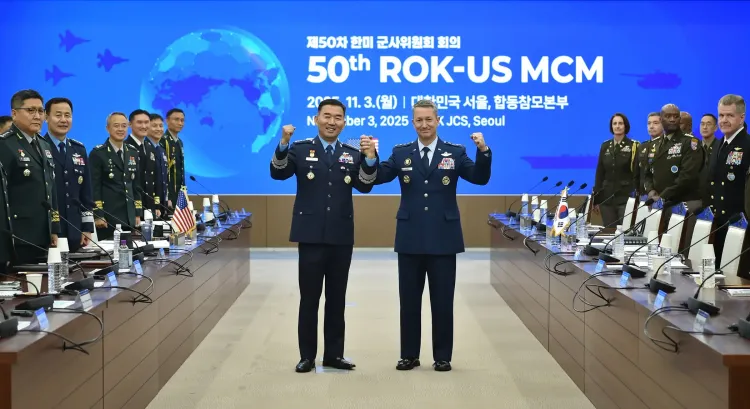
Seoul, Nov 3 (NationPress) The leading military officials from South Korea and the United States on Monday concluded that "meaningful progress" has been achieved towards fulfilling the conditions necessary for Seoul to regain wartime operational control (OPCON) from Washington, as stated by the South's military.
During the 50th Military Committee Meeting in Seoul, Joint Chiefs of Staff (JCS) Gen. Jin Yong-sung and his US counterpart, Gen. Dan Caine, engaged in discussions about these pivotal developments. This meeting marked their first face-to-face dialogue in three months.
According to the military’s English-language release, "They agreed to continue efforts to meet the conditions required for achieving OPCON transition and strengthen the alliance's combined defence posture."
Both generals shared a mutual understanding of the substantial progress made across various sectors, as evaluated through the annual assessment based on the bilaterally established standards of the conditions-based operational control transition plan.
These discussions occurred as South Korea aims to reclaim OPCON from Washington within the five-year term of President Lee Jae Myung, which concludes in 2030.
Additionally, Jin and Caine discussed alliance modernization, agreeing to enhance the alliance's capabilities, interoperability, and readiness to better address the evolving security landscape and "emerging" threats, as noted by the military.
They acknowledged that the security environment in the Indo-Pacific region has grown "increasingly complex" due to North Korea's advancing nuclear and missile threats, alongside a rising global arms race, as reported by Yonhap.
Nonetheless, the top military officials affirmed that the North's military expansion, which is supported by technological aid from Russia, is effectively managed under the allies' robust combined defence posture.
Looking ahead, Jin and Caine emphasized the necessity of developing an "ever-stronger" combined defence posture in accordance with the allies' mutual defence treaty, committing to utmost efforts for ensuring peace and stability not only on the Korean Peninsula but across the region.
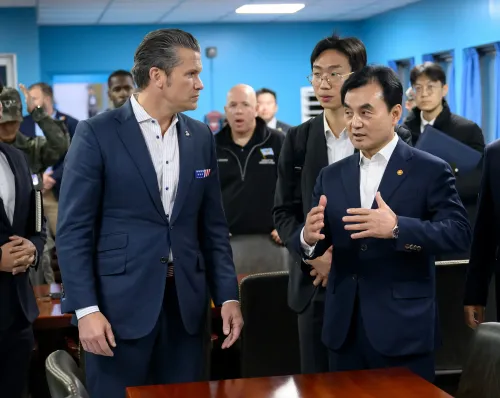
These talks, filled with senior officials from both sides, including Adm. Samuel Paparo, chief of the US Indo-Pacific Command, and Gen. Xavier Brunson, commander of US Forces Korea, took place just a day before the annual security discussions between their defence chiefs.
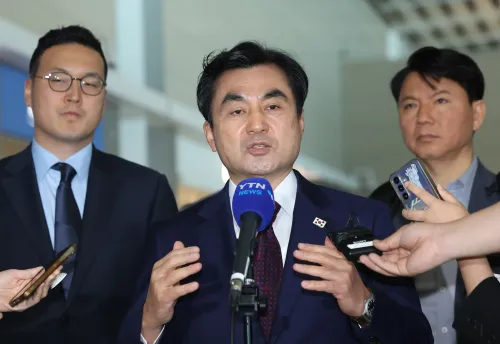
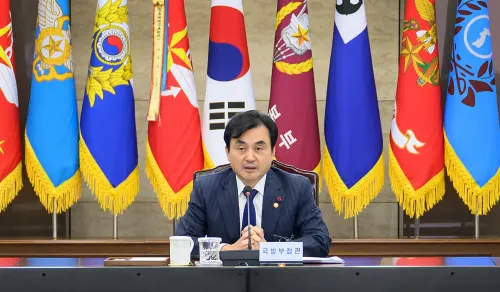
The 57th Security Consultative Meeting, co-chaired by Defence Minister Ahn Gyu-back and US Defence Secretary Pete Hegseth, is anticipated to cover Seoul's pursuit of OPCON transition and the acquisition of nuclear-powered submarines.
Point of View
It is evident that the ongoing collaboration between South Korea and the United States is crucial for maintaining stability in the region. The steps taken towards transitioning wartime operational control reflect a commitment to a strong alliance that can adapt to evolving threats, including North Korea's military advancements. The focus on enhancing combined defense capabilities is essential for ensuring peace on the Korean Peninsula.
NationPress
29 Sept 2026
Frequently Asked Questions
What is OPCON and why is it significant?
OPCON stands for wartime operational control, which is the authority to command military forces during wartime. Its transfer is significant as it reflects South Korea's growing autonomy in defense matters.
What challenges does the Indo-Pacific region face?
The Indo-Pacific region faces challenges from North Korea's advancing nuclear capabilities and an escalating global arms race, necessitating a strong defense posture among allied nations.
Who were the key military officials involved in the discussions?
The key officials included Gen. Jin Yong-sung from South Korea and Gen. Dan Caine from the United States, along with other senior military leaders.
What are the implications of the OPCON transition?
The implications include increased South Korean autonomy in defense operations, a strengthened alliance with the US, and enhanced security measures in response to regional threats.
When is the next Security Consultative Meeting scheduled?
The next Security Consultative Meeting is scheduled for November 4, co-chaired by Defence Minister Ahn Gyu-back and US Defence Secretary Pete Hegseth.