FairPoint: Is Bangladesh Truly Succumbing to Extremism?
Synopsis
The alarming rise of extremism in Bangladesh poses a significant threat to its future and regional stability. This article explores the troubling trends of anti-India sentiment and the growing ideological divide that could lead to dire consequences for both Bangladesh and its neighbors.
Key Takeaways
Bangladesh's radicalisation poses a significant threat to its future and regional stability.
Historical ties between India and Bangladesh are being overshadowed by rising anti-India sentiments.
Extremist groups are exploiting ideological shifts to gain traction in Bangladesh.
India must adopt a strategic approach to manage its relationship with Bangladesh.
The future of Bangladesh may hinge on its ability to resist ideological extremism.
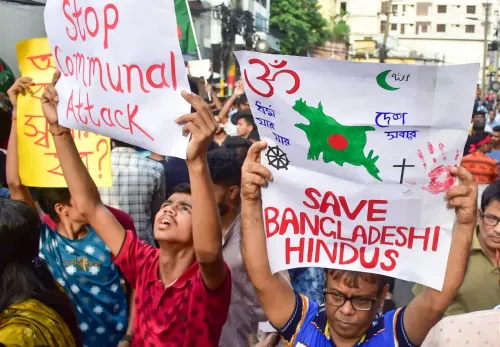
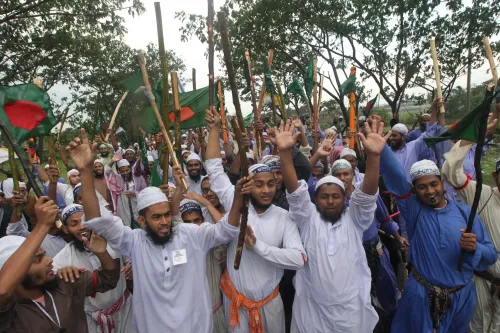
New Delhi, Dec 21 (NationPress) The current situation in Bangladesh should not come as a surprise to anyone. Observers aware of the ongoing, steady radicalisation there anticipated this development. The hostility, violence, and rhetoric directed towards India and Hindus are not mere random acts of aggression; they are the inevitable result of a longstanding ideological shift -- one that aims to cultivate an anti-India and anti-Hindu sentiment.
The brutal murder of Dipu Das by radical Islamist mobs, followed by a grotesque public celebration of his death, has laid bare the extent of this decay. This incident was not just a violent act; it served as a grim warning to minorities and a declaration of ideological supremacy by forces that have long repudiated Bangladesh's pluralistic roots.
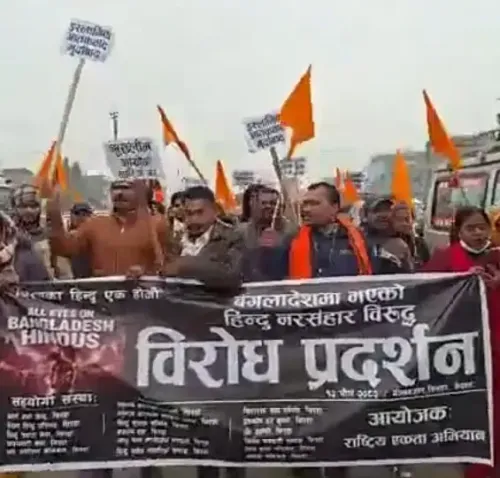
The incident sparked outrage in India, prompting condemnation from various leaders across the political spectrum, including Congress leader Priyanka Gandhi Vadra -- who typically focuses on international Muslim issues like Gaza -- highlighting the brutality of the act. However, the outcry, both domestically and internationally, has failed to compel the current government in Bangladesh to take decisive action.
It is troubling to see numerous countries in India’s vicinity simmering with anti-India sentiments. Bangladesh has deteriorated rapidly, seemingly oblivious to India's past contributions. India was instrumental in its creation in 1971, liberating it from the oppressive grasp of Pakistan, yet today, Bangladesh appears to desire a Pakistan-like identity within its borders. As shocking as it may seem, this is the reality facing India's eastern neighbor.
While Bangladesh was never fully secular, leaders like Sheikh Hasina made concerted efforts to maintain social harmony and resist extremist influences. Her administration, despite its shortcomings, opposed radical Islamist factions that aimed to dominate political and public life. This delicate equilibrium collapsed when extremist elements, disguised as a student movement, took to the streets and ultimately seized the narrative. The outcome was not reform but a significant regression.
Since then, anti-India sentiments and overt disdain for Hindus have intensified alarmingly. Radical factions now openly declare their intentions, with calls for destabilising India’s northeastern states made without trepidation. This situation transcends being a mere internal issue for Bangladesh; it poses a direct threat to regional stability and India’s territorial integrity.
Bangladesh's decline should also be contextualised within the broader turbulence in India’s neighborhood. From Pakistan's constant antagonism to Nepal's sporadic flirtations with anti-India nationalism, and from Sri Lanka's oscillations to the recent antagonism from the Maldives, India finds itself encircled by a landscape of volatile politics.
Dealing with this environment necessitates strategic patience rather than emotional or reactionary responses -- a skill India has honed over decades.
The Maldives offers a significant case study. The "India Out" campaign, driven by Islamist groups and political opportunism, nearly ruptured bilateral relations. President Mohamed Muizzu, upon returning from China in early 2024, even accused India of bullying.
However, geopolitics often confronts rhetoric with reality. When promised support from Beijing and Gulf nations failed to materialise, Male had to reassess its stance. A quiet course correction ensued. Muizzu attended Prime Minister Narendra Modi's oath-taking ceremony in June 2025, signalling a thaw in relations. PM Modi’s subsequent appearance as the chief guest at the Maldives' 60th Independence Day celebrations marked a significant reset.
Sri Lanka's path has mirrored this trajectory. After a period of anti-India posturing, Colombo rediscovered strategic realities. President Anura Kumara Dissanayake’s choice to visit India first reaffirmed the truth that geography and history render India indispensable. Relations have improved steadily since.
Nepal, too, swings between suspicion and pragmatism. While certain factions fuel anti-India sentiments, Kathmandu recognises its profound economic, cultural, and political connections with New Delhi.
Bangladesh, however, presents a far more perilous challenge. Here, radical Islamist factions are not merely voicing their discontent; they are aligning with Pakistan's longstanding strategy to encircle and destabilise India. These actors are striving to convert Bangladesh into an eastern pressure point against India.
New Delhi remains as clear-eyed as ever. Its discreet but determined approach -- calm on the surface yet resolute beneath -- has consistently yielded success. Sentimentality has no role in foreign policy, nor does panic. Engagement must persist where possible; deterrence must be applied where necessary, and vigilance must remain paramount. The region's stability hinges on this approach.
Bangladesh might have forgotten its history, but India cannot afford to overlook the lessons it imparts -- particularly when the costs of inattention are measured in blood.
The tragedy lies in the fact that Bangladesh’s future is being sacrificed on the altar of ideological extremism. A nation that once epitomised resistance to religious authoritarianism is now courting the very forces of Pakistan. If this trajectory persists, Bangladesh risks spiralling into internal chaos and hostility with its most dependable neighbour.
(Deepika Bhan can be contacted at deepika.b@ians.in)
Point of View
It is imperative to remain grounded in national interests. Bangladesh's radicalisation is not merely an internal issue; it has regional ramifications that must be addressed with strategic foresight. We must advocate for a balanced approach that prioritises engagement, deterrence, and vigilance to safeguard our nation's integrity.
NationPress
30 Sept 2026
Frequently Asked Questions
What are the main causes of radicalisation in Bangladesh?
The radicalisation in Bangladesh is driven by a mix of ideological shifts, political opportunism, and the influence of extremist groups that seek to undermine the country's pluralistic foundations.
How does Bangladesh's situation affect India?
Bangladesh's growing anti-India sentiment and radicalisation pose a direct threat to regional stability and India's territorial integrity, as extremist factions align with external hostile forces.
What role has the Indian government played in this context?
The Indian government must maintain a nuanced approach, balancing engagement and deterrence while remaining vigilant against threats that could destabilise the region.
What historical ties exist between India and Bangladesh?
India played a crucial role in Bangladesh's independence in 1971, liberating it from Pakistan's control. However, current sentiments reflect a troubling shift away from this historical alliance.
What can be expected in the near future regarding Bangladesh's political landscape?
If current trends continue, Bangladesh risks facing internal strife and deepening animosity towards India, which could have significant implications for regional security.