OPCON transfer to South Korea: US vows to meet conditions 'as soon as possible'
Synopsis
Washington says it wants OPCON transferred to South Korea ‘as soon as possible’ — but the US military’s own timeline points to early 2029 at the earliest, while Seoul is pushing for as early as 2026. The gap between political will and operational readiness is now the defining fault line in one of Asia’s most consequential alliance arrangements.
Key Takeaways
Assistant Secretary Michael DeSombre told a House Foreign Affairs subcommittee on 25 June that the US is focused on meeting OPCON transfer conditions ‘as soon as possible.’ The transfer is governed by a conditions-based framework requiring South Korea to demonstrate leadership of combined forces, strike capability, and air defence readiness.
South Korean President Lee Jae Myung’s administration aims to complete the transfer before its term ends in 2030 , with some Seoul officials eyeing as early as 2026 .
US Forces Korea Commander Gen.
Xavier Brunson has set a more conservative target: conditions met by no later than Q1 2029 .
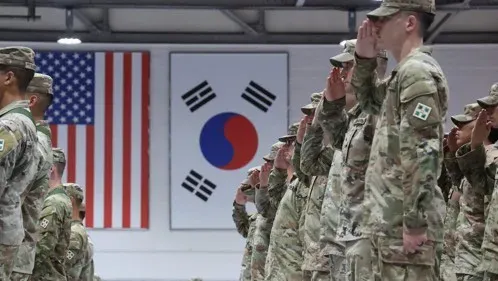
South Korea has held wartime OPCON since the 1950–53 Korean War ; it reclaimed peacetime OPCON in 1994 but wartime control remains with the US.
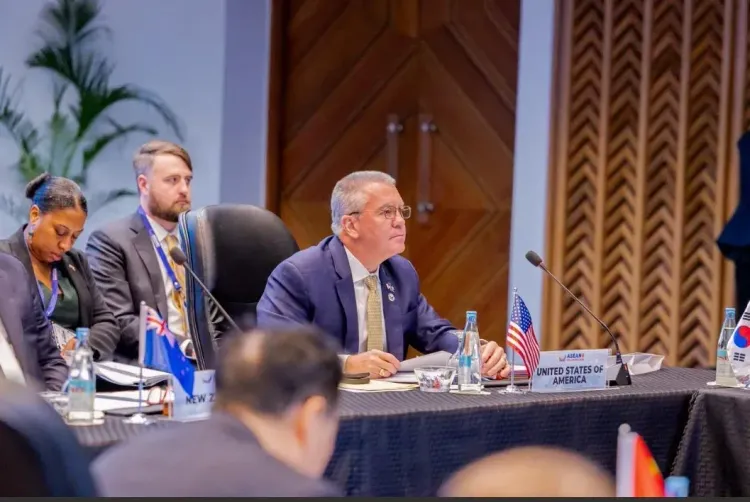
Assistant Secretary of State for East Asian and Pacific Affairs Michael DeSombre said on Thursday, 25 June that the United States is focused on ensuring the necessary conditions for the transfer of wartime operational control (OPCON) to South Korea are met “as soon as possible,” signalling Washington’s alignment with Seoul’s urgency even as a gap over timing persists between the two allies.
What DeSombre Said
DeSombre made the remarks during a hearing of the Subcommittee on East Asia and Pacific Affairs under the House Foreign Affairs Committee at the Capitol in Washington. “There are ongoing discussions of exactly the timing (of the transfer),” he said.
“We understand the desire from the (South Korean) administration to do it as quickly as possible, and we are focused on ensuring that the necessary conditions are in place as soon as possible,” he added. He also underscored that the transition is being pursued under a “conditions-based” framework, requiring both sides to be confident that deterrence on the Korean Peninsula will be maintained once Seoul assumes operational command.
The Conditions Seoul Must Meet
Under the agreed framework, South Korea must demonstrate the capability to lead combined South Korea-US forces, along with credible strike and air defence capabilities. A regional security environment conducive to the handover is also a prerequisite. The administration of South Korean President Lee Jae Myung has been working to fulfil these conditions before its term ends in 2030.
The Timing Gap Between Seoul and Washington
A notable divergence has emerged over the pace of the transfer. Seoul officials are pushing to meet conditions swiftly, with speculation in South Korean policy circles that the transition could occur as early as 2026. However, US Forces Korea Commander Gen. Xavier Brunson has stated that the allies are aiming to meet the conditions by no later than the first quarter of 2029 — a considerably more conservative timeline.
Historical Background
South Korea handed over operational control of its troops to the US-led United Nations Command during the 1950–53 Korean War. Wartime OPCON was subsequently transferred to the allies’ Combined Forces Command when that command was established in 1978. Seoul reclaimed peacetime OPCON in 1994, but wartime operational control has remained in US hands ever since — a legacy arrangement that successive South Korean governments have sought to reverse.
What Comes Next
Formal discussions on the exact timeline are ongoing. The conditions-based approach means there is no fixed handover date; progress will hinge on verifiable military capability benchmarks and the broader security calculus on the Korean Peninsula. Analysts note that the gap between Seoul’s political ambitions and Washington’s operational caution will be a central issue in upcoming bilateral defence consultations.
Point of View
And conditions-based frameworks have historically been elastic enough to absorb indefinite delay. The real question is whether the Lee administration can build sufficient military capability to foreclose Washington’s ability to cite readiness gaps as a reason to defer. Until then, OPCON transfer risks remaining what it has been for decades: a sovereign aspiration deferred by alliance management.
NationPress
24 Sept 2026
Frequently Asked Questions
What is wartime OPCON and why does South Korea want it back?
Wartime operational control (OPCON) is the authority to command South Korean forces during armed conflict. South Korea transferred this authority to the US-led UN Command during the 1950–53 Korean War and has not reclaimed it since, making it the only US ally without full wartime command of its own troops. Successive South Korean governments have sought its return as a matter of national sovereignty.
What conditions must be met before the OPCON transfer can happen?
Under the conditions-based framework agreed by both allies, South Korea must demonstrate the capability to lead combined South Korea-US forces, possess credible strike and air defence capabilities, and operate within a regional security environment conducive to the transfer. All three benchmarks must be satisfied before either side proceeds.
When could the OPCON transfer actually happen?
There is no fixed date. Seoul officials have raised the possibility of a transfer as early as 2026, but US Forces Korea Commander Gen. Xavier Brunson has indicated the allies aim to meet the conditions by no later than the first quarter of 2029. The exact timing remains under active discussion.
What did Assistant Secretary Michael DeSombre say at the congressional hearing?
DeSombre told the House Foreign Affairs Subcommittee on East Asia and Pacific Affairs on 25 June that the US ‘understands’ Seoul’s desire for a swift transfer and is ‘focused on ensuring that the necessary conditions are in place as soon as possible.’ He also reaffirmed the conditions-based nature of the agreement.
How long has the US held wartime OPCON over South Korean forces?
The US has held wartime OPCON since the Korean War of 1950–53. Command was later formalised under the Combined Forces Command established in 1978. South Korea reclaimed peacetime OPCON in 1994, but wartime control has remained with the US for over seven decades.