USFK reaffirms 'conditions-based' OPCON transfer amid rushed timeline concerns
Synopsis
A quiet but significant rift has emerged in the South Korea-US alliance: Seoul wants wartime operational control back as early as 2026, but USFK is signalling 2029 as the earliest realistic target. With the Chosun Ilbo report warning that a rushed transfer could fracture the Combined Forces Command itself, the gap between political ambition and military readiness is now in the open.
Key Takeaways
A USFK official on 28 May reaffirmed the alliance's commitment to a 'conditions-based' wartime OPCON transfer to South Korea .
South Korean President Lee Jae Myung's administration is pushing to retake wartime OPCON within its five-year term ending in 2030 , potentially as early as 2026 .
Xavier Brunson told the House Armed Services Committee that conditions should be met by no later than Q1 2029 .
The Chosun Ilbo reported that a rushed transfer could jeopardise the current Combined Forces Command structure.
The two allies agreed on a conditions-based OPCON transition framework in October 2014 ; Seoul has held peacetime OPCON since 1994 .
A US Forces Korea (USFK) official on 28 May reaffirmed that the South Korea-US alliance remains committed to a 'conditions-based' transfer of wartime operational control (OPCON) to Seoul, pushing back — implicitly — against reports that Washington has raised concerns over a potentially accelerated handover timeline.
What the USFK Official Said
"The US-ROK alliance is committed to a conditions-based transition of wartime operational control, and that commitment is unchanged," the official said. ROK refers to the Republic of Korea, South Korea's official name.
"Our focus remains on strengthening the combined defence and ensuring the defence of the Republic of Korea and the US homelands," the official added. Notably, the official declined to directly confirm or deny a report by South Korean daily Chosun Ilbo, which claimed that USFK had warned Seoul that a rushed OPCON transition could make it difficult for American troops to operate under South Korean command within the existing combined structure.
The Gap Over Timing
The administration of South Korean President Lee Jae Myung has been pushing to retake wartime OPCON within its five-year term ending in 2030. A source in Seoul indicated that the government believes the required conditions could be met as early as 2026.
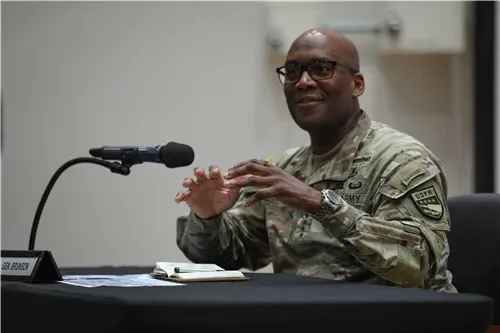
However, USFK Commander Gen. Xavier Brunson told a House Armed Services Committee hearing last month that the two allies aim to satisfy transfer conditions by no later than the first quarter of 2029 — a remark that underscored a visible gap between the two governments on the pace of transition.
What the Chosun Ilbo Report Alleged
According to the Chosun Ilbo report, USFK conveyed to the South Korean side that proceeding with OPCON transfer without fully satisfying military requirements could make it difficult for US troops to fall under a South Korean general's operational control. The report further suggested this scenario could potentially lead to the disbandment of the allies' current Combined Forces Command construct.
Historical Background
South Korea handed over operational control of its troops to the US-led UN Command during the 1950-53 Korean War. Control was subsequently transferred to the Combined Forces Command when that structure was established in 1978. Seoul retook peacetime OPCON in 1994, but wartime OPCON has remained with the United States ever since.
The two allies have been working toward a conditions-based OPCON transition since agreeing on the framework in October 2014. The agreed conditions encompass South Korea's capability to lead combined Korea-US forces, its strike and air defence capabilities, and a regional security environment conducive to such a handover.
What Comes Next
With Seoul pressing for an earlier transfer and Washington signalling a 2029 floor, the two allies face a delicate negotiation over conditions assessment and command restructuring. The outcome will have significant implications for the future architecture of the US military presence on the Korean Peninsula.
Point of View
Particularly its ability to command a combined force under live wartime conditions. President Lee's political calendar and the Pentagon's operational calculus are on a collision course, and the Combined Forces Command's future architecture is the real stakes. A rushed transfer that fractures the command structure would be a strategic gift to Pyongyang — and both capitals know it.
NationPress
11 Oct 2026
Frequently Asked Questions
What is the OPCON transfer between South Korea and the US?
Wartime operational control (OPCON) refers to the authority to command South Korean and US troops during a conflict on the Korean Peninsula. South Korea handed this control to the US-led UN Command during the 1950-53 Korean War; it currently remains with the United States, while Seoul has held peacetime OPCON since 1994.
Why is South Korea pushing for an early OPCON transfer?
The administration of President Lee Jae Myung has made reclaiming wartime OPCON a priority within its five-year term ending in 2030, with Seoul reportedly believing the required conditions could be met as early as 2026. The push reflects longstanding South Korean aspirations for full military sovereignty.
What timeline has the US indicated for the OPCON transfer?
USFK Commander Gen. Xavier Brunson told the House Armed Services Committee last month that the two allies aim to satisfy the conditions for transfer by no later than the first quarter of 2029 — later than Seoul's preferred timeline.
What are the conditions required for the OPCON transfer?
The agreed conditions, established under a 2014 framework, include South Korea's capability to lead combined Korea-US forces, its strike and air defence capabilities, and a regional security environment conducive to the handover. All three must be met before the transfer can proceed.
What risks has USFK reportedly flagged about a rushed transfer?
According to the Chosun Ilbo, USFK warned Seoul that proceeding without fully satisfying military requirements could make it difficult for US troops to operate under a South Korean general's command, and could potentially lead to the disbandment of the current Combined Forces Command structure.