South Korea, US coordinating on OPCON transfer target year, says Defence Minister
Synopsis
South Korea wants OPCON back from the US before 2030, but Washington is pumping the brakes — and a December bilateral security meeting may force the issue. With Gen. Brunson's 'conditions have changed' remark already drawing Seoul's pushback, the two allies are now locked in a delicate negotiation over both the timeline and the certification criteria.
Key Takeaways
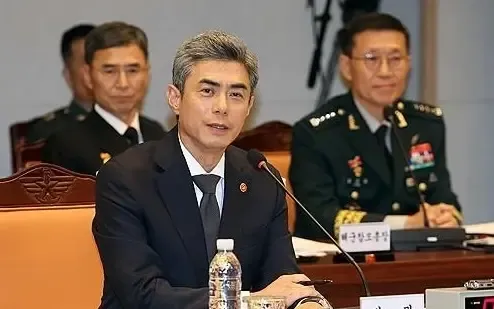
Defence Minister Kang Shin-chul confirmed on 26 October 2026 that Seoul and Washington are coordinating on setting a target year for the OPCON transfer .
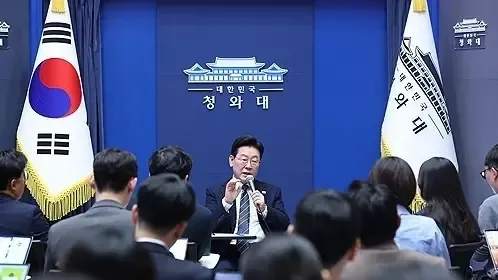
President Lee Jae Myung 's administration wants OPCON retaken before 2030 , or earlier if possible.
The US has reportedly expressed reservations about rushing the handover, citing the need to meet established military conditions.
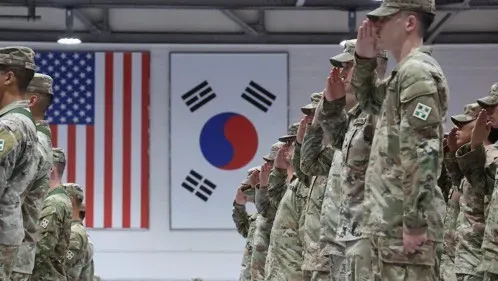
The two sides are currently in the second phase of the three-stage OPCON transition plan, focused on FOC certification.
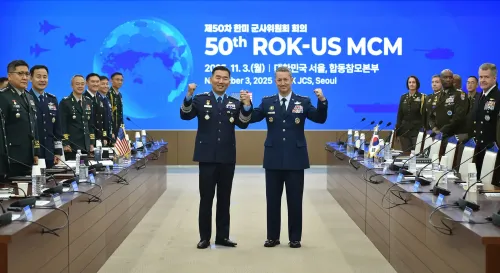
The Security Consultative Meeting (SCM) in Washington in December is expected to be the key forum for resolving differences.
Discussions are also ongoing on finding an alternative airport to replace Gwangju Air Base as a US logistics hub after its relocation for a chip cluster project.
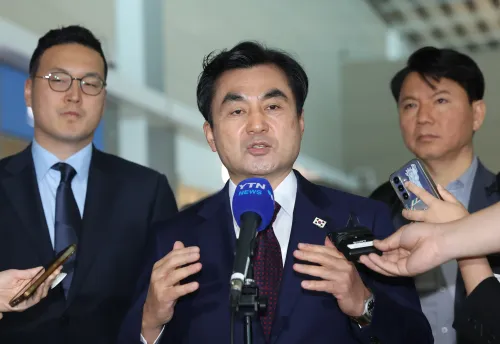
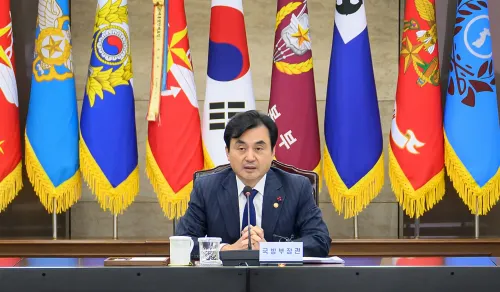
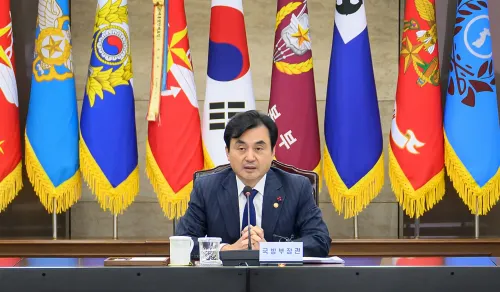
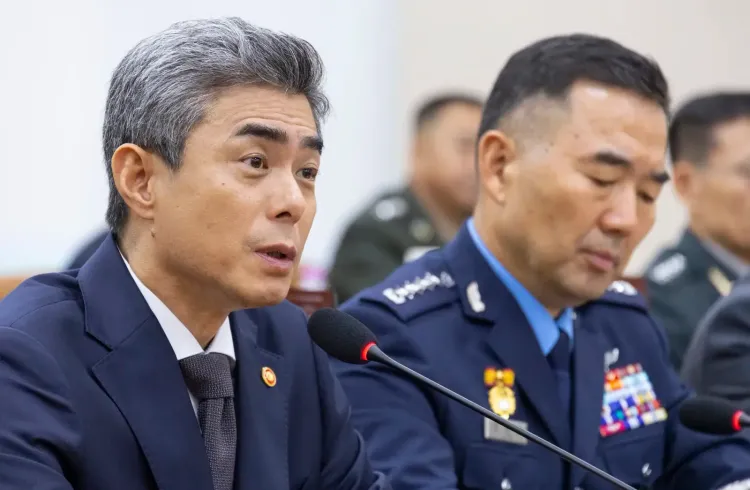
South Korea and the United States are closely coordinating on fixing a target year for Seoul's retaking of wartime Operational Control (OPCON) from Washington, Defence Minister Kang Shin-chul said on Monday, 26 October 2026. The announcement came during a parliamentary audit, amid ongoing alliance-level discussions ahead of a key bilateral security meeting in December.
What Kang Said at the Parliamentary Audit
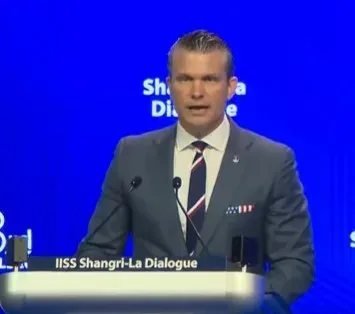
'The South Korean and US authorities are closely coordinating on completing the full operational capability (FOC) certification and determining the 'year X' for the OPCON transfer,' Kang said in his address to parliament. His remarks followed recent comments by US Forces Korea (USFK) Commander Gen. Xavier Brunson, who had stated that 'conditions have changed' for South Korea to retake OPCON — remarks that drew pushback from Seoul.
Seoul's Timeline vs Washington's Caution
President Lee Jae Myung's administration is keen to retake OPCON before its five-year term concludes in 2030, or possibly earlier. However, the US has reportedly adopted a more measured stance, expressing reservations about accelerating the handover for political reasons rather than on the basis of established military conditions. The divergence has created visible friction in an otherwise close alliance relationship.
Where the OPCON Transition Process Stands
Under the agreed three-stage OPCON transition plan, the two allies are currently in the second phase, which involves verifying Seoul's capabilities to lead the combined forces. While South Korea hopes to complete the FOC certification at the upcoming Security Consultative Meeting (SCM) in Washington in December, the allies reportedly still differ on whether the conditions for that assessment have been fully met. The SCM is expected to cover a broad range of alliance and security issues, with OPCON transfer expected to be a central agenda item.
Contingency Planning and the Gwangju Air Base Issue
Separately, Kang confirmed that discussions are under way with the US on identifying alternative airports to serve as aerial ports of debarkation (APOD) for American reinforcements in the event of a contingency. This has become necessary because Gwangju Air Base — currently one of five collocated operating bases (COBs) used for receiving US personnel and equipment — is slated for relocation to support a major chip cluster development project in the southwestern city of Gwangju. Kang said the issue should be resolved in a 'top-down' manner, signalling that it requires high-level bilateral engagement rather than a staff-level fix.
What Comes Next
The December SCM is now widely seen as the pivotal moment for the OPCON question. Should Washington decline to set a target year at that meeting, Seoul has not yet outlined specific contingency measures, though Kang indicated that 'various measures' remain under review. The outcome will have lasting implications for the structure of the US-South Korea alliance and for the regional security balance on the Korean Peninsula.
Point of View
And how much of that question is Seoul's to answer? The Lee administration's push to meet a 2030 deadline is politically driven as much as it is strategically calibrated, and Washington knows it. Gen. Brunson's 'conditions have changed' comment was a rare public signal that the US is not ready to hand over the keys on a political timetable. The December SCM will reveal whether the two allies can paper over that gap — or whether it widens into a genuine alliance stress point at a moment when the Korean Peninsula can ill afford one.
NationPress
26 Oct 2026
Frequently Asked Questions
What is OPCON transfer and why does it matter?
OPCON, or wartime Operational Control, refers to the authority to command South Korean and US combined forces during a conflict on the Korean Peninsula. Currently held by the US, Seoul has been seeking its return as a symbol of full military sovereignty. The transfer matters because it would fundamentally restructure the US-South Korea command relationship.
When does South Korea want to retake OPCON?
President Lee Jae Myung's administration wants to retake OPCON before its five-year term ends in 2030, and is pushing to complete the required military certifications as early as possible. The US has reportedly urged a more measured approach, insisting that conditions — not political timelines — should determine the handover date.
What is the Security Consultative Meeting (SCM) and when is it held?
The SCM is the annual high-level defence ministerial meeting between South Korea and the United States, typically covering alliance management, military readiness, and strategic issues. The next SCM is expected to be held in Washington in December 2026, with OPCON transfer among its central agenda items.
What is the current stage of the OPCON transition process?
The two allies are in the second of three stages, which involves verifying South Korea's capability to lead combined forces — a process known as full operational capability (FOC) certification. Disagreements reportedly remain over whether the benchmarks for this phase have been fully satisfied.
Why is Gwangju Air Base being relocated, and what does it mean for the alliance?
Gwangju Air Base is being relocated to support a major semiconductor cluster development project in the southwestern city of Gwangju. The base currently serves as one of five collocated operating bases (COBs) for receiving US military reinforcements, so its relocation requires identifying and certifying an alternative aerial port of debarkation — a process Seoul and Washington are now actively discussing.